Start with your particular stretch of coast
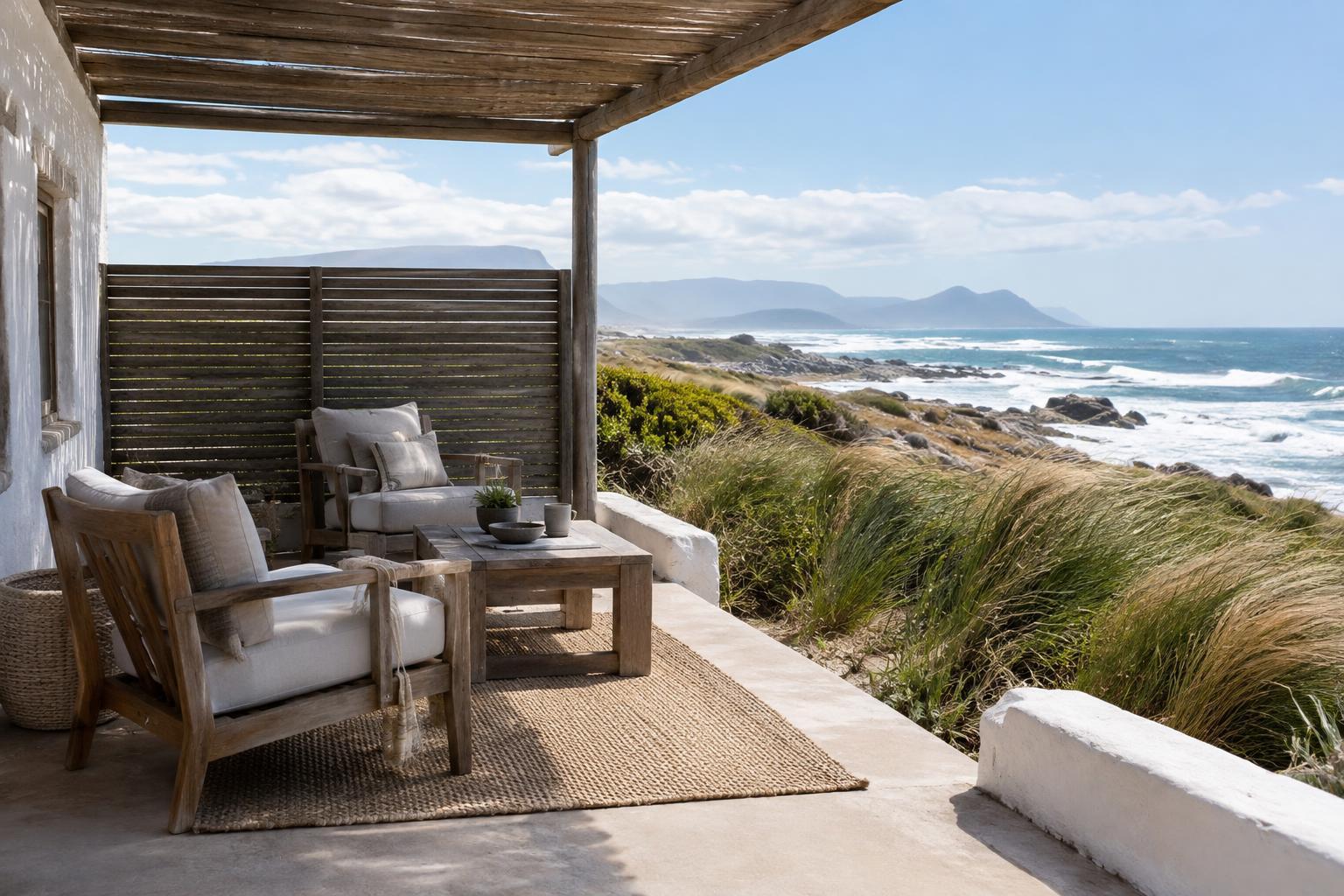
A garden near the sea faces more than one challenge. Wind can dry leaves and shift sand, while salt spray may settle on exposed plants. Sandy soil often drains quickly and holds little moisture. Yet a sheltered courtyard a few streets inland can feel very different from a garden facing the surf. Before buying plants, spend time noticing where the strongest wind arrives, where rainwater collects and which corners offer protection.
“Indigenous” is a useful starting point, but it does not mean every South African plant belongs in every South African coastal garden. The Cape, Eastern Cape and KwaZulu-Natal have different climates and natural plant communities. Look for species native to your region, then check that they suit your garden’s conditions. A reputable local indigenous nursery or botanical garden can help you confirm a plant’s identity and natural range.
Understand what salt tolerance means
Plants described as salt-tolerant may cope with salty air, occasional spray or saline soil, but not necessarily all three. For most home gardeners, exposure to wind and sea spray is the first question. A plant that grows well behind a wall might struggle in an open bed above the beach, even if both sites have sandy soil.
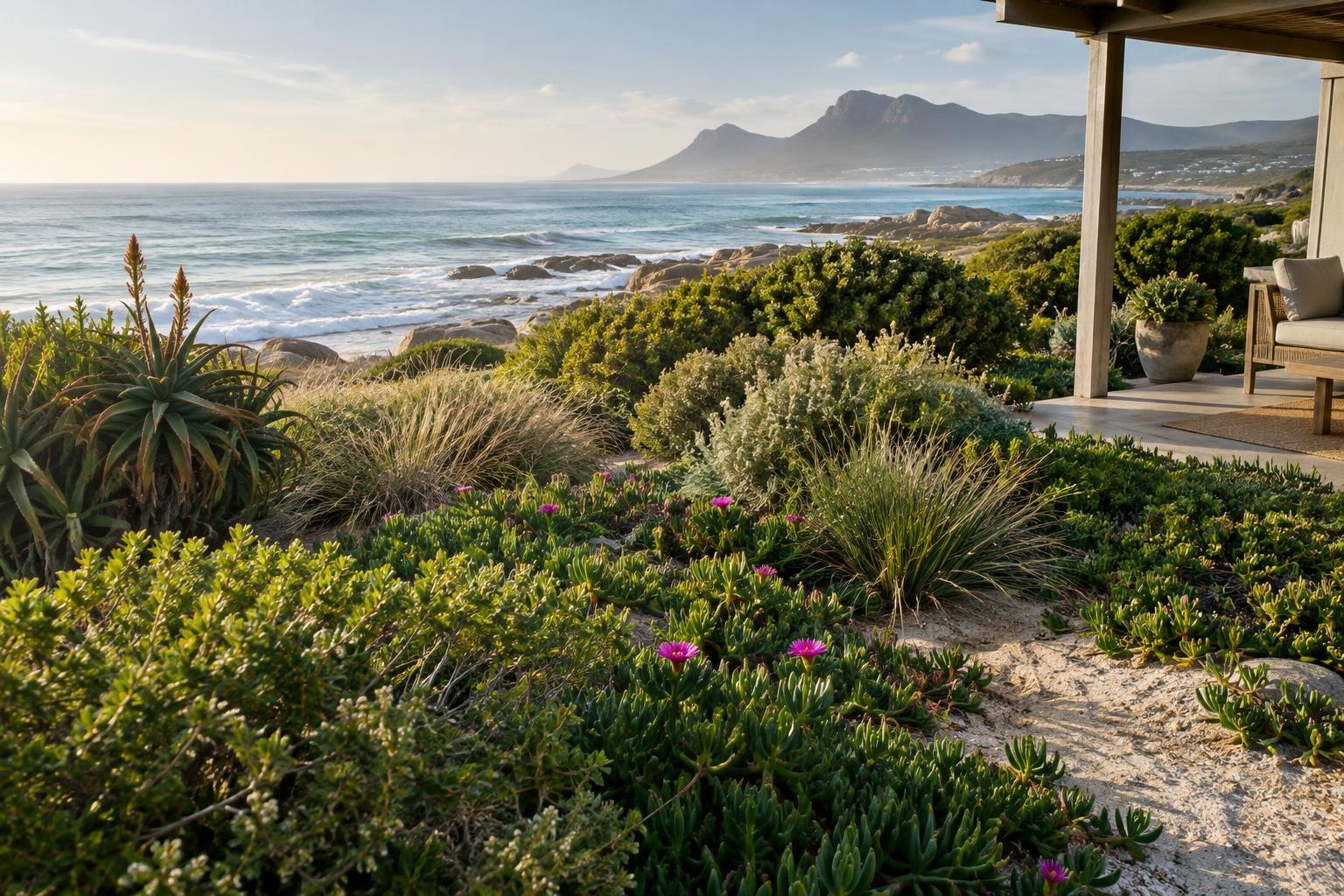
Think in layers rather than asking one species to do every job. Low, spreading plants can cover bare ground; tougher shrubs can slow the wind; more delicate plants can sit behind them. Leave room for each plant’s mature size. Crowding may create quick cover, but it can also make pruning and airflow harder to manage later.
Four plants worth asking about
Sour fig, or Carpobrotus edulis, is a spreading succulent with fleshy leaves and bright flowers. In suitable parts of its natural range, it can make a useful groundcover for sunny, well-drained spots exposed to coastal conditions. Give it space to spread, and keep it within the garden rather than allowing it to run into adjacent natural vegetation.
Gazania rigens is another low-growing option associated with South African coastal habitats. Its daisy-like flowers suit sunny positions, and its compact form can work along a path or at the front of a bed. Growth habits and locally available forms vary, so ask for a plant appropriate to your area rather than relying on a common name alone.
For structure, consider Carissa macrocarpa, often called Natal plum, where it is locally appropriate. This dense, spiny shrub can form a boundary or provide shelter for smaller plants, but its thorns make it a poor choice immediately beside a narrow walkway or children’s play space. Searsia crenata, sometimes called dune crow-berry, is another coastal shrub to discuss with a local nursery. Its eventual size makes it better suited to a space where it can grow into a natural shape. These are possibilities to investigate, not a planting list for every shoreline.
Plant for a strong start
Choose healthy nursery-grown plants rather than taking cuttings or seedlings from dunes, beaches or nearby bush. Natural coastal vegetation helps hold sand and supports wildlife; removing plants can damage a place that may already be under pressure. If your property borders a dune or protected area, check local requirements before clearing vegetation or changing the ground.
Plant into soil that drains freely, and water new plants deeply enough to reach their roots while they establish. Even a drought-tolerant coastal plant usually needs attention at first. Mulch can help slow moisture loss, but keep it away from stems and avoid piling it where strong winds will scatter it. Watch the garden through a full cycle of weather before deciding that an exposed spot needs another plant.
Keep the garden coastal, not just tidy
A resilient coastal garden need not look clipped or uniform. Leave some breathing room between plants, retain suitable existing vegetation and accept that growth may lean with the prevailing wind. Prune for access and plant health rather than forcing every shrub into a tight shape. Check boundaries for plants spreading beyond the space you intended.
The best beginner’s plan is modest: choose a few locally appropriate species, place the toughest ones in the most exposed positions and learn how they respond. Over time, that approach can create a garden that feels at home beside the sea while respecting the coastal landscape beyond it.