The line the tide leaves behind
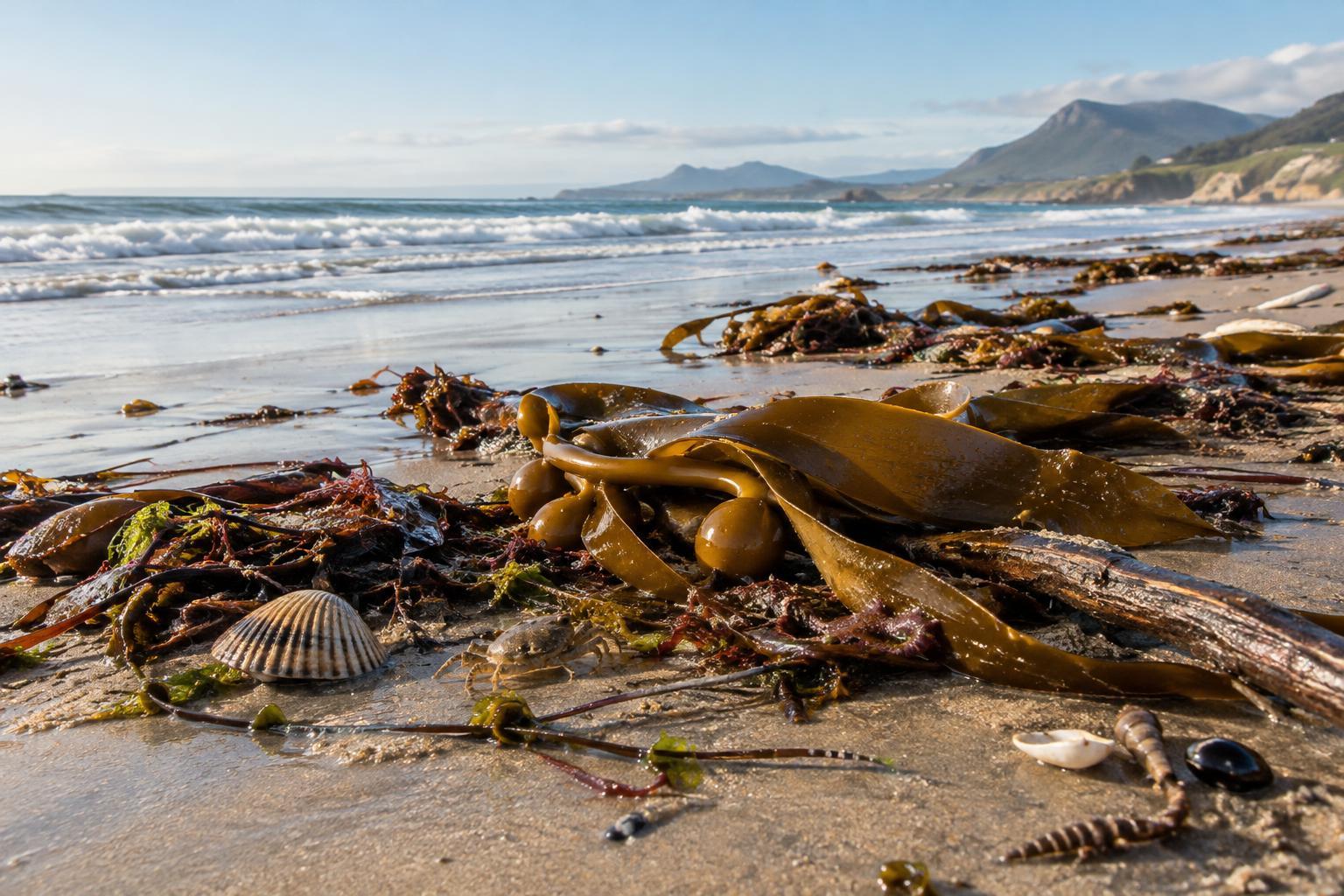
After a high tide, a beach may have a loose line of seaweed, shells, plant fragments and driftwood above the wet sand. This is the strandline. Beachgoers sometimes see it as a mark of an untidy shore, but much of its natural material has simply been carried in by waves and left as the water receded. Its position and contents can change from one visit to the next.
On South Africa’s varied coastline, a strandline might contain kelp on one beach and smaller seaweeds or seagrass fragments on another. It may be sparse after calm conditions or spread across a wider area after rough seas. Looking closely at what has arrived can make a familiar beach feel different without needing to remove anything from it.
A temporary home and a source of food
Seaweed washed ashore does not stop being part of the coastal ecosystem. As it breaks down, it can provide food for small invertebrates and create a damp shelter beneath its leaves and stems. Amphipods, often called sand hoppers, are among the animals a careful observer might notice near natural beach debris. The animals present will depend on the beach and the condition of the material.
Those small creatures can, in turn, be food for birds and other beach animals. Some birds search through the strandline rather than feeding at the water’s edge. This connection between material from the sea and life on land is one reason a natural wrack line is more than a pile of waste. Even when it looks dry on top, it may still be providing cover below.
What wrack can tell you, and what it cannot
A strandline offers clues about where the tide reached and what the water has recently carried ashore. A broad band of kelp may prompt questions about nearby underwater habitats, while an unusual mix of shells can invite a closer look at the beach’s variety. These are starting points for observation, not reliable ways to identify exactly what happened offshore. Waves and currents can move material some distance before it lands.
It also helps to distinguish natural wrack from litter. A plastic wrapper tangled in seaweed does not become harmless because it is part of the same line. Sharp objects, fishing gear and unknown substances are reasons to keep your distance or follow local guidance on reporting hazards. If you choose to pick up ordinary litter, avoid reaching into dense seaweed where animals may be sheltering.
How to explore the strandline gently
Walk slowly alongside the wrack rather than dragging your feet through it. Look for differences in shape, colour and texture, and watch for tiny movements before lifting anything. If you turn over a small piece of seaweed to observe what is beneath it, place it back as you found it. Leaving shells, driftwood and seaweed in place also lets other visitors encounter the beach as it is.
Give feeding or resting birds plenty of space. If a bird stops what it is doing, calls repeatedly or moves away as you approach, step back. Keep dogs under close control and follow any posted beach rules, especially around sensitive wildlife areas. Children can enjoy a simple observation game: find three different natural objects along the line and describe them without taking them home.
A useful pause in the beach-day routine
Not every beach will have a visible strandline on every visit, and some managed beaches may have natural material cleared from busy areas. Where wrack is present, you do not need special equipment to appreciate it. A few minutes of watching can reveal an active boundary between sea and shore that is easy to overlook on the way to the water.
Choose a spot away from heavy foot traffic, keep your hands clear of anything sharp or unfamiliar, and leave the natural material where it lies. The next tide may rearrange the whole scene. That temporary quality is part of the appeal: a strandline records one moment on a coast that is always moving.