Choose fish that suits your braai
A fish braai does not need an elaborate recipe. The main decisions are what to buy, how to keep it from sticking and when to take it off the heat. For a first attempt, ask a fishmonger for a firm fillet or a cleaned whole fish that will fit comfortably on your grid. Hake, snoek and yellowtail are familiar names at South African fish counters, though availability varies by place and season. If you are unsure what to choose, explain that you plan to cook over coals and ask which available option will be easiest to handle.
Look for fish that has been kept properly chilled and smells mild rather than strongly unpleasant. If buying a whole fish, ask for it to be scaled and gutted unless you are comfortable doing that yourself. A skin-on fillet is often easier for beginners because the skin helps hold it together on the grid. Frozen fish can also work well: thaw it in the fridge, not on the counter, and drain away any liquid before preparation. Buy from a supplier you trust and ask about the catch or source if that matters to your choice.
Prepare it simply before lighting the fire
Keep raw fish cold until you are ready to cook. Use a clean board and knife, and keep them separate from anything you will serve without further cooking. Pat the fish dry with kitchen paper; a wet surface is more likely to steam and cling to the grid. Run your fingers gently over a fillet to check for pin bones, removing any you find with clean tweezers. If you have a whole fish, check that its cavity is clean and pat that dry too.
Salt, pepper, a little oil and lemon are enough to make a good braai fish. You can add garlic, herbs or a pinch of chilli if you like. For a South African-inspired variation, a light apricot-and-lemon glaze is particularly pleasant on snoek. Brush sweet glazes on towards the end of cooking so they are less likely to burn. If using an acidic marinade, keep it brief, especially for delicate fillets: a long soak in lemon juice can change the texture before the fish reaches the fire.
Build steady coals and set up the grid
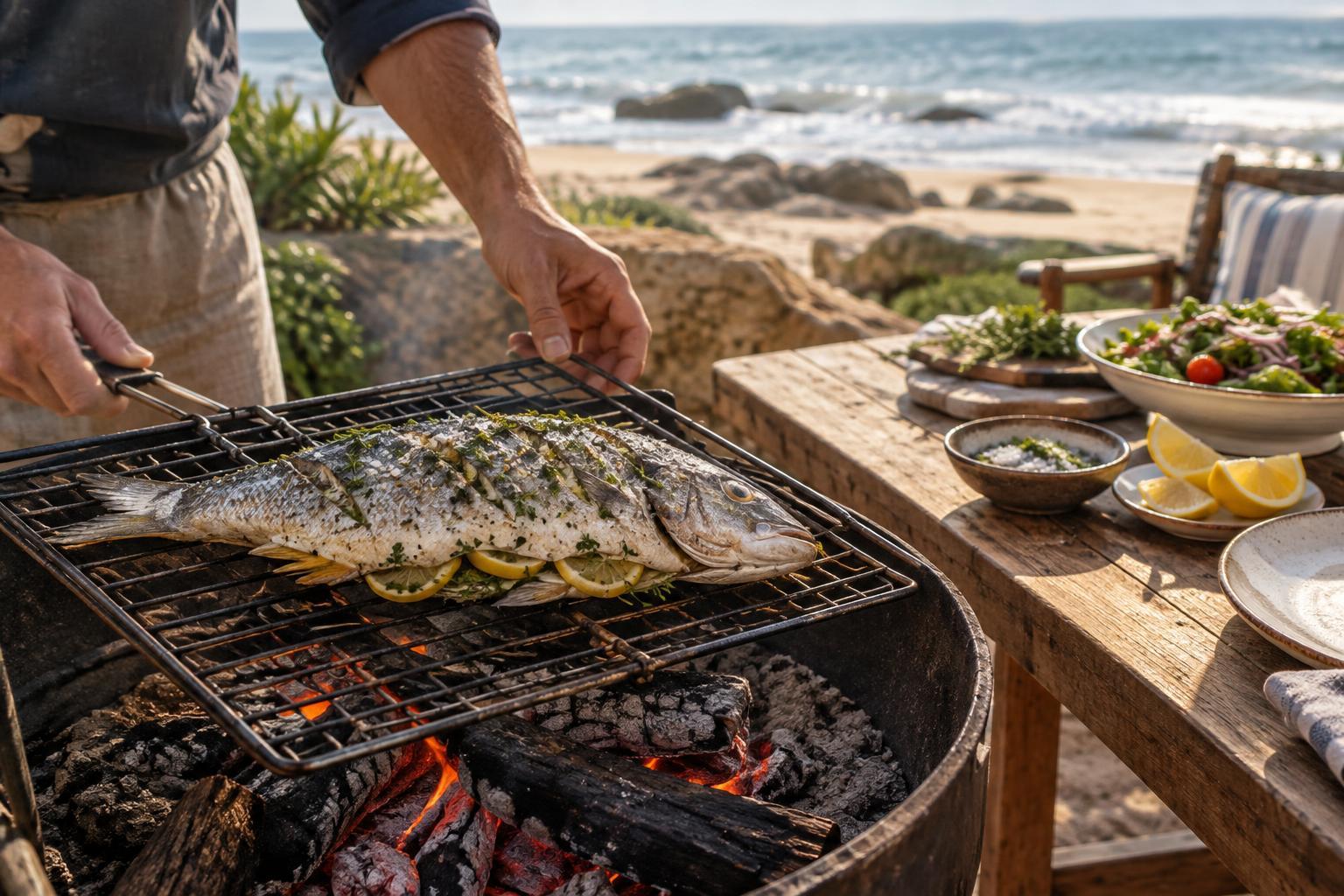
Fish is easier to control over an even bed of coals than over active flames. Let the fire settle, then arrange the coals so you have a hotter area and a gentler one. This gives you somewhere to move the fish if the skin browns too quickly. Clean the grid while it is warm, then oil it lightly. A hinged braai grid can make turning a whole fish or large fillet less stressful, but check that it closes without squeezing the flesh.
Place a skin-on fillet skin-side down first. Leave it alone long enough to form a crust before trying to turn it; repeated lifting makes breakage more likely. A whole fish can be turned carefully in a hinged grid. Cooking time varies with thickness, the heat of the coals and the distance from the fire, so watch the fish rather than relying on a fixed number of minutes. If fat drips and causes flare-ups, move the grid to the gentler side instead of letting flames lick the flesh.
Check doneness without drying it out
The safest way to check fish is with a food thermometer inserted into the thickest part; aim for 63°C. The flesh should also look opaque and separate readily when gently pressed with a fork. Check a whole fish near the backbone, where it tends to take longest. Thin edges may cook sooner than the centre, so position them away from the fiercest heat where possible. If a large piece is browning before its centre is cooked, move it to gentler coals and give it more time.
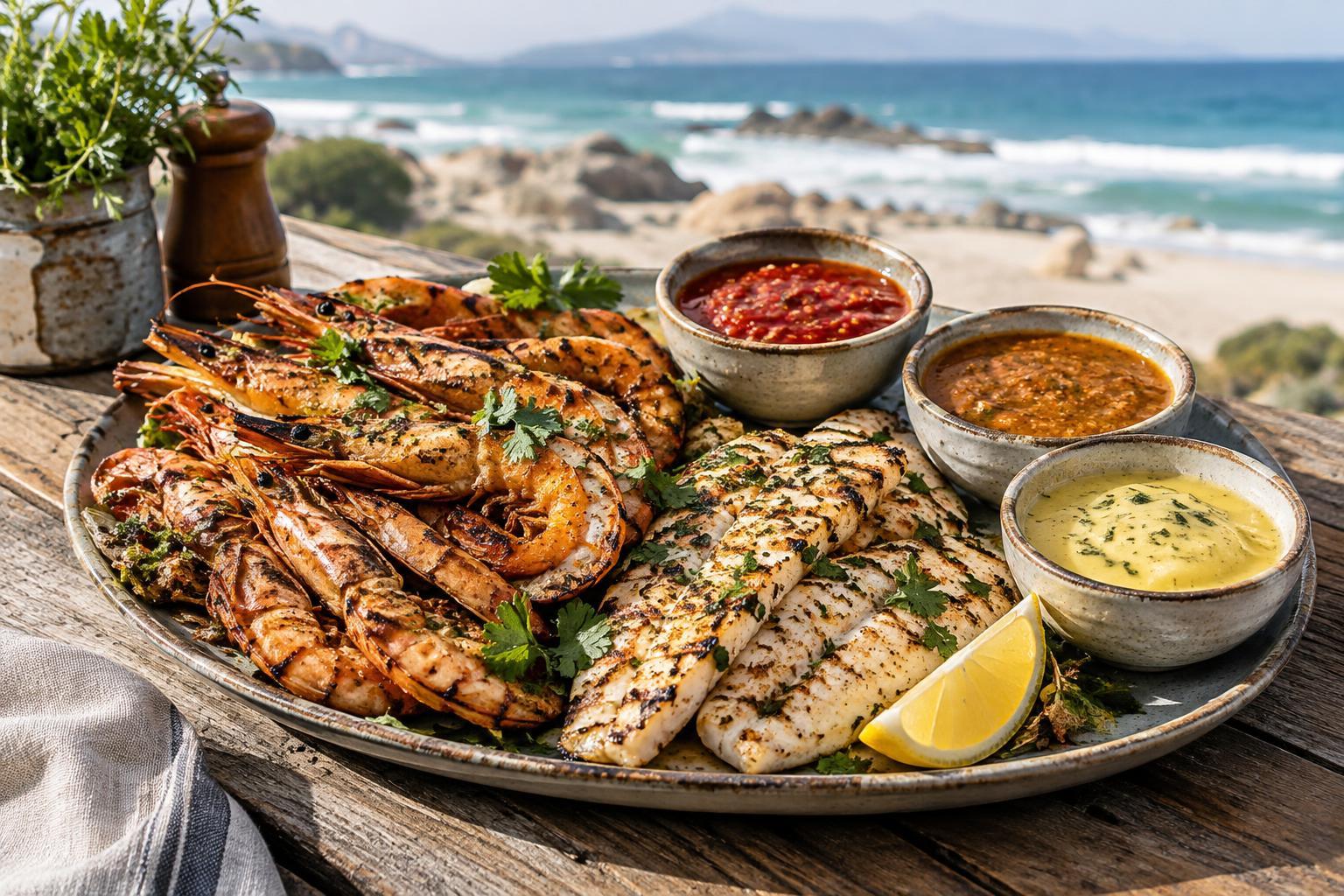
Lift cooked fish onto a clean platter, not the one that held it raw. Let it rest briefly while you finish the sides, and offer lemon wedges at the table so everyone can adjust the flavour. For a whole fish, warn guests about bones and serve it carefully. Leftovers should be cooled and refrigerated promptly rather than left beside the braai for the rest of the afternoon.
Keep the rest of the meal relaxed
Fish pairs well with straightforward sides that can be prepared while the coals settle. Try a tomato and onion salad, grilled mielies, bread, or potatoes wrapped and cooked ahead of time. A crisp salad brings freshness to a glazed fish, while a simple lemon-and-herb dressing suits a more lightly seasoned one. Put out serving utensils before you start cooking so the finished fish can go straight to the table.
For your first fish braai, choose one manageable piece rather than several different cuts that need different cooking times. Prepare the sides in advance, keep the grid clean and resist turning the fish too soon. Once you are comfortable judging the coals and the thickness of the fish, you can experiment with whole fish, different seasonings and the flavours your guests enjoy most.