Start with the coast, not a single menu
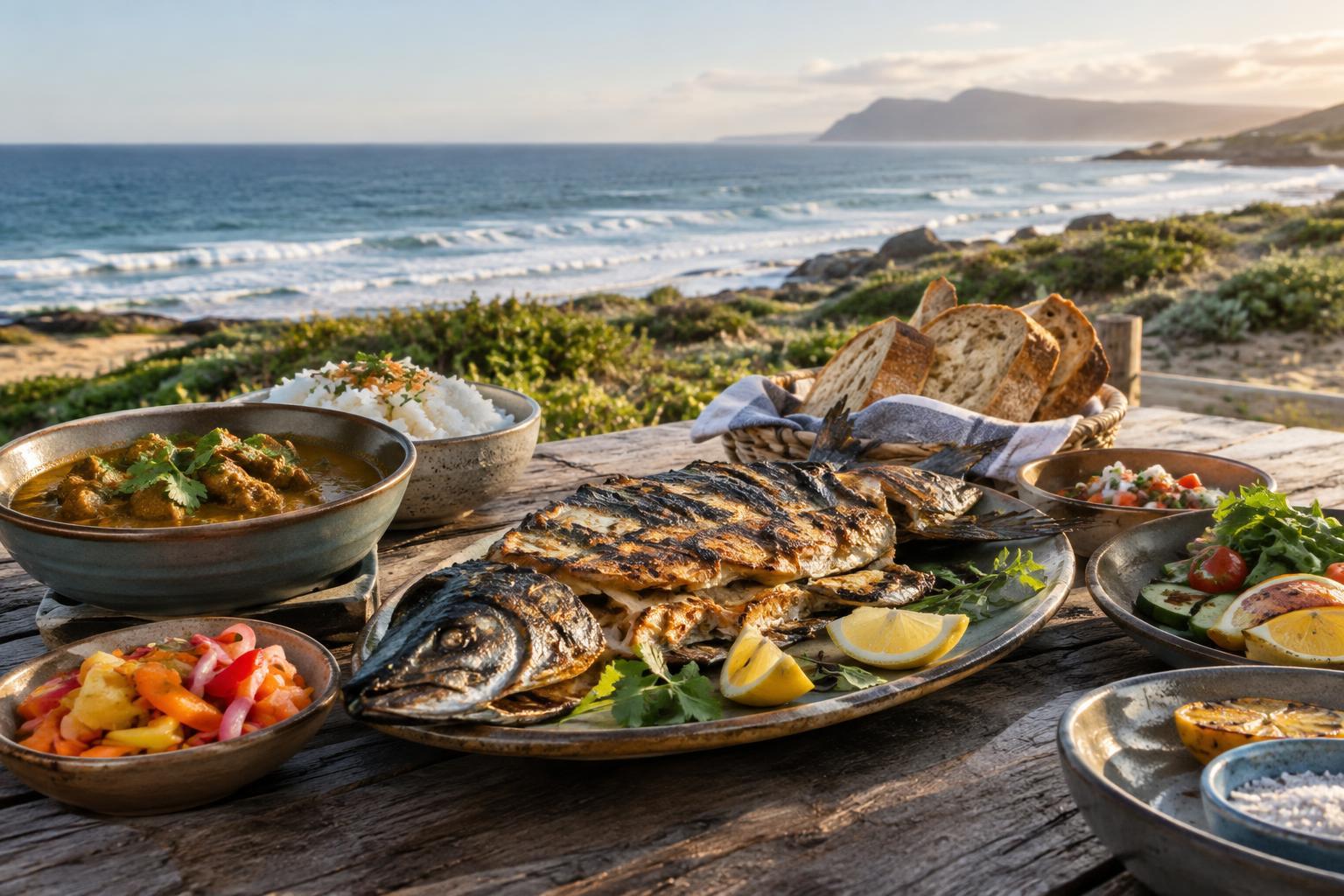
South Africa’s coastline stretches through communities with different languages, histories, climates and ways of cooking. There is no single “coastal cuisine.” A fish cooked over coals, a family curry and a bowl of maize-based comfort food can all belong to a coastal food experience, even when their ingredients and origins are quite different. Think of this guide as a starting map rather than a checklist of dishes every town will serve.
For a rewarding first taste, pay attention to where you are and how people eat there. A harbour café, a neighbourhood takeaway, a market stall and a home-style restaurant may each tell a different part of the story. Ask what a dish contains and how it is usually served. If seafood is on the menu, ask what is available that day rather than assuming every listed catch is local or in season.
West Coast: smoky fish and preserving traditions
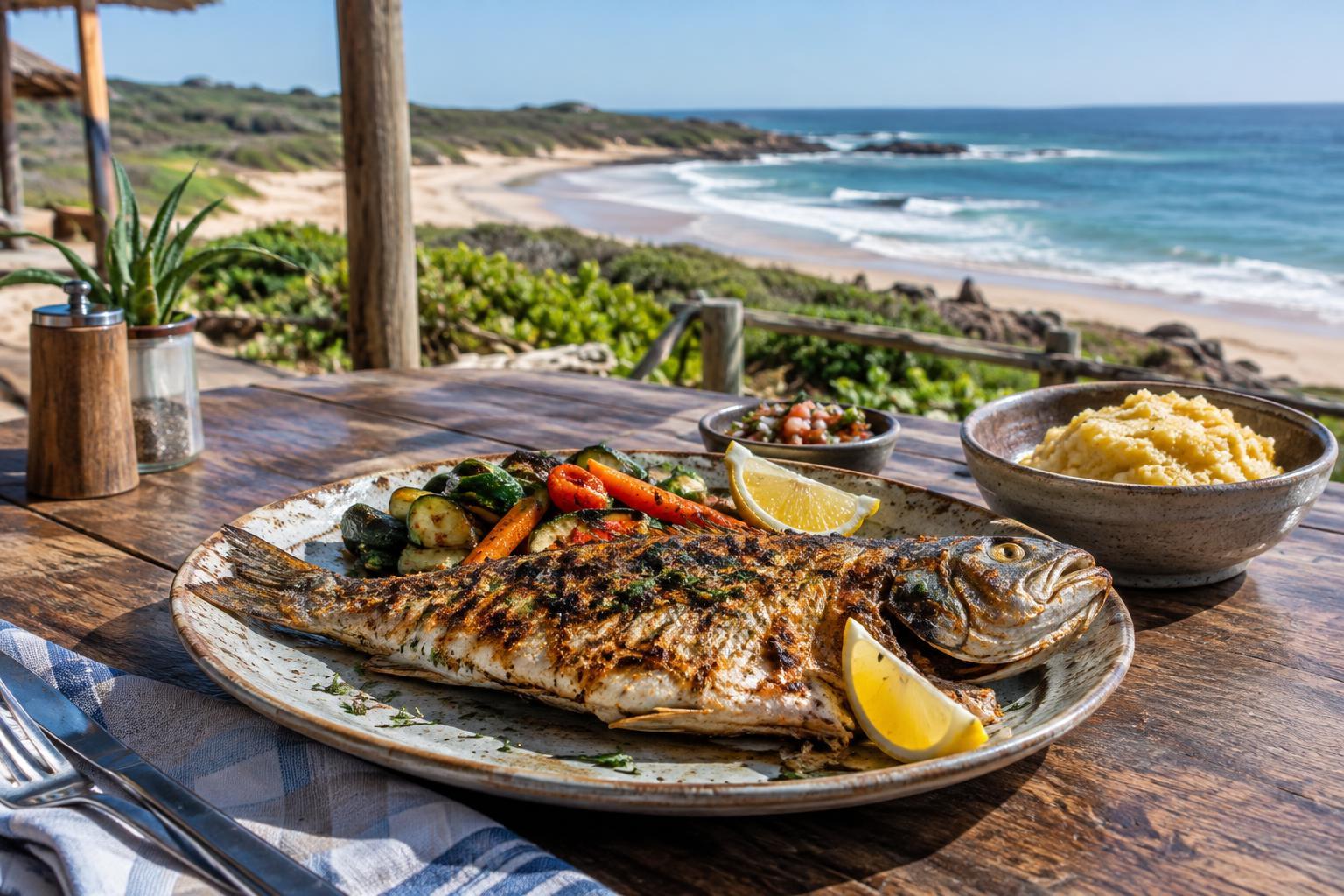
Along the Atlantic-facing West Coast, fish is a useful place to begin. Snoek is closely associated with this part of the country and is often braaied, or cooked over coals. Its rich flavour works well with simple accompaniments such as bread, potatoes or a bright relish. You may also encounter bokkoms: small fish that are salted and dried. Their intense, salty taste makes more sense in small portions than as a mild seafood snack.
Salting and drying speak to a practical food tradition: preserving a catch for later use. That does not mean every coastal meal is old-fashioned or prepared the same way. Menus vary from town to town, and fish names can be unfamiliar to newcomers. Rather than ordering by a romantic idea of what a fishing village should serve, ask about the preparation. Grilled, fried, smoked and dried fish offer very different first impressions.
Cape Town and the southern Cape: layered influences
Around Cape Town, coastal eating reflects more than proximity to fishing grounds. Pickled fish, often made with a gently spiced, tangy sauce, is a familiar dish in many households, particularly around Easter. Recipes differ, and its meaning may be personal as well as regional. Cape Malay cooking adds another important thread to the city’s food culture, with fragrant spices appearing in dishes that reach well beyond seafood.
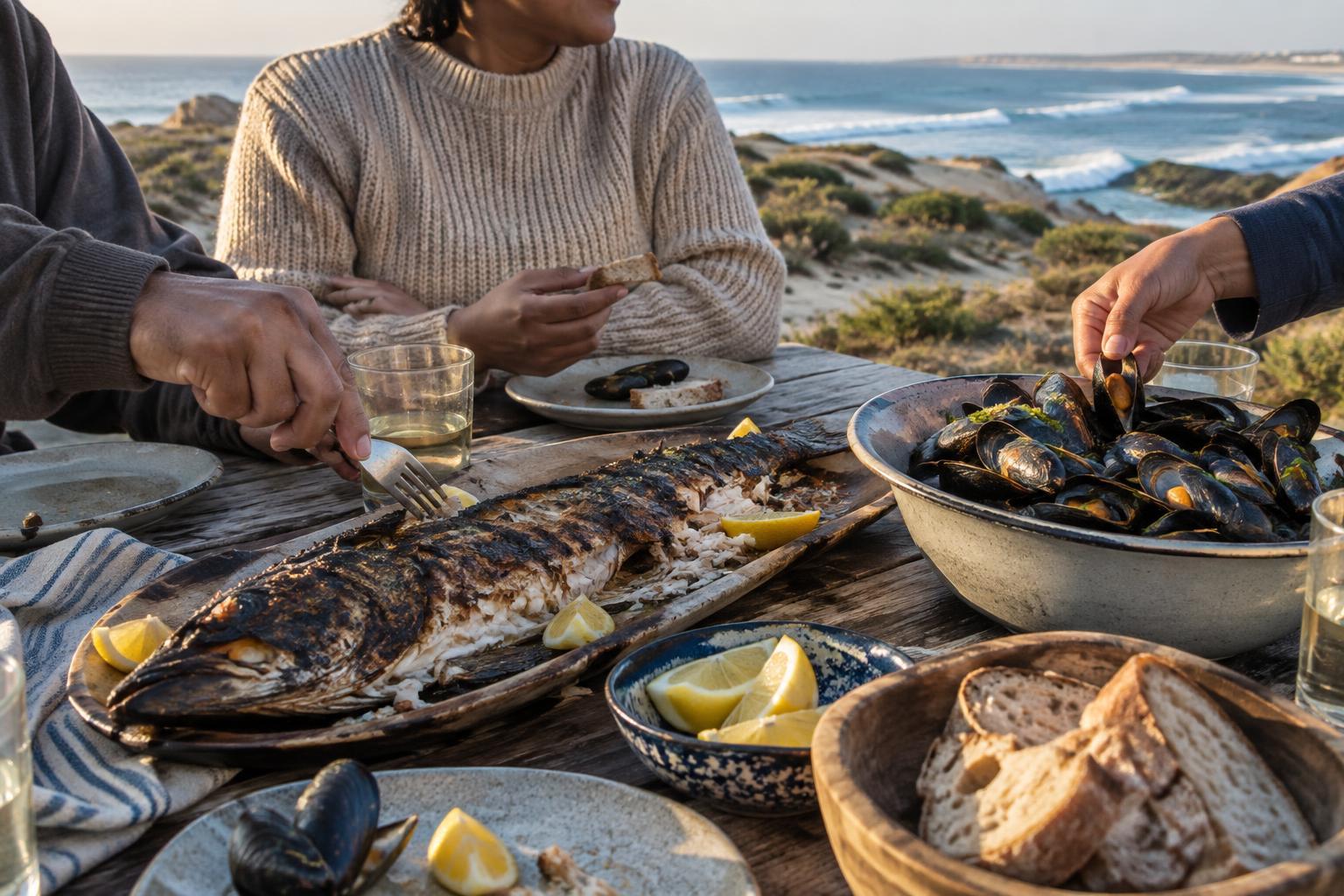
Travelling east along the southern Cape and Garden Route, you may find oysters, mussels and other seafood on menus, alongside produce from inland farms. A plate’s ingredients do not necessarily come from the nearest bay, so ask if provenance matters to you. For beginners, this is a good region to compare preparations: a simply cooked fish lets its texture stand out, while a curry or pickled dish shows how seasoning can change the experience entirely.
Eastern Cape: coastal meals beyond seafood
The Eastern Cape is a reminder that eating on the coast need not mean ordering fish at every meal. In parts of the province, Xhosa food traditions are an important part of local food culture. Umngqusho, commonly made with samp and beans, is one example of a hearty dish you might seek out. It is not a seafood dish, and presenting it as one would miss the point: coastal communities also cook with grains, legumes, vegetables and meat.
Availability depends on the town and the establishment, so a home-style menu may be more revealing than a seafood-only one. If you do choose fish, notice what comes with it. Starches, cooked vegetables and sauces can tell you as much about a meal as the catch itself. Trying one non-seafood speciality alongside a fish dish is a simple way to avoid reducing a region’s food identity to its shoreline.
KwaZulu-Natal: Indian Ocean seafood and Durban flavours
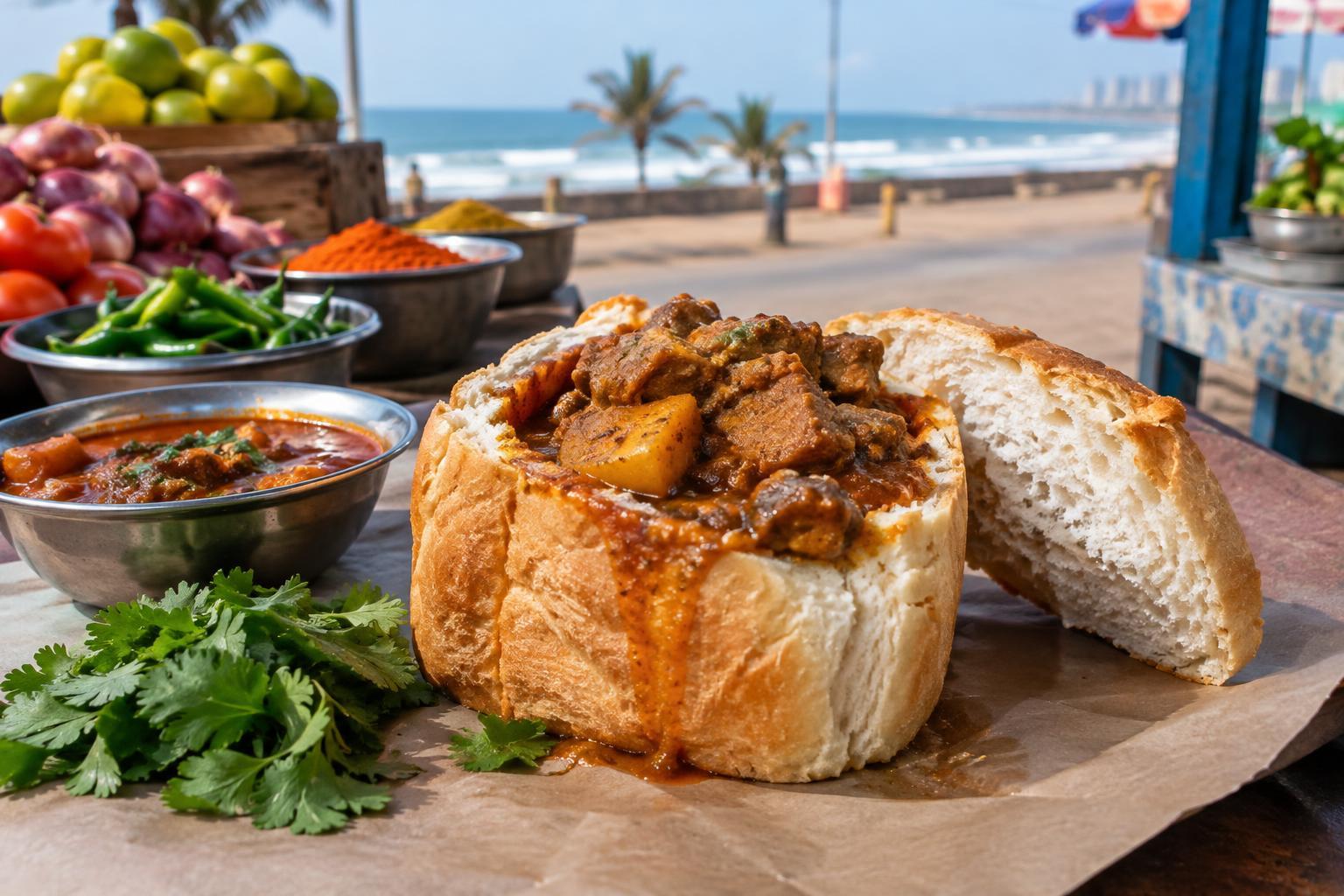
KwaZulu-Natal’s warm-water coast offers another mix of influences. Fish and other seafood appear in many forms, but Durban’s Indian-influenced food culture is just as important to a beginner’s itinerary. Curries vary in heat, ingredients and style; bunny chow, a hollowed-out loaf filled with curry, is a familiar local takeaway. It is not specifically a seafood tradition, yet it is part of how many visitors and residents eat near this coast.
Choose with curiosity rather than a fixed list. Ask about spice levels, share a dish if you are unsure of the portion, and leave room for everyday food as well as special-occasion meals. Across every region, follow local rules on collecting seafood rather than gathering it yourself, and check current opening times and access details before setting out. The most useful question at the table may be the simplest: “What do you recommend here, and how is it usually eaten?”