Start with the shape of the coast
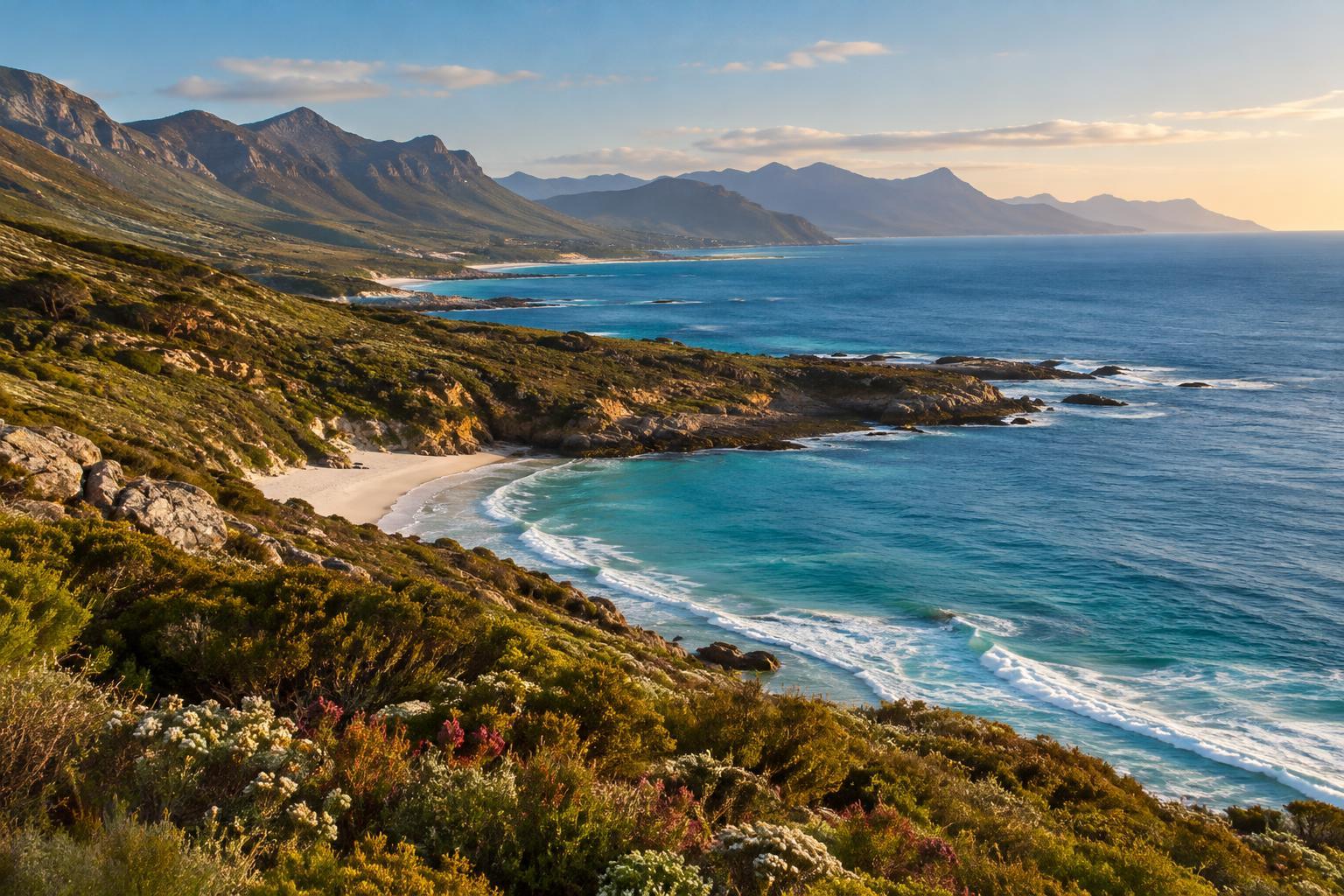
South Africa’s coast is easier to understand as a series of regions than as one long beach holiday. On the Atlantic-facing west, cold water and open, often windswept landscapes set the tone. Around the Cape, rocky shores, broad bays and small seaside towns sit close together. Farther east, the shoreline becomes greener in many places, with long beaches, estuaries and, toward KwaZulu-Natal, a warmer subtropical feel.
These are useful travel-planning distinctions, not firm borders. Water temperature, wind and swimming conditions can vary from beach to beach and day to day. Decide first what you want most: quiet scenery, coastal walks, food stops, a road trip or time in the water. Then look closely at the particular town and beach rather than relying on a region’s reputation alone.
West Coast: open horizons and an unhurried pace
The West Coast, stretching north of Cape Town along the Atlantic, appeals to travellers who enjoy space, small harbours and a slower rhythm. Expect broad views, sandy stretches and shorelines that can feel exposed to the wind. The sea is generally colder than it is on the country’s eastern coast, so a beach day here might centre on a walk, a picnic or watching the changing light rather than a long swim.
Fishing heritage and seafood are part of the region’s identity, though what is available depends on the place and season. Allow time for stops instead of treating the coast as a route to rush through. If swimming is important to your trip, check conditions at the beach you plan to visit and have a sheltered alternative in mind.
Cape and Garden Route: variety within reach
Around the Cape Peninsula and the southern Cape, the coast changes quickly. One outing may take you to a rocky viewpoint; another, to a wide beach or a sheltered bay. This variety makes the area a good introduction for first-time visitors who want coastal scenery without committing to a single style of trip. Wind, waves and water temperature still differ substantially between nearby shores.
Continuing east along the Garden Route, forested areas, lagoons, river mouths and beach towns make a leisurely road trip appealing. The name describes a broad travel corridor rather than a promise that every stop will look alike. Give yourself fewer bases and more time at each one: a short distance on a map can still contain several tempting detours. Before setting out for a walk or viewpoint, confirm access and consider the weather and daylight.
Eastern Cape: long beaches and a wilder feel
The Eastern Cape offers several kinds of coast, from established seaside towns to quieter stretches where rivers meet the sea. The Wild Coast is especially associated with rolling green hills, headlands and beaches that can feel remote. It rewards travellers who value the journey as much as the destination, but distances, road conditions and available facilities deserve careful planning.
Do not assume that an empty-looking beach is suitable for swimming. Currents, surf and river mouths call for caution wherever you travel. For a first visit, choose a comfortable base, learn which beaches have suitable facilities, and plan shorter outings from there. That leaves room to enjoy a viewpoint, a walk or a local meal without turning every day into a long drive.
KwaZulu-Natal: warmer-water possibilities and coastal energy
KwaZulu-Natal’s Indian Ocean coast often draws visitors looking for warmer-water beach time. It includes busy urban beachfronts, holiday towns, estuaries and nature-focused areas, so the experience depends heavily on where you stay. A lively promenade and a quiet coastal path can belong to the same broad region without offering the same kind of day out.
To choose among these regions, match the trip to your priorities. Pick the West Coast for open landscapes and slow stops, the Cape and Garden Route for a varied road trip, the Eastern Cape for expansive scenery, or KwaZulu-Natal if warmer-water possibilities top your list. Wherever you go, check current beach guidance, access arrangements and venue details before travelling. Pack for changes in wind and weather, and leave enough flexibility to enjoy the coast you find.