Start with the view from land
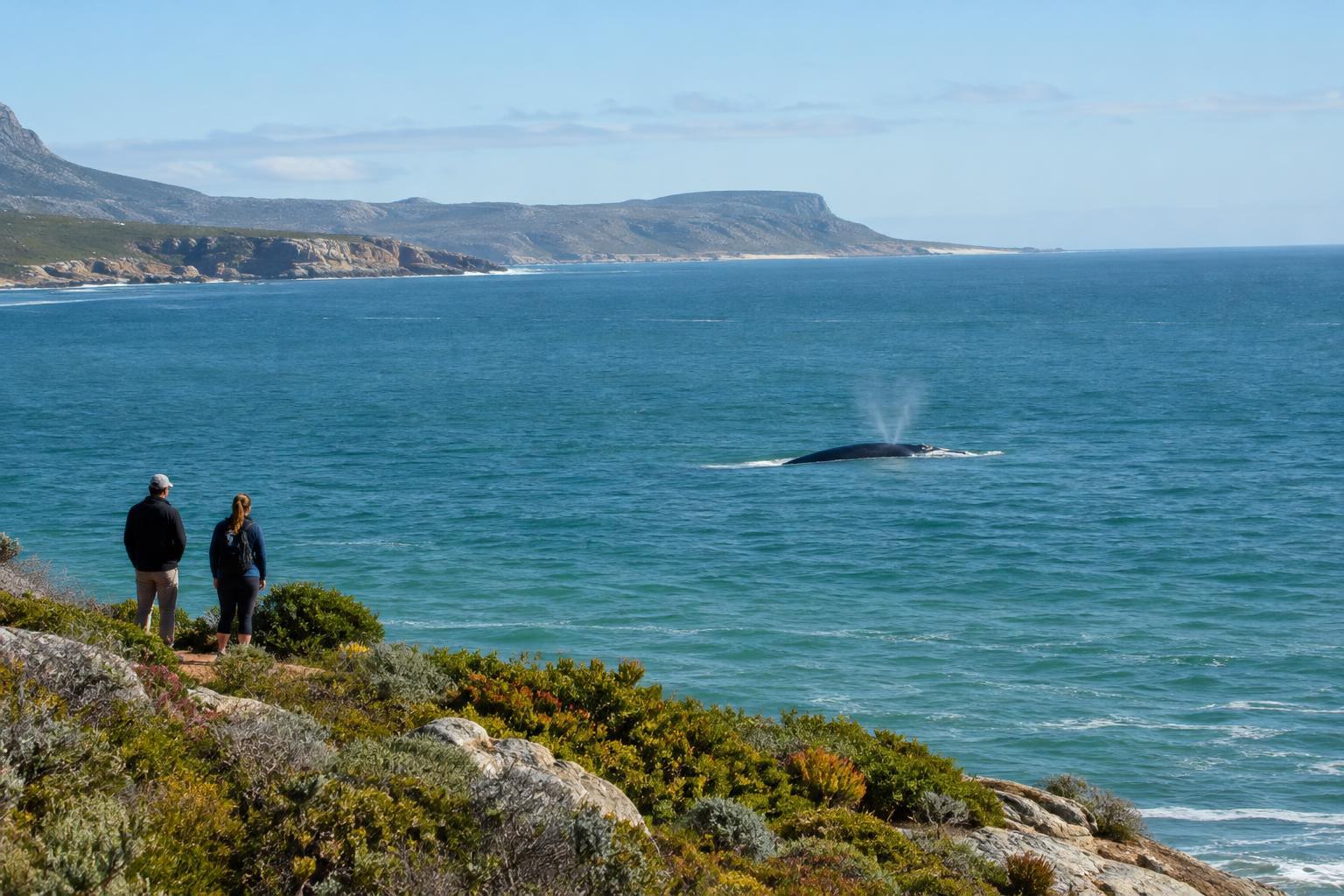
Watching for whales can be as simple as finding a safe place above the water and giving the sea your attention. South Africa’s long coastline offers headlands, coastal paths and beaches with open views. An elevated lookout often makes it easier to scan a broad stretch of water than standing at the water’s edge. Choose a public viewpoint where you can remain well back from cliffs, rocks and breaking waves.
Bring water, sun protection and a layer for changing weather. Binoculars can help, but they are not essential: a whale’s blow or the splash from a breach may be visible to the naked eye. Scan slowly across the horizon, then look closer in. When you spot something, keep watching the same area for a few minutes. A whale may surface several times before diving out of sight.
Get to know three whales you might see
Southern right whales are among the best-known visitors to the southern and western coasts, especially during the cooler part of the year. They can sometimes be seen relatively close to shore in sheltered bays. Their broad backs lack a dorsal fin, and the pale, rough-looking patches on their heads, called callosities, may help distinguish them through binoculars. A southern right whale’s blow can appear V-shaped when conditions make it visible.
Humpback whales travel past parts of the South African coast during their migrations and may be spotted from lookouts along the eastern coastline as well as elsewhere. They have long pectoral fins and are known for energetic surface activity, though many sightings are only a brief glimpse of a back or tail. Bryde’s whales are also found in South African waters. They can be harder for a beginner to identify from land, often appearing as a streamlined back and a curved dorsal fin. Treat an uncertain identification as part of the experience rather than a puzzle you must solve.
Let seasons guide you, not guarantee a sighting
Whale watching is shaped by migration, feeding opportunities, sea conditions and luck. Southern right sightings are generally associated with winter and spring along parts of the Cape coast, while migrating humpbacks can be seen along portions of the coast during cooler months. Bryde’s whales may be present in some areas outside those migration windows. These are broad patterns, not a promise that a particular bay will have whales on a particular day.
Visibility matters as much as timing. Glare, rain and choppy water can hide a whale even when it is nearby. If you have a choice, try a day with a clear view of the water and allow enough time to settle in rather than making a quick stop. Before travelling to a specific lookout, check current public access, conditions and any local guidance.
Learn the signs on the surface
The first clue is often a blow: a brief misty plume as a whale exhales at the surface. You might then see a dark back, a dorsal fin or a tail fluke lifted before a deeper dive. A breach, when much of the body rises out of the water, is dramatic but uncommon enough that it should be a bonus, not the goal. What looks like a whale from far away can also be spray, a wave or another marine animal.
Notice patterns instead of relying on one glimpse. Is the animal surfacing repeatedly in the same area? Can you see a dorsal fin, or the shape of its blow? Make a mental note of size, shape and behaviour, then compare those clues later. For a first outing, simply recognising that whales are present can be more rewarding than trying to name every animal.
Give wildlife room to be wild
A shore-based lookout lets you observe without approaching whales. Stay on marked paths where provided, keep children away from exposed edges and never scramble onto wet rocks for a better photograph. If you encounter whales while kayaking or boating, do not chase, crowd or cut across their path. Follow local rules and the instructions of any authorised operator; approach and viewing requirements can vary by activity and place.
Keep expectations relaxed. You may spend an hour watching an apparently empty sea, then catch a single blow on the horizon. A sighting does not need to be close or spectacular to be memorable. The pleasure of shore watching is in slowing down, noticing the conditions and leaving the animals free to move on.