A coastal bird with a life at sea
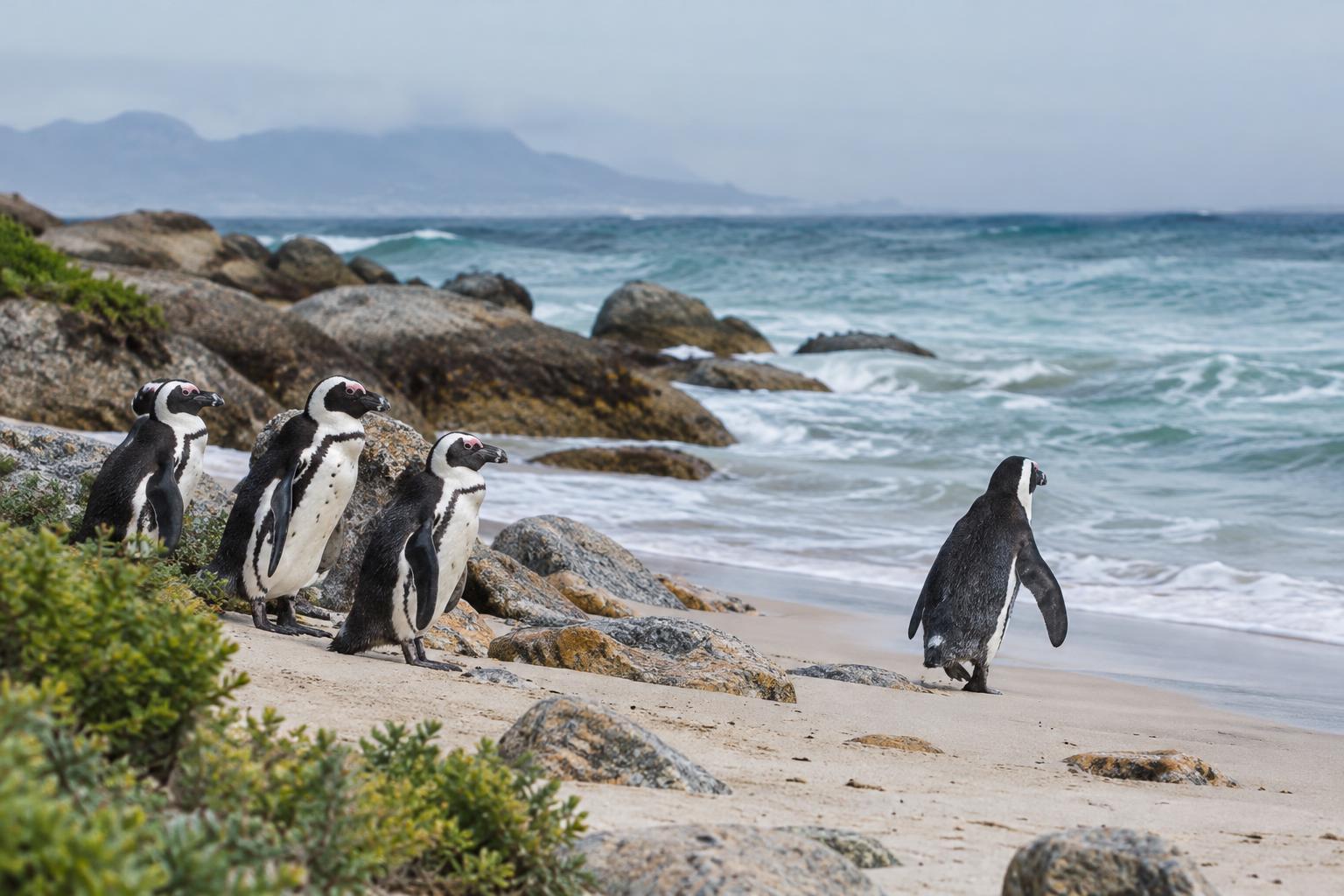
African penguins are the only penguins that breed naturally in Africa. Their colonies are found along the coasts of Namibia and South Africa, on offshore islands and at a small number of mainland sites. They may look at home standing on a beach, but they spend much of their time at sea, where they swim and hunt for fish.
Their black backs and white fronts help them blend into the water when viewed from above or below. On land, their loud, braying calls can make a colony sound surprisingly busy. Each penguin’s pattern of dark spots on its chest is distinctive, though visitors should observe from a distance rather than try to identify birds up close.
Where African penguins live
Breeding sites are scattered along the southern African shoreline, particularly around the western and southern coasts. Offshore islands have long provided nesting space away from many land-based predators. Mainland colonies include well-known sites near Cape Town and at Stony Point in Betty’s Bay, where viewing areas can offer a chance to watch the birds without walking through their habitat.
A colony needs more than a safe patch of ground. Adults must be able to reach enough food at sea and return to feed their chicks. Nesting birds also need shelter from heat, rain and disturbance. Some use burrows or spaces beneath vegetation; where suitable cover is limited, exposed nests can leave eggs and chicks more vulnerable.
Seeing penguins at a particular site is never guaranteed. Birds move between land and sea, and visitor access can change. Before planning a trip, check the latest local guidance on opening arrangements, viewing routes and any restrictions.
Why food availability matters
African penguins eat small fish, including sardines and anchovies. When breeding, adults repeatedly travel out to feed and return with food for their chicks. If suitable prey is scarce near a colony, those trips can become harder, leaving adults with less time and energy to care for their young.
Food availability is shaped by several interacting factors, including ocean conditions and fishing activity. Fish can still be present along the wider coast while being difficult for penguins at a particular colony to reach. That is why the waters around breeding sites matter as much as the sites themselves. Protecting a nest does little good if the adults cannot reliably find food nearby.
Other pressures on colonies
African penguins also face hazards that are easier to see from shore. Oil pollution can damage the waterproofing of their feathers, making it difficult for affected birds to stay warm and swim effectively. Entanglement in discarded fishing material and other marine debris poses further risks. On land, predators can threaten eggs, chicks or adults, particularly where colonies are accessible from the mainland.
Disturbance is another concern. A person approaching a nest for a photograph may cause a bird to leave its eggs or chicks exposed, even if the encounter seems brief and harmless. Repeated disruption can add to the challenges of raising young. Heat and a lack of sheltered nesting places may also affect birds at exposed sites.
These pressures do not operate in isolation. A penguin already working harder to find food may be less able to cope with other difficulties. Conservation efforts therefore need to consider both the colony and the surrounding sea, while responding to the conditions at each site.
How to watch without getting in the way
A responsible visit begins with the viewing route. Stay on marked paths and boardwalks, follow local signs and keep a comfortable distance from birds, especially around nests. Never feed a penguin or block its route between the sea and the colony. If a bird changes direction, stops or appears unsettled because of your presence, give it more space.
Take photographs without moving closer for a better frame, and keep food scraps, packaging and loose items out of the habitat. If you see a bird that appears injured or trapped, alert site staff or an appropriate local wildlife organisation rather than trying to handle it yourself.
African penguins are a memorable part of South Africa’s coastal wildlife, but a colony is not a petting attraction. Watching quietly from the right place lets visitors enjoy their calls, movements and daily routines while leaving the birds room to carry on with them.