Start with the beach day you are planning
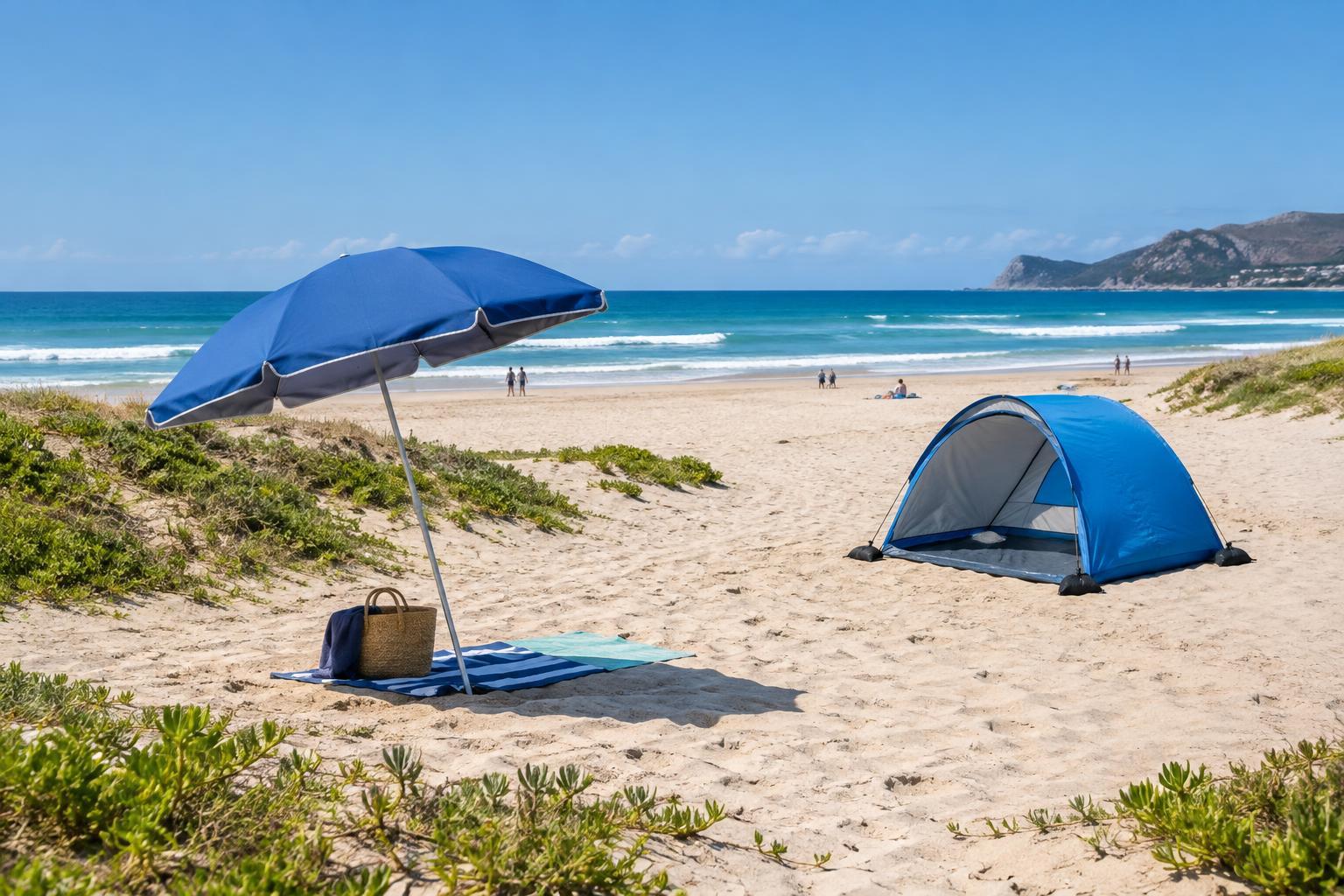
The best shade is the one you can carry, set up securely and use throughout your visit. Before choosing between an umbrella and a pop-up shelter, think about how far you will walk from the car, how many people need to sit in the shade and whether you expect to stay for an hour or most of the day. A quick swim with a small bag calls for different gear from a family outing with lunch, towels and a cooler.
Space matters too. On a busy stretch of South African shoreline, a broad shelter may be awkward to place without crowding a walkway or another group. A smaller umbrella can be easier to fit among other beachgoers. On a quieter beach, a shelter’s larger footprint may be welcome, provided its use is permitted and you can position it clear of access routes, dunes and the reach of the tide.
Where an umbrella works best
A beach umbrella is usually the simpler choice when you want to travel light. It packs into a narrow bag, goes up with little practice and can be shifted as the sun moves. Its open sides also make it easier to keep an eye on the water and on people nearby. For one or two people, that flexibility may be more useful than having a large patch of shade.
Its limits become clear when the wind picks up or the sun sits low. The shaded area moves and may be smaller than it first appears; a tilted umbrella can also leave bags or legs exposed. Look for a sturdy pole and an anchoring method suited to sand, then follow the maker’s setup guidance. Do not rely on a shallow push into dry sand. If the umbrella starts rocking, lifting or turning, take it down rather than trying to hold it in place.
When a pop-up shelter earns its space
A pop-up shelter can be a comfortable base for a longer visit, especially when several people need a place for breaks, snacks and dry belongings. Models vary: some have open sides, while others have panels that offer more privacy and block low-angle sun. Check the packed size as well as the erected size. A shelter that opens easily in the garden may still feel cumbersome on a long walk over soft sand.
Pop-up does not mean windproof. A larger canopy catches the breeze, and closed panels can make that effect more noticeable. Use every recommended anchor point and any supplied sand pockets or suitable weights; keep the structure clear of other people. Practise folding it at home, since packing up can be the hardest part. If conditions are gusty, a compact umbrella may be easier to manage—or it may be better to skip portable shade altogether.
Treat shade as one part of sun protection
Neither option creates a fixed, fully protected zone. Sunlight reaches under open sides as the sun changes position, and light reflected from sand and water can add to exposure. Check the canopy’s stated sun-protection rating if one is provided, but do not treat fabric alone as a substitute for clothing, a hat and sunscreen used according to its label. Move seats and belongings back into the shade during the day rather than assuming the original setup still covers them.
For children or anyone who needs frequent breaks from the sun, favour a setup that is easy to adjust and comfortable to leave. Airflow matters in warm weather: a shelter with panels may feel stuffy if they block the breeze. Keep drinking water accessible, and remember that portable shade is a place to rest, not a reason to extend a beach visit beyond what feels comfortable.
Set up with the shoreline in mind
Before unpacking, look for posted rules about shelters, umbrellas and designated swimming areas; requirements can differ between beaches. Choose firm, level sand above the likely reach of the tide, without blocking a path or a lifeguard’s view. Avoid placing gear on dunes or vegetation. Wind and water conditions can change during a visit, so check your setup regularly and move or pack it away when necessary.
For a short, mobile outing, start with an umbrella you can anchor and reposition. For a longer stay with more people, consider a shelter if you can carry it, give it enough room and secure it properly. Whichever you choose, pack the anchors with the canopy, collect anything the wind dislodges and leave the sand clear when you go.