What is a Cape fur seal colony?
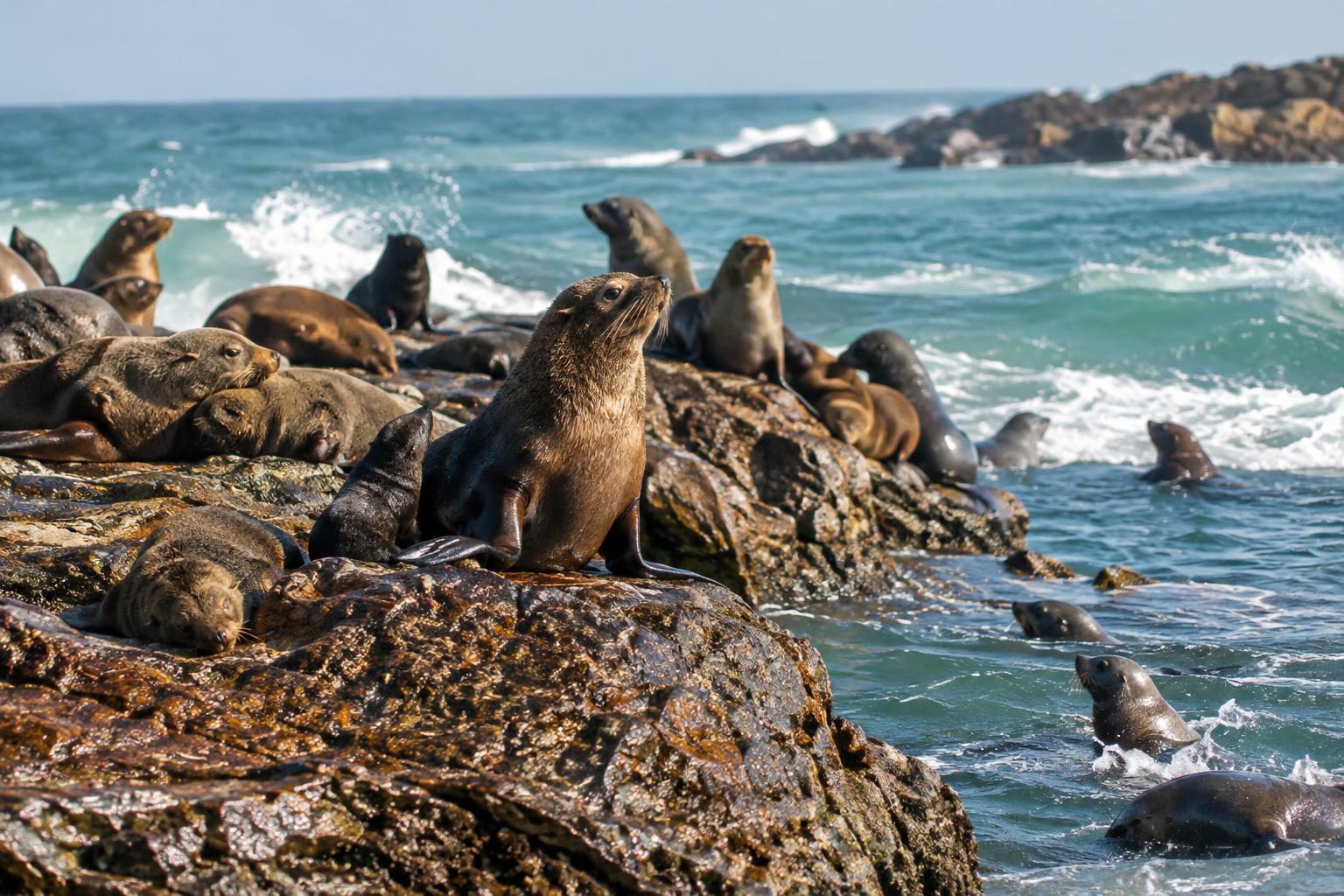
Cape fur seals gather along parts of the southern African coast, including islands and stretches of mainland shoreline. They are sometimes called Cape or South African fur seals. Unlike true seals, they have visible external ear flaps and can bring their hind flippers forward to move on land. In the water, their powerful front flippers help propel them through the waves.
A colony is a place where seals come ashore to rest, breed and raise pups. Depending on the site and time of year, visitors may see animals packed closely together or spread across rocks and beaches. The apparent bustle has a pattern: some seals are sleeping, others are returning from sea, and neighbours may be negotiating space. Because colonies are working habitats rather than attractions arranged for visitors, the best viewing experience begins with allowing the animals room to carry on undisturbed.
The rhythms of colony life
During the breeding season, adult males may compete for space and defend territories. Their displays can include loud calls, posturing and physical confrontations. Females give birth on land and nurse their pups, but they also need to leave the colony to feed at sea. A mother and pup use calls and other cues to find one another amid the noise and movement.
Outside the most intense breeding activity, a colony remains a place of arrivals, departures and rest. Seals feed at sea on prey that can include fish and squid, then return to shore between trips. Their routines are not synchronized for the benefit of an observer, so a quiet spell at a viewpoint is just as much a part of colony life as a noisy one.
Reading behaviour without jumping to conclusions
A seal lying motionless on a beach may simply be resting. Yawning, scratching, rolling over and jostling for a comfortable spot can also be ordinary behaviour. Calls serve different purposes, from keeping contact to warning a neighbour away. Watch the wider scene before deciding what a single movement means: a seal lifting its head repeatedly as people approach, for example, may be reacting to their presence.
Pups can appear to be alone while their mothers are away feeding. Approaching one to check on it may cause disturbance or make it harder for the pair to reunite. If an animal appears injured, entangled or in immediate danger, do not attempt to touch, move or feed it. Keep people and pets back and contact a local wildlife rescue organization or the relevant coastal authority for guidance.
How to watch responsibly
Choose a designated viewpoint or an existing path where one is available. Give seals generous space, stay well clear of pups, and never position yourself between an animal and the sea. If seals become alert, move away from you or change their behaviour as you approach, increase your distance. A camera zoom or binoculars can offer a better view without requiring a closer encounter.
Keep voices low and avoid sudden movements. Do not feed seals or leave food and litter where they can reach it. Follow local rules for pets; where dogs are allowed, keep them under close control and away from the colony. From a boat or kayak, avoid chasing seals, crowding an entry point or encouraging them to approach for food. A responsible operator should put the animals’ space ahead of a close photograph.
Planning a rewarding visit
Before setting out, check current access arrangements, viewing rules and sea conditions for the particular site. Some colonies are best seen from established lookouts, while others may be subject to restrictions that protect wildlife or visitors. Coastal paths and rocks can be slippery, and wind and spray can make a short stop feel exposed, so bring suitable footwear and a layer for changing conditions.
Allow time to pause and observe rather than rushing toward the closest animal. Notice how seals enter the water, how pups move through a group, and how neighbours respond when a newcomer arrives. Watching these small interactions from a respectful distance offers a fuller picture of colony life—and helps keep the shore a place where seals can behave naturally.