A food tradition shaped by Cape Town
Cape Malay food is part of Cape Town’s layered culinary history. Its roots lie in the cooking traditions of communities formed under colonial rule, including people brought to the Cape from parts of Asia and Africa. Over generations, cooks adapted ingredients and techniques to local kitchens. Today, the term describes a living food culture, not a single fixed menu or a promise that every cook makes a dish in the same way.
Spice is central to many dishes, but that does not necessarily mean intense chilli heat. You might notice warm, fragrant combinations alongside sweetness, acidity and savoury depth. If you are new to the cuisine, approach dish names as invitations to ask questions. A café version, a family recipe and a celebration meal may share a name while tasting quite different.
Savoury dishes worth recognising
Bobotie is one of the best-known dishes to look for: seasoned minced meat, often with a gently sweet-and-sour balance, baked beneath an egg-based topping. It is commonly served with rice and condiments, though recipes and accompaniments vary. Sosaties are marinated skewers, often made with meat and sometimes fruit or onion. Their marinade may bring together spice, sweetness and tang before the skewers are cooked.
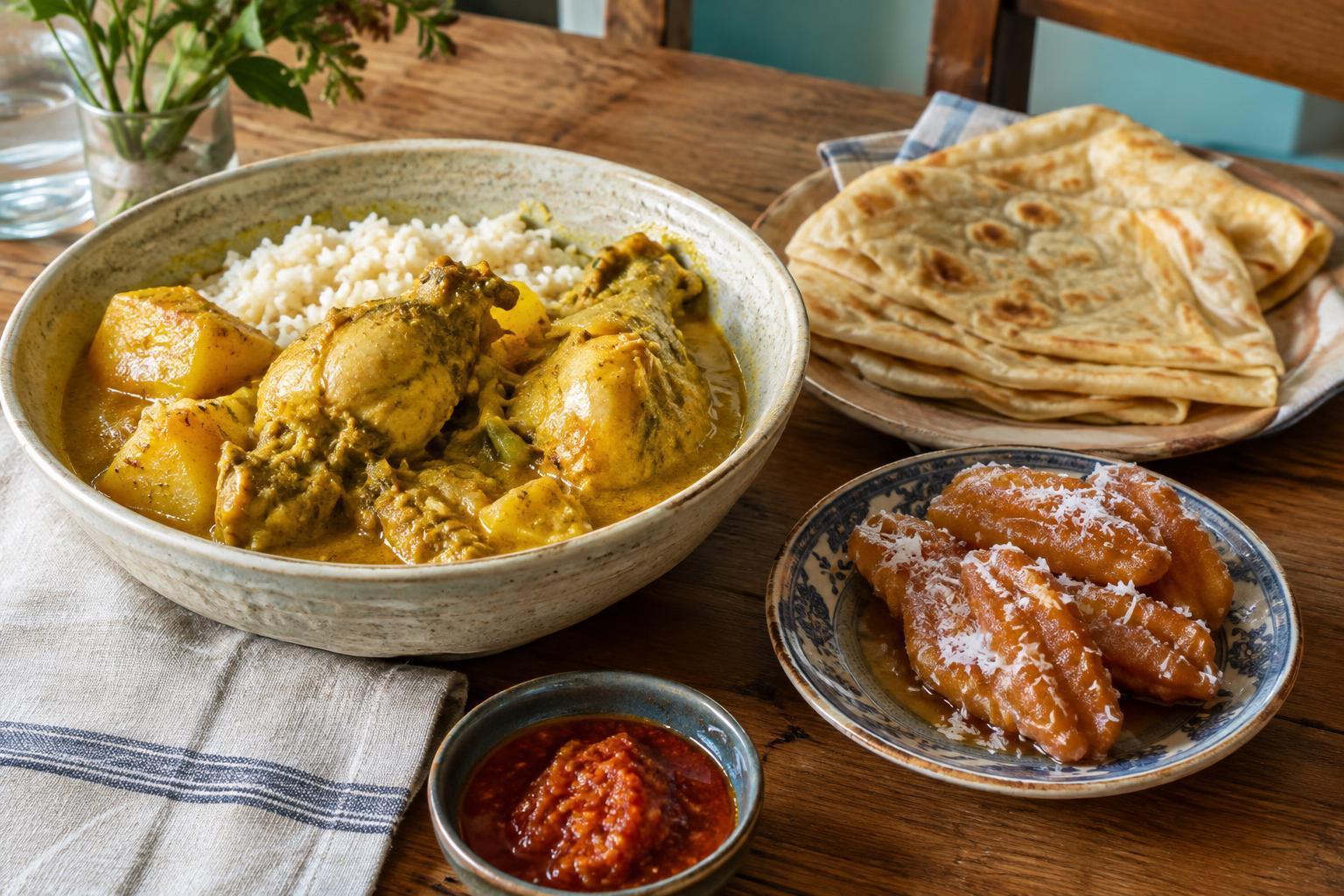
Bredie is a slow-cooked stew, with versions named for ingredients such as tomato or waterblommetjies, an aquatic plant used in Cape cooking. Denningvleis is another slow-cooked meat dish, known for its sweet-sour character. Curries are equally worth exploring: rather than expecting one standard “Cape Malay curry,” ask what is in the pot that day. The protein, vegetables, spice blend and level of heat can all change from one kitchen to another.
Snacks, breads and something sweet
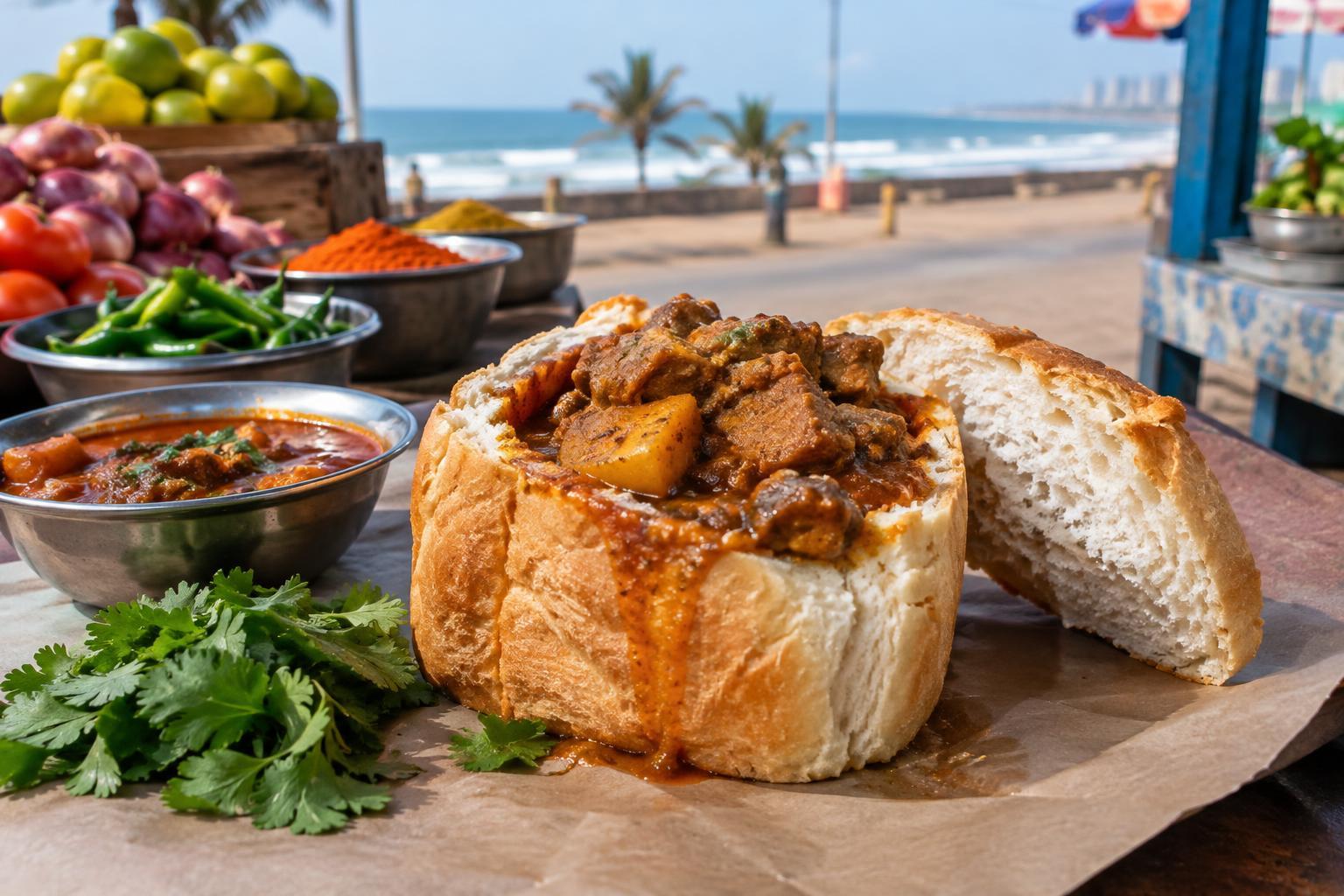
Samoosas make an easy introduction when you want a small savoury bite. These crisp pastries can hold meat, vegetables or other fillings, so check rather than guessing what is inside. Roti is a useful companion to a curry, while a salomie generally refers to a curry-filled roti wrap. Depending on the place, it can be a practical lunch to eat on the go or a meal best tackled sitting down.
For a sweet treat, look for Cape Malay koesisters. These spiced, syrup-coated doughnuts are commonly finished with coconut. They are distinct from the plaited koeksisters also found in South Africa, even though the names look similar. Boeber, a sweet milk drink or dessert made with vermicelli and spices, is another name to know. You may encounter it particularly in connection with Ramadan, but availability depends on the kitchen and occasion.
How to explore without treating a neighbourhood as a menu
Bo-Kaap is closely associated with Cape Malay heritage, but it is also a residential neighbourhood. Its streets are not simply a backdrop for food photographs. If you visit, keep entrances clear, ask before photographing people and treat homes and places of worship as private or community spaces. A meal, a cooking class or a conversation with a willing host can offer more insight than a hurried stop for a single famous dish.
Cape Malay cooking is not confined to one part of the city, and not every dish associated with it originated exclusively within the community. Choose places because their food and approach interest you, rather than expecting one venue to represent an entire tradition. Menus, opening hours and access can change, so confirm practical details directly before setting out.
Ordering with curiosity
Start with a dish that sounds familiar, then try something less familiar alongside it. A curry and roti might help you notice how a kitchen builds flavour; a koesister gives you a different view of its use of spice. If you are sensitive to chilli, ask about heat rather than assuming a fragrant dish will be mild. If you have dietary requirements, confirm ingredients and preparation with the venue, including whether a particular dish meets your needs.
Most of all, leave room for variation. The most useful question may be “How do you make yours?” rather than “Is this authentic?” It gives the person preparing or serving the food space to describe their version. That small shift turns a checklist of dishes into a more rewarding way to explore Cape Town’s food scene.