Start with the feeling, not the empty wall
It is tempting to treat every bare wall as a space to fill. In a coastal home, though, an unadorned stretch can be part of the pleasure: it gives the eye somewhere to rest after a bright day outdoors. Before buying or hanging anything, decide how you want each room to feel. A living area might welcome conversation and a few layered memories, while a bedroom may feel better with one quiet image and plenty of open space.
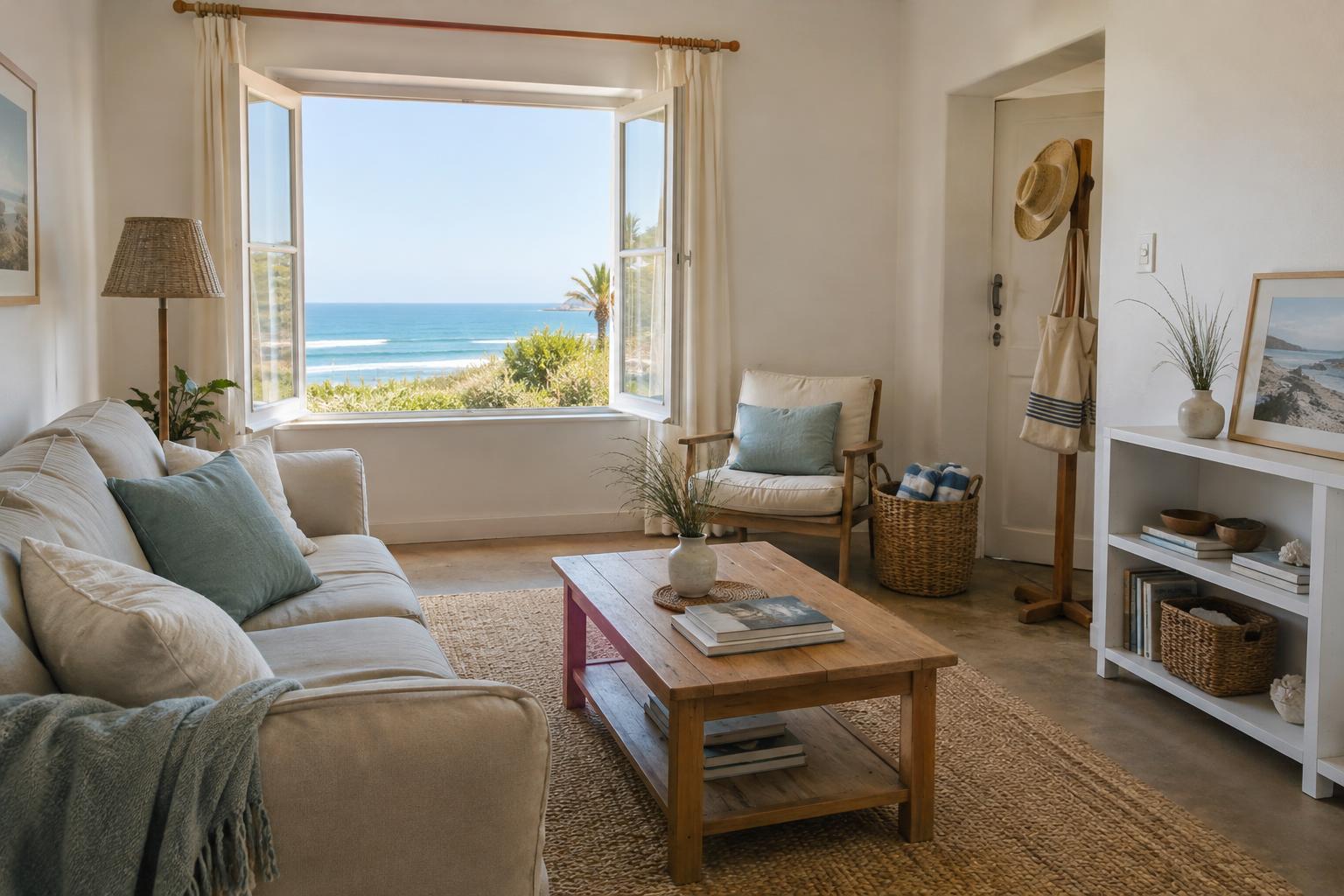
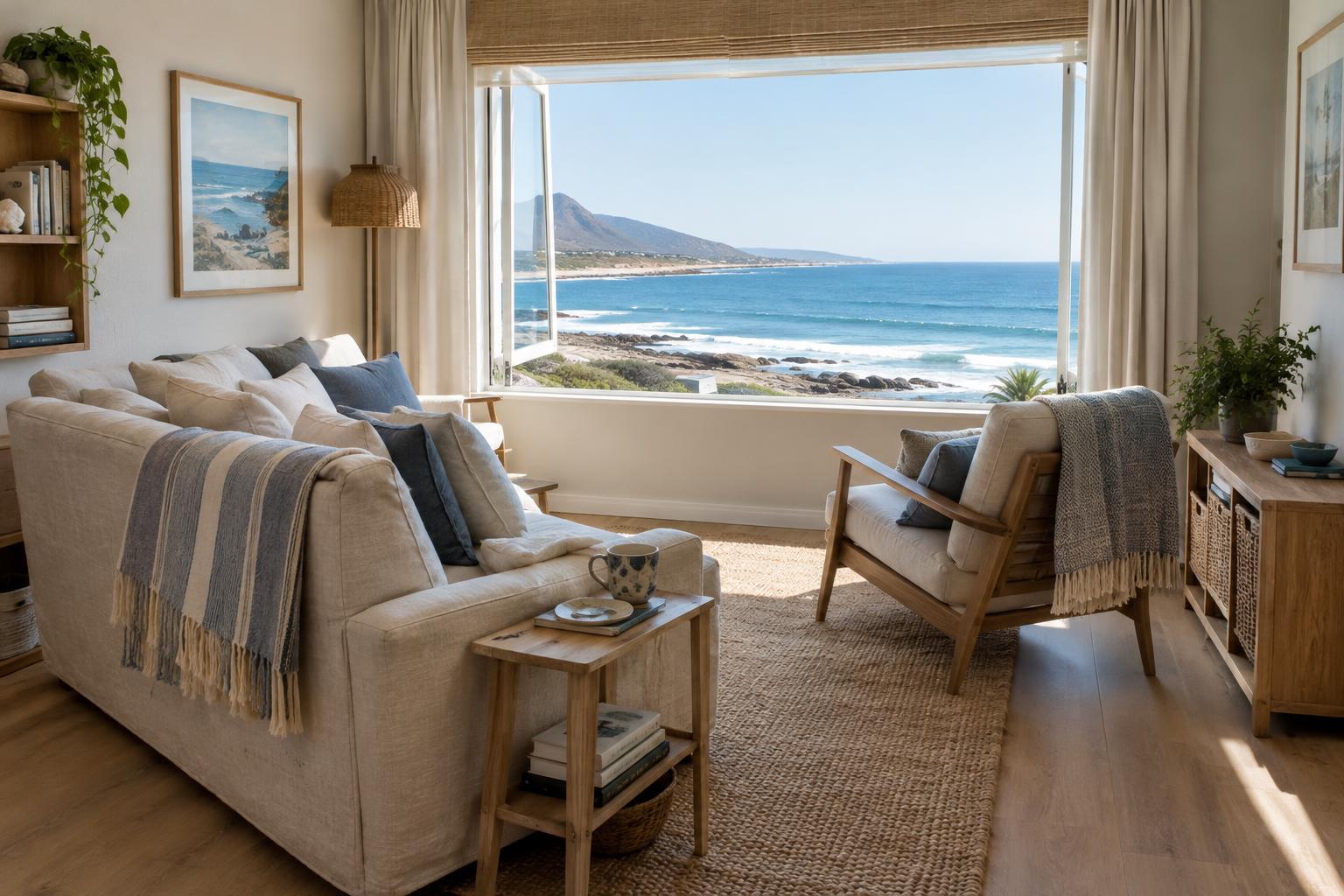
Walk through the room and notice what already draws attention. A sea-facing window, a textured rug or a colourful sofa may be doing much of the visual work. Art can support those features rather than compete with them. If you have several pieces in mind, choose one place to be the main display and let nearby walls remain simpler.
Choose a point of view that feels personal
Coastal style does not have to mean shells, anchors or a wall full of blue prints. A photograph of a familiar stretch of South African shoreline, a drawing of coastal plants or an abstract work that recalls the colour of wet sand can feel connected to place without illustrating it literally. Include pieces because you enjoy looking at them, not because they match a prescribed theme.
Personal photographs often carry more meaning than generic beach imagery. Look through your own collection for moments with a clear subject: a line of dunes, light on a veranda, or people gathered around a table after a beach day. You do not need to display every good memory at once. Choosing a few favourites makes each one easier to notice, and leaves you free to rotate others in later.
Give each piece enough space
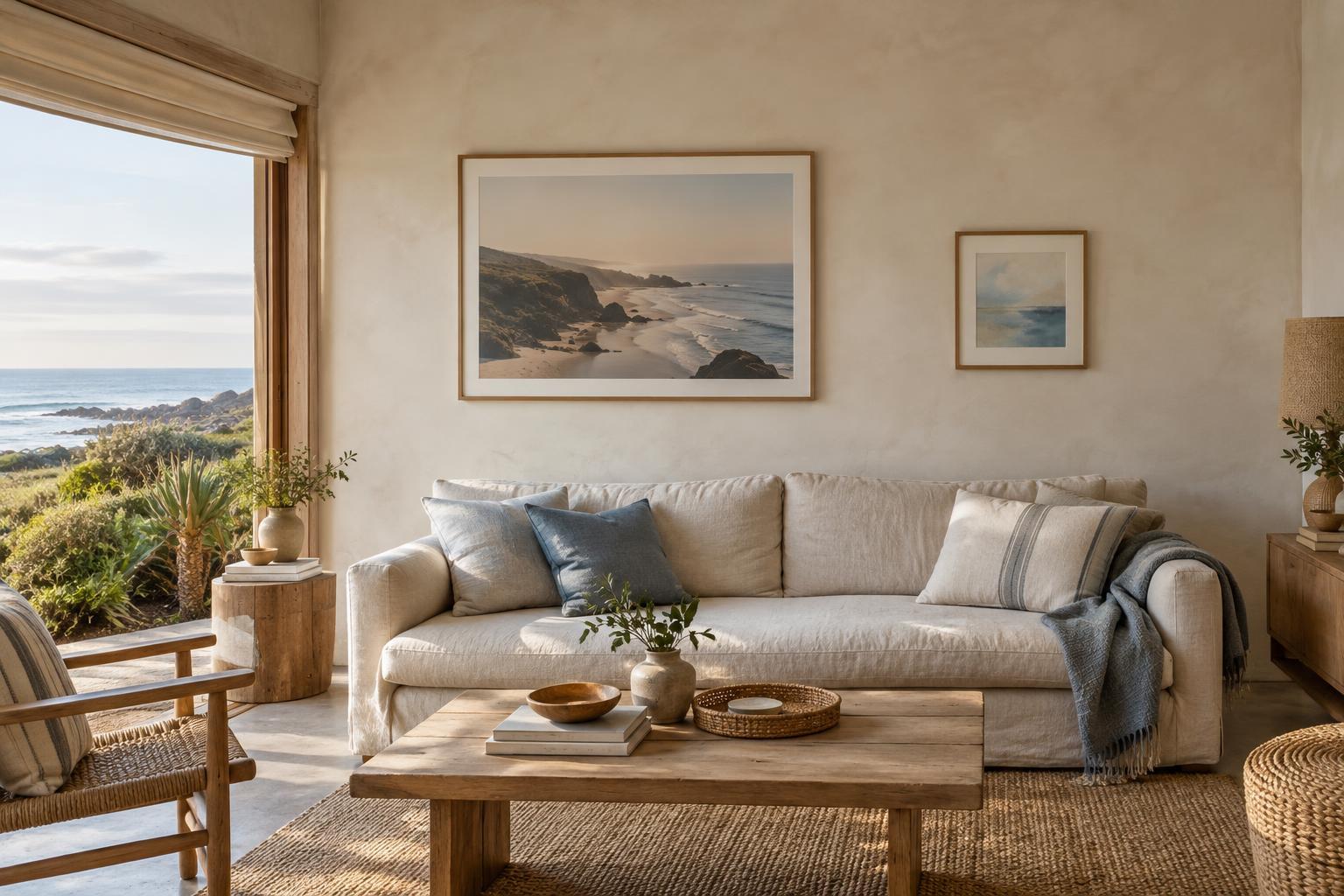
Scale matters as much as subject. A single substantial work can settle a wall more comfortably than several small pieces scattered across it. Above a sofa or sideboard, consider the furniture and the artwork together so they read as one arrangement rather than two unrelated elements. On a narrow wall, one smaller piece with generous space around it may be all that is needed.
If you prefer a gallery wall, give it a clear boundary instead of allowing it to spread indefinitely. Lay the frames on the floor first, then adjust the gaps until the collection feels connected. A shared frame colour, a restrained palette or a common subject can help varied photographs and artworks sit together. You can also leave room within the arrangement for a future piece rather than trying to complete it in one afternoon.
Stand back and look at the whole room before making holes in the wall. The spaces between objects are part of the composition. If your eye jumps from frame to frame without finding a place to pause, remove a piece or move part of the collection to another room.
Let materials and light do some of the work
Frames need not be identical, but their finishes should feel comfortable alongside the room’s other materials. Pale timber can sit gently with woven textures; a dark, simple frame can give a soft photograph definition. Mats can create breathing room around a small image, especially when it sits among larger works. Before ordering a print, test its approximate size on the wall with a paper template so the finished piece does not feel unexpectedly tiny or dominant.
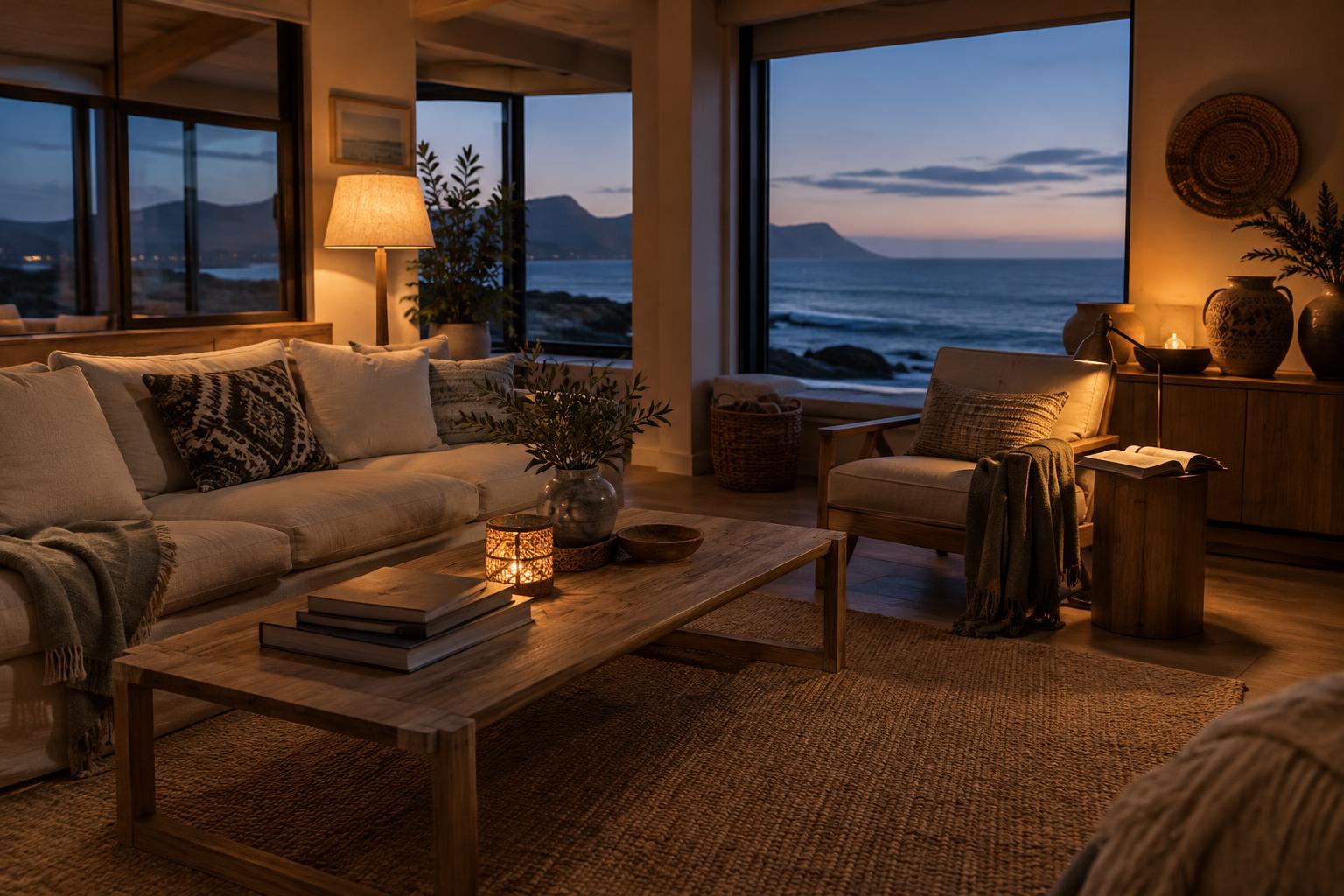
Coastal rooms can be bright, and direct sun may affect some artworks and photographs over time. Pay attention to where the light falls during the day, particularly for pieces you would be sad to see fade. Keep treasured originals away from spots that receive strong direct sunlight; a replaceable print may be a more comfortable choice there. In areas exposed to damp air, choose frames and fixings with care and check them occasionally.
Edit slowly and live with the result
A home collected over time often feels more relaxed than one decorated all at once. Start with the works you already own, put them where you will enjoy them most, and wait before adding more. You may find that a wall you intended to fill looks better left open, or that one photograph belongs in a hallway where you pass it every day.
When a display begins to feel busy, try removing one or two pieces before changing anything else. Store them safely and revisit the arrangement after a while. The aim is not a perfectly sparse room; it is a home where art, photographs, views and everyday life each have space to be appreciated.