Begin with a feeling, not a theme
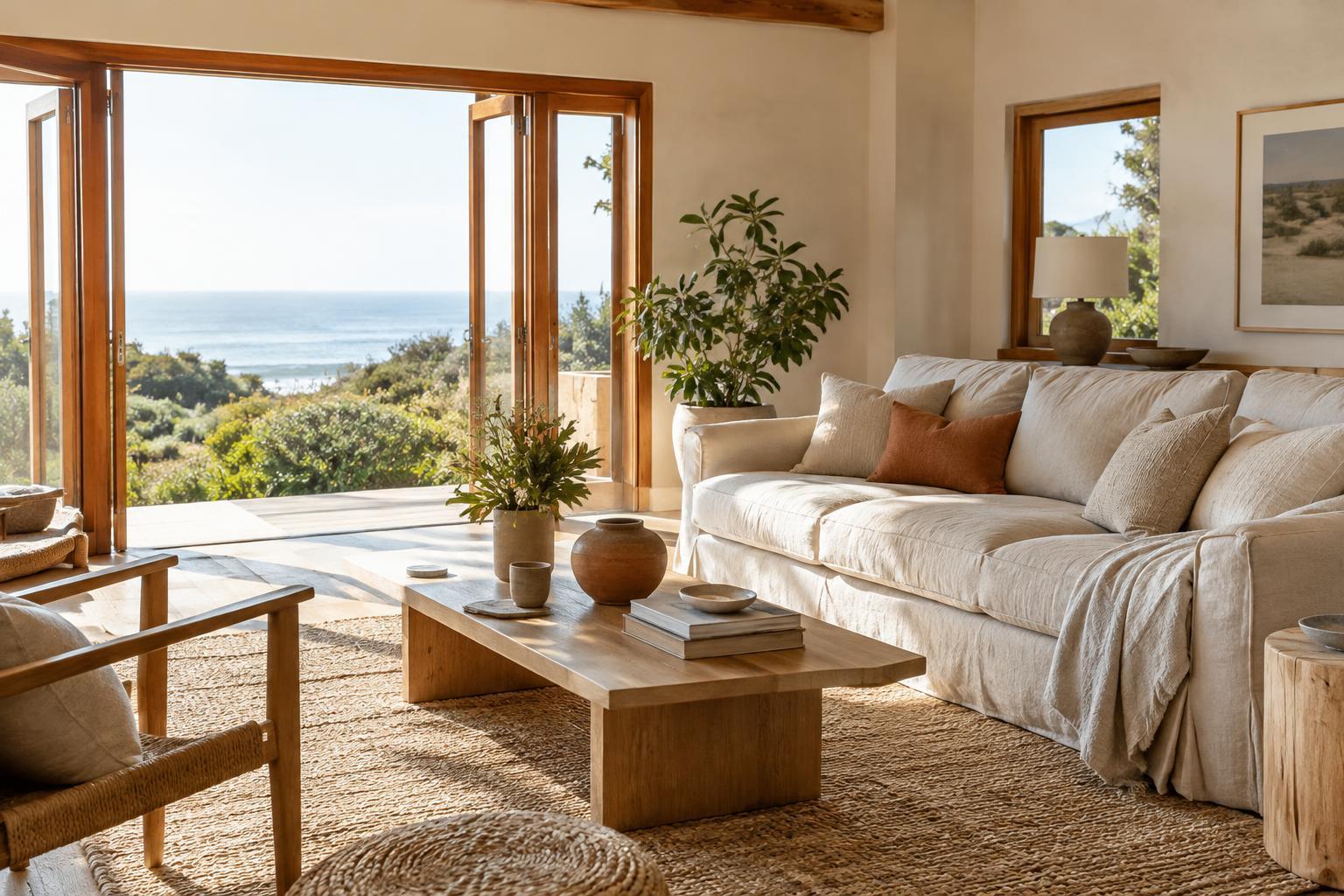
Coastal style is often reduced to rope, anchors and navy stripes. Those details can be fun, but they are not what makes a room feel easy to live in. Think instead about the qualities you enjoy beside the sea: open space, natural light, comfortable places to sit and surfaces that do not demand constant fussing. You can bring those qualities into a home whether you overlook the water, live inland or have only one small room to work with.
South Africa’s coastline offers more than one visual reference. A sheltered KwaZulu-Natal beach, a rocky Cape cove and a windswept stretch of the West Coast suggest different colours and textures. Choose a place or mood that means something to you, rather than trying to reproduce a generic beach house. A few well-considered choices will usually feel calmer than a room full of objects competing to announce the theme.
Build a flexible palette
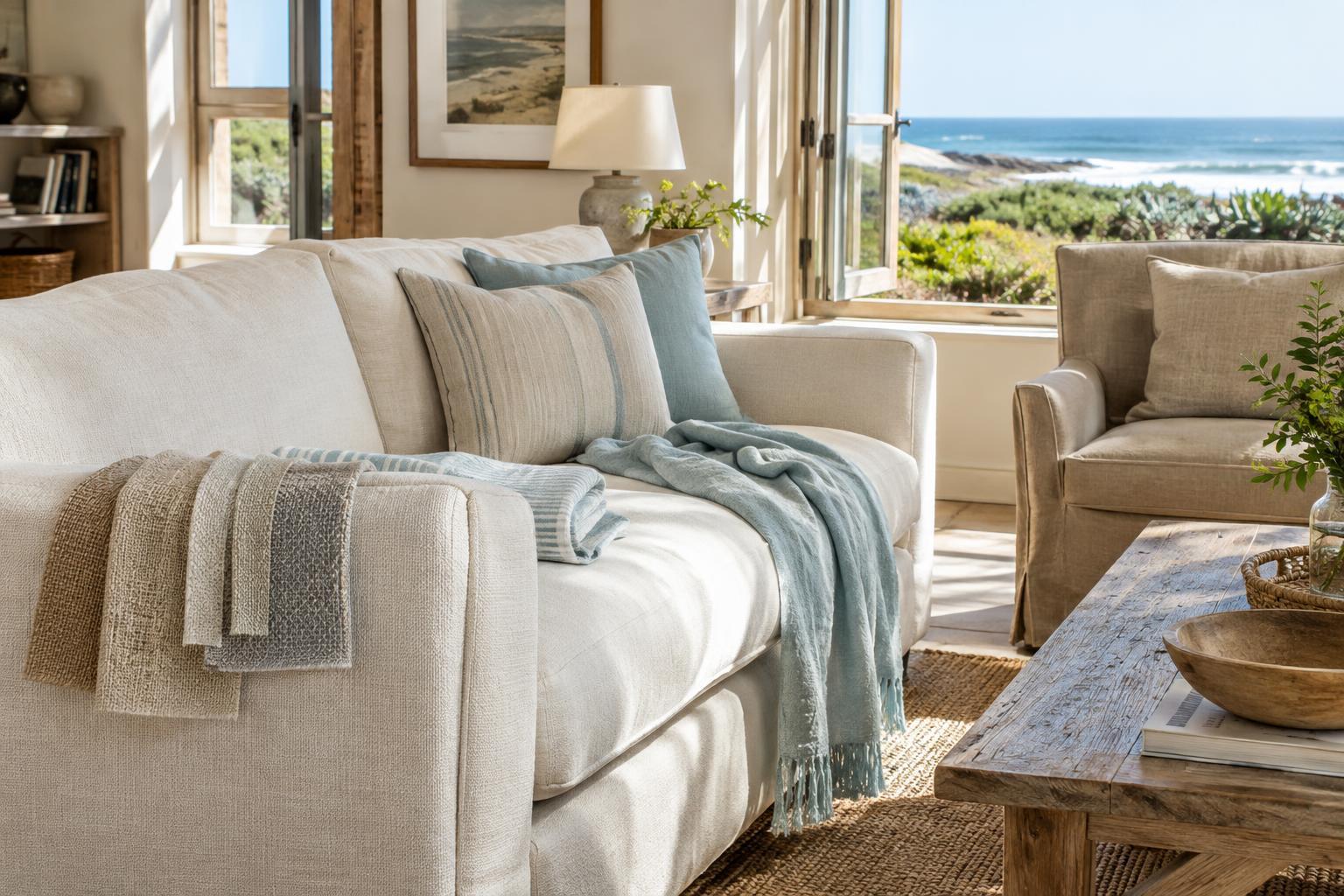
Start with the colours already present in your home, especially the flooring and any large furniture you plan to keep. Warm off-whites, sandy neutrals and soft stone shades make useful backgrounds because they sit comfortably alongside timber, woven pieces and greenery. They also leave room for a deeper accent: sea-glass green, muted blue, clay or the darker tones of coastal rock. You do not need all of them. Two or three connected colours are enough to give a room direction.
Before painting, look at samples in the room during the day and after dark. Bright sunlight can make a pale shade look washed out, while a cooler colour may feel less welcoming in a shaded space. If a full repaint is not possible, use a cushion cover, throw, lampshade or piece of art to test a colour. These smaller changes are easier to reconsider as you learn what works with your light.
Let texture do the coastal work
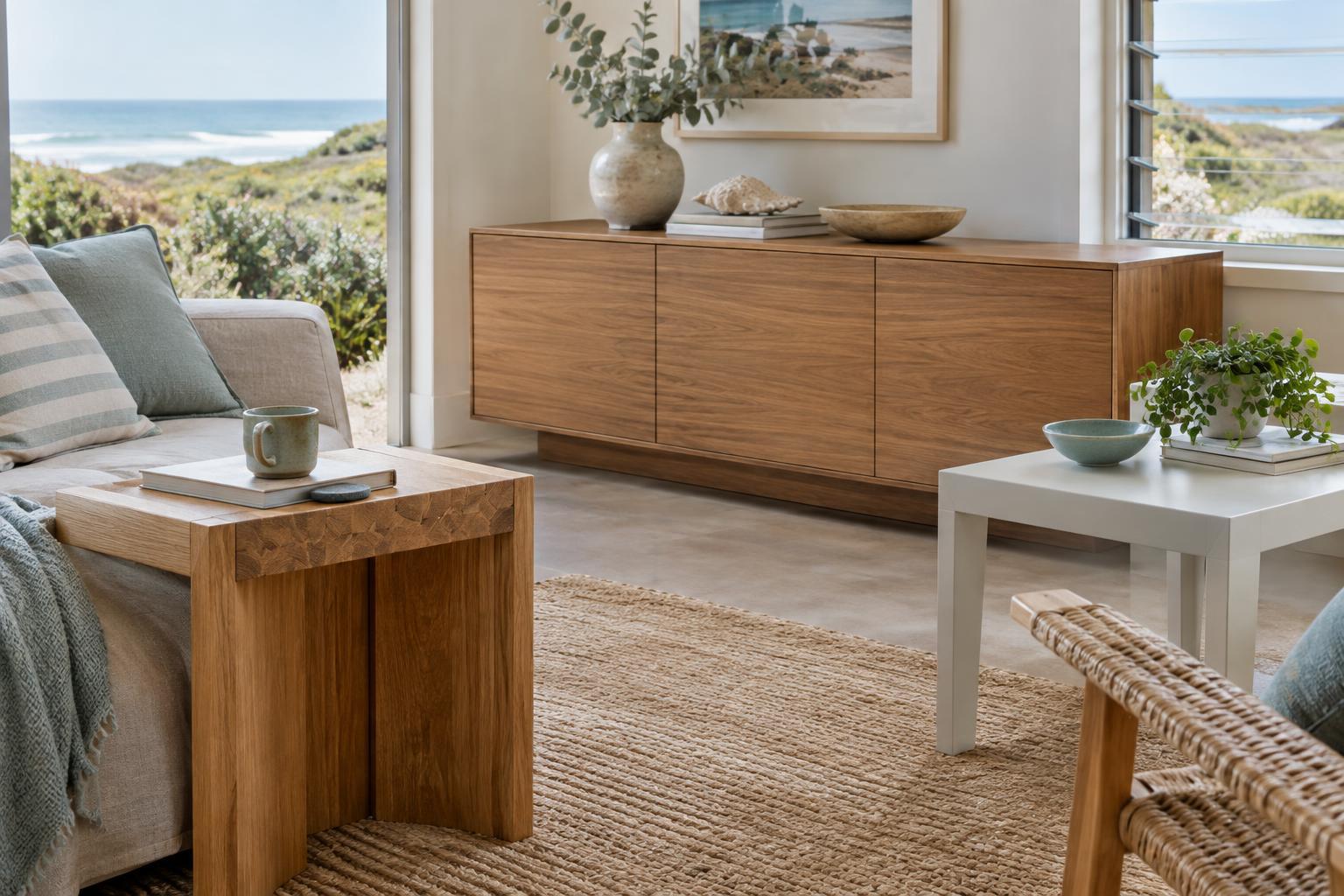
A room can feel coastal without a single seashell on display. Linen-look fabrics, cotton, timber, cane and woven baskets add the variation that makes a simple palette interesting. Contrast is helpful: place a textured cushion against a smooth sofa, or a woven tray on a plain table. Leave some surfaces clear so those materials have space to stand out. The aim is a relaxed mix, not a matched set of beach-themed accessories.
Choose materials for how you actually use the room. A washable cotton cover may suit a busy family space better than a delicate fabric that needs careful handling. In a home exposed to salty air, damp or strong sun, consider how easy an item will be to clean, move and maintain before buying it. Airflow, window coverings and regular care matter as much as a material’s appearance; no furnishing is entirely free of upkeep.
Make room for everyday life
The most convincing coastal rooms make ordinary routines feel easier. Near the entrance, a basket for sandals and a place to hang a hat can be more useful than decorative signage. In a living room, keep a clear route between seats and give people somewhere to set down a drink. If space is tight, a storage bench or side table can do more than one job without crowding the room.
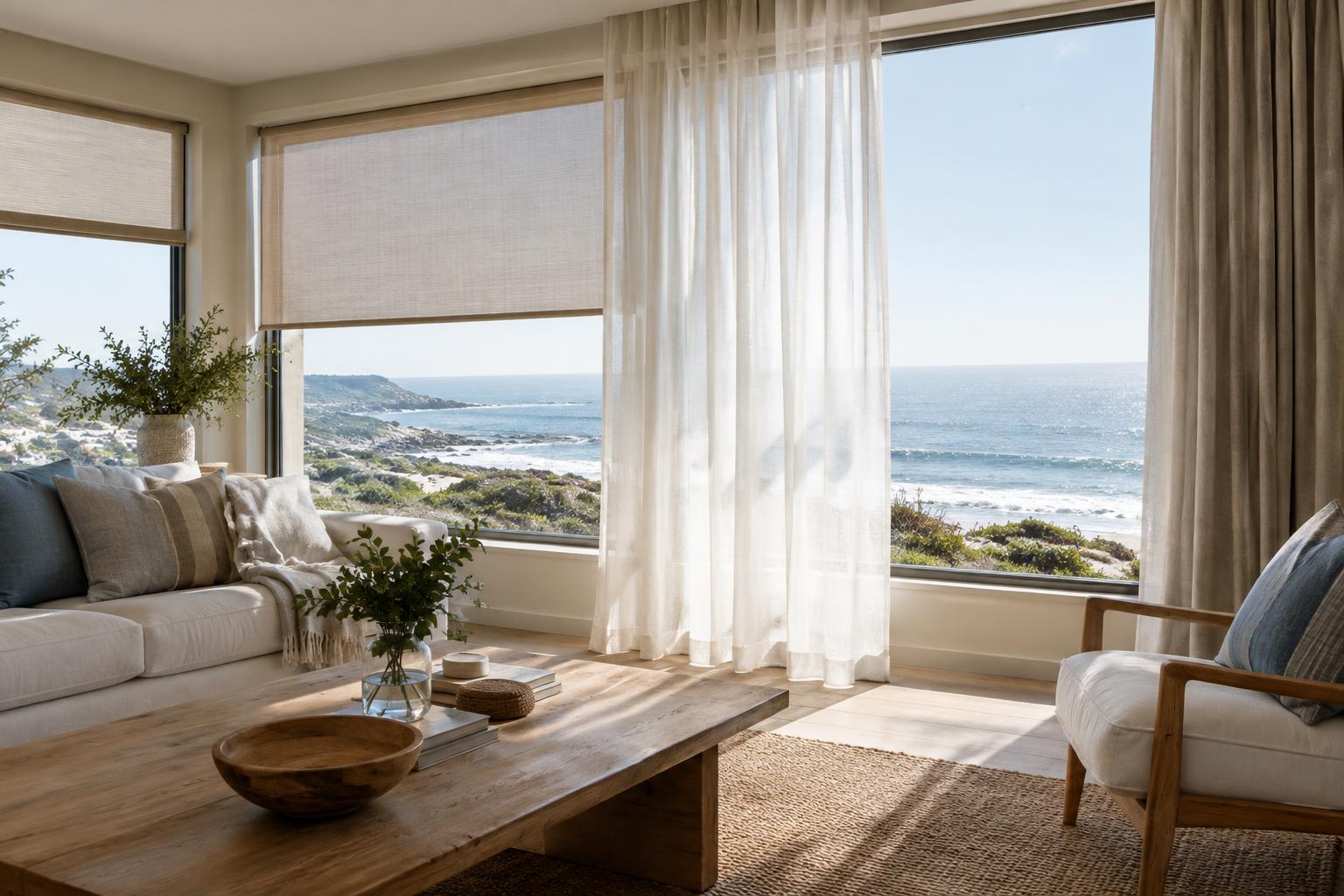
Lighting deserves the same practical attention. Keep windows as unobstructed as privacy and comfort allow, then add lamps where you read or relax. Sheer curtains can soften daylight, while a more substantial blind or curtain may help when glare becomes uncomfortable. These choices create a gentler atmosphere without assuming that every coastal home has large windows, an ocean view or the same climate.
Finish with details that belong to you
Personal objects keep a coastal interior from looking like a display room. Frame a photograph from a favourite shoreline walk, show a locally made ceramic piece you enjoy using, or choose artwork for its colours rather than its subject. One meaningful object often has more presence than several novelty decorations. If you collect natural finds, be mindful of local rules and habitats; leaving shells, plants and other materials where you found them is often the simplest choice.
Work slowly and begin with what you own. Rearrange furniture to improve movement, remove a few items that make the room feel crowded, and notice what still feels missing. Then add one layer at a time, whether that is a washable rug, a better reading lamp or a colour you have tested. Coastal style is not a shopping list. It is a comfortable balance of light, texture and practical choices that suits your home.