Choosing a theme instead of a sense of place
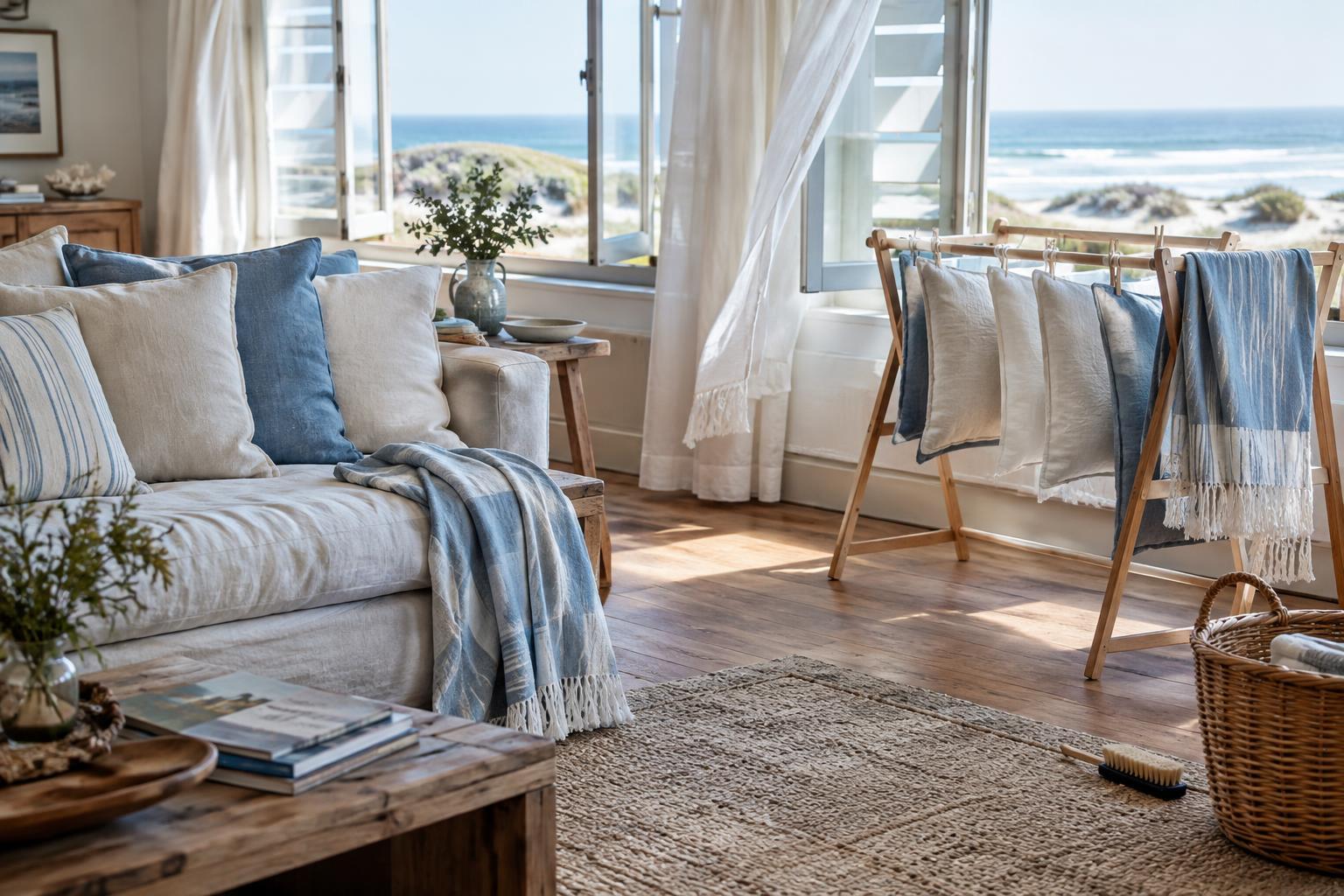
A common mistake is treating “coastal” as a shopping list: anchors, rope, shells, signs and blue-and-white stripes in every room. A few playful pieces can be charming, but too many compete for attention and make the home feel staged. Start with the feeling you want instead. A holiday home might call for open walkways, comfortable seats, soft light and a place to put down a sandy bag.
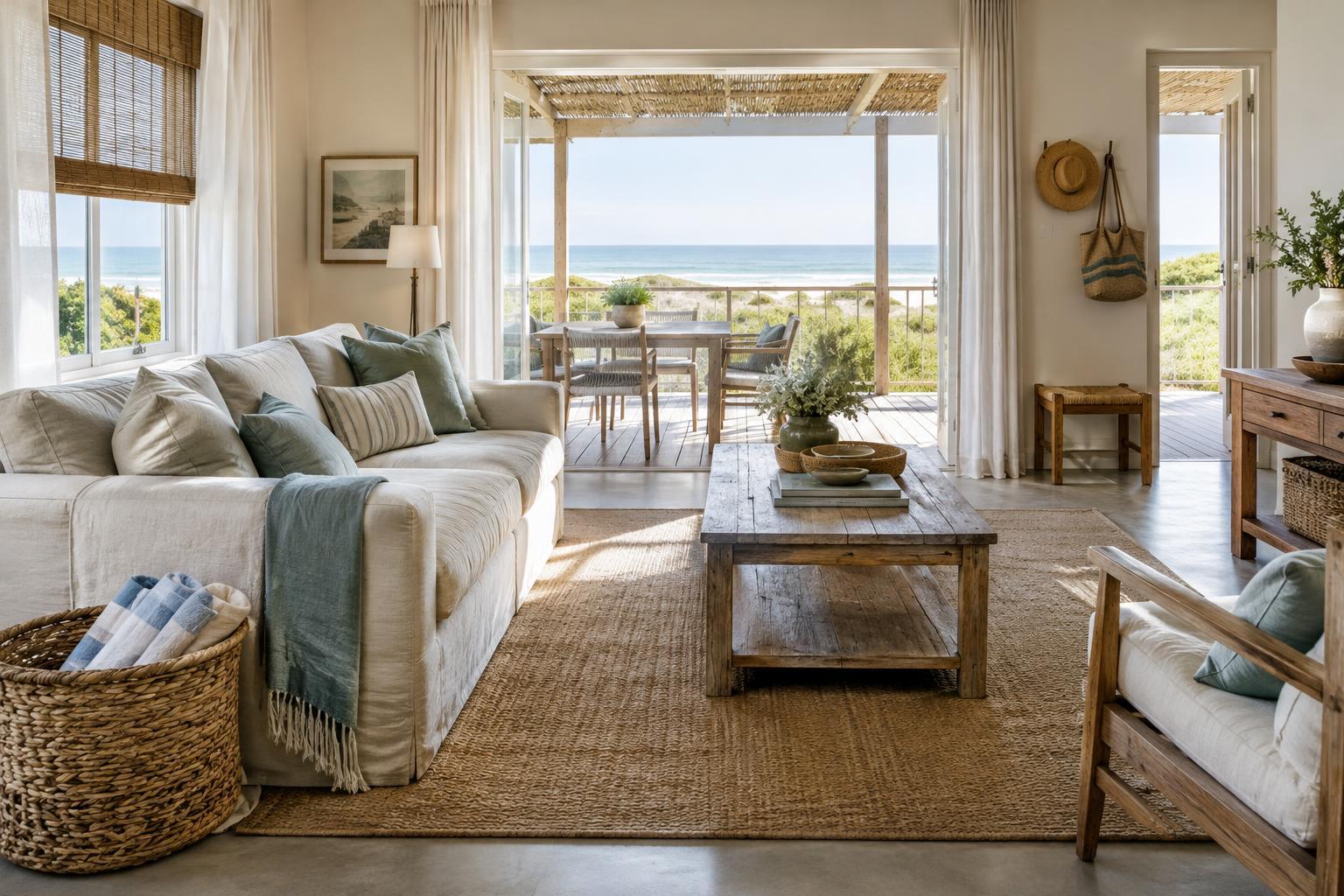
Let the setting guide your choices without trying to copy it literally. Along South Africa’s shoreline, one home may face a sheltered garden while another opens onto a windy view. Existing floors, natural light and the colours outside can suggest a palette more personal than a standard beach look. If you collect local art or handmade objects, give them room to stand on their own rather than surrounding them with more seaside decoration.
Picking finishes for looks alone
Salt air, damp towels, sunscreen and sand can be hard on a frequently used home. That does not mean every surface must be industrial, but a beautiful material becomes less appealing if it needs constant careful handling. Before choosing a sofa or dining chair, think about who will use it and how it will be cleaned. Removable, washable covers may be more useful than delicate upholstery; a forgiving tabletop may suit shared meals better than one that marks easily.
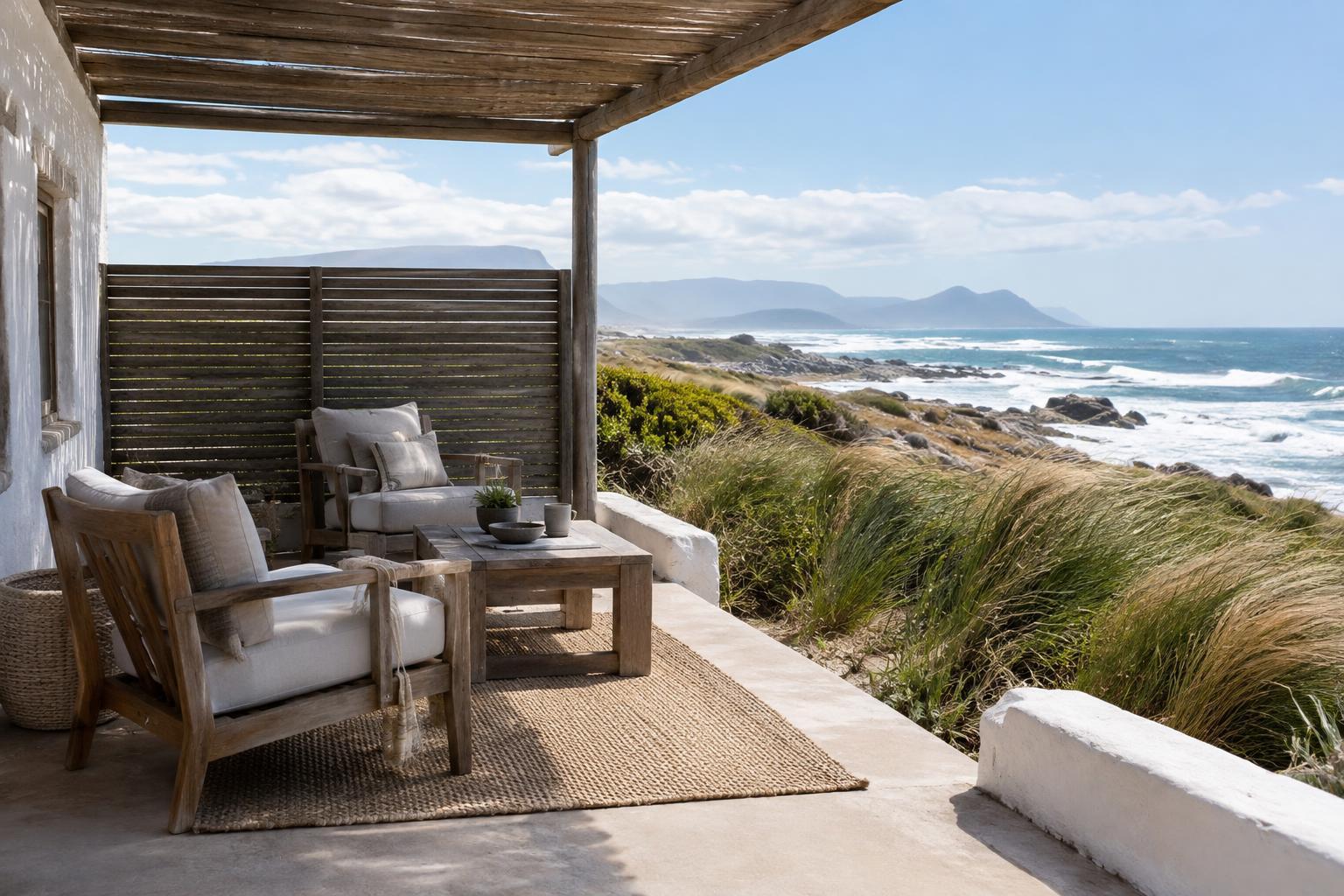
Be equally careful with finishes that are described as “weatherproof”. An item suited to a covered veranda may not cope as well in a fully exposed position, and products still need care. Check the maker’s guidance for furniture, fabric and hardware, particularly where sun, moisture or sea air reach them. Indoors, leave enough space around pieces to wipe floors and reach windows. Easy maintenance is part of a relaxed holiday, not a compromise on style.
Forgetting what happens after a beach trip
Many decorating plans focus on the view from the sofa and overlook the trip from the front door to the shower. Without an obvious spot for shoes, wet towels, hats and beach gear, those things end up across chairs and beds. A sturdy mat, hooks at a useful height and a basket for loose items can make an entrance work harder. Where space allows, provide somewhere to rinse or set down sandy belongings before they travel through the house.
Storage should be easy to understand, especially for guests who do not know the home. Keep spare towels where people expect to find them and reserve accessible space for their bags and groceries. Open shelves look airy, but using them for everything can create visual clutter and more surfaces to dust. A mix of closed storage and a few practical open spots usually works better than expecting every object to remain display-ready.
Squeezing in beds at the expense of comfort
It is tempting to maximise sleeping capacity in a holiday home. Yet a room that fits an extra bed but leaves no clear route to the door can be awkward every day. Before buying furniture, measure the room and allow space to move around beds, open cupboards and put down a suitcase. Bedside lighting and a reachable place for a phone or book often matter more to a guest than another decorative cushion.
The same principle applies in shared rooms. A large dining table is useful only if people can pull out the chairs, and a sofa should not block the easiest path to an outside space. Consider several ways the home will be used: a quiet morning, a rainy afternoon and a full house returning from the beach. Furniture that supports all three will generally earn its place.
Ignoring light, privacy and the need to rest
A bright, breezy room can be inviting by day and uncomfortable when early sunlight reaches a bedroom or neighbours can see straight in at night. Plan window coverings for the job each room needs to do. Bedrooms may benefit from better light control, while living areas might call for adjustable shade that preserves some daylight. Consider how curtains or blinds will work with windows and doors that are often opened for airflow.
Finally, avoid making the home so polished that guests feel afraid to use it. Layer practical lighting for cooking, reading and evenings together; add enough comfortable seating; and keep clear surfaces for ordinary holiday routines. The most successful coastal interiors do not demand perfect weather or a perfectly tidy room. They give people space to arrive, settle in and enjoy being near the sea.