A food culture shaped by many kitchens
Durban’s Indian-influenced food is part of the city’s everyday life: found in family kitchens, takeaway counters, cafés and markets. Its roots include the food traditions carried by Indian indentured labourers and traders who arrived in Natal, as well as the ways later generations adapted recipes to local ingredients, tastes and routines. That history is complex, and the cooking that grew from it cannot be reduced to one spice blend or one signature dish.
For a visitor, the pleasure lies in noticing that variety. A curry served with rice may taste quite different from one tucked into bread, while two shops’ versions of the same dish can differ in heat, texture and seasoning. Rather than asking which version is the single authentic one, approach each meal as an expression of a particular kitchen.
What makes a Durban curry distinctive?
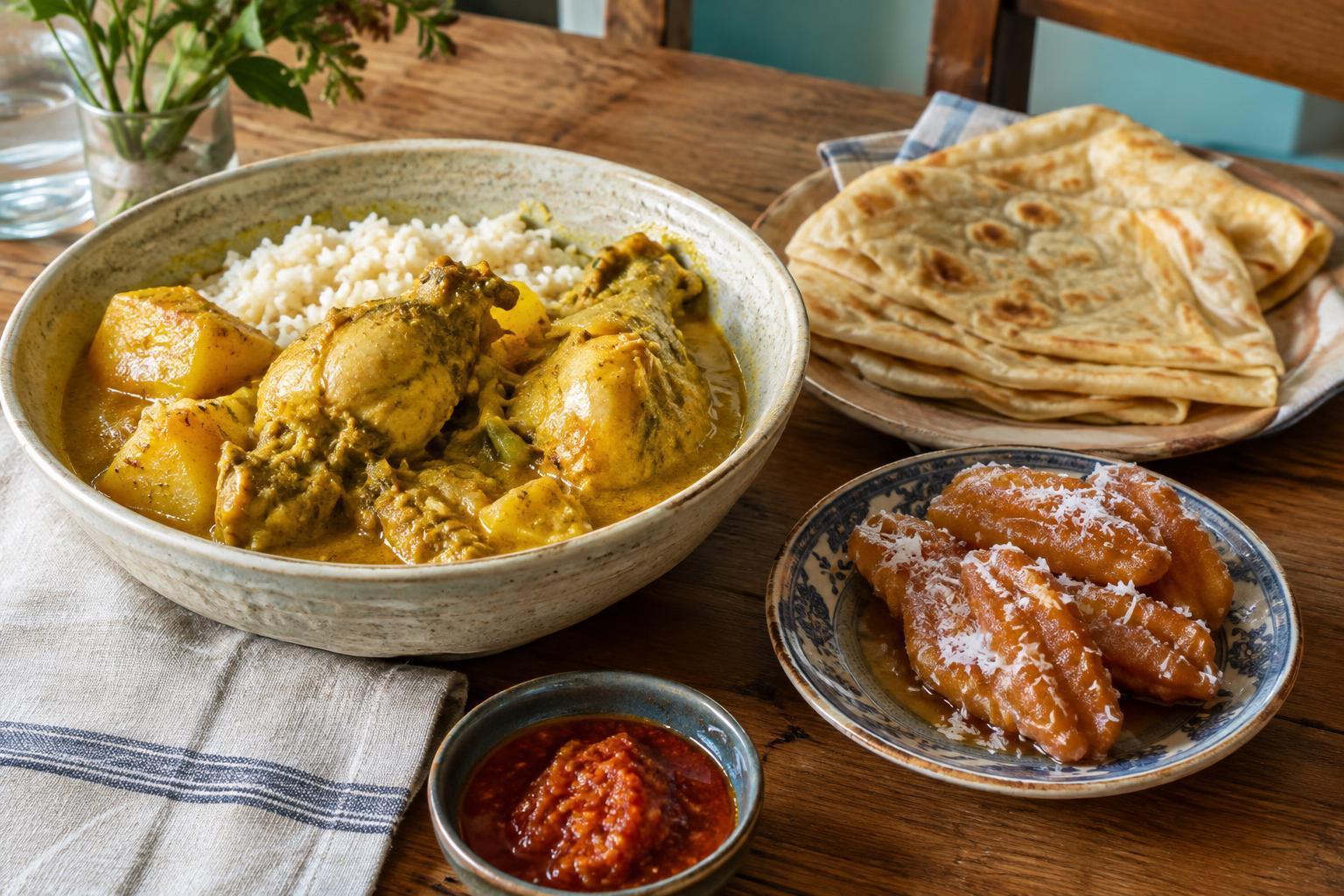
Durban curry is often associated with a bold, deeply seasoned sauce and a noticeable chilli warmth, but there is no fixed formula. Cooks may build flavour with onions, garlic, ginger, tomatoes and a combination of ground or whole spices. The balance matters as much as the heat: one curry may be bright and tangy, another rich and slow-cooked. Potatoes are common in some preparations, soaking up the sauce and making the meal especially satisfying.
Menus may offer beans, chicken, mutton or other fillings, each suited to a different style of cooking. A bean curry can be hearty without trying to imitate a meat dish. If you are unsure how hot a meal will be, ask before ordering; a shop’s idea of mild may not match yours. It is also worth asking what comes with the curry, whether rice, bread or another accompaniment, so you can choose a meal that suits your appetite.
Bunny chow: curry in a loaf
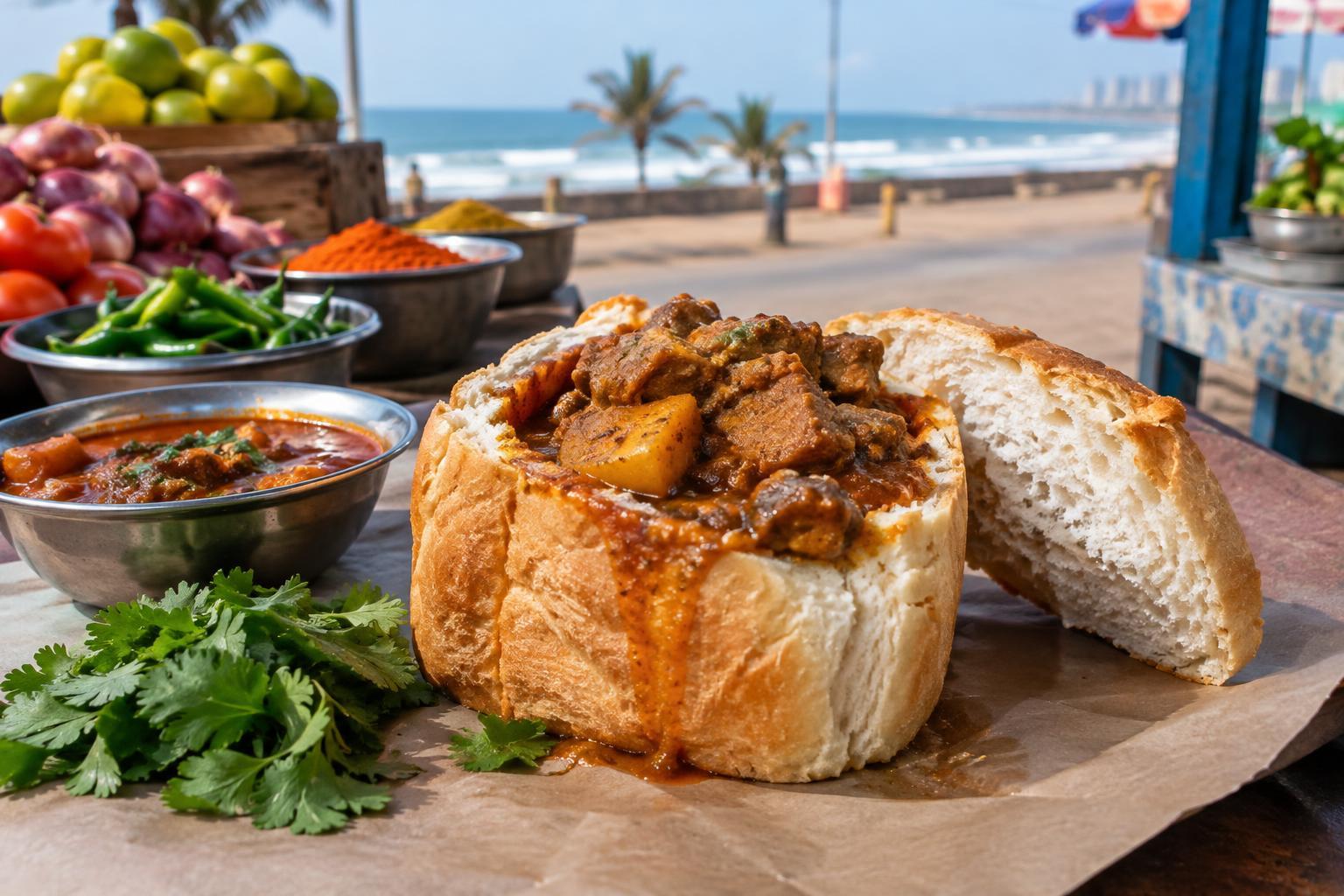
Bunny chow is Durban’s famously practical combination of curry and bread. A portion of a loaf is hollowed out, filled with curry and usually topped with the piece of bread removed from its centre. The bread is not merely a container. It catches the sauce, softens at the edges and becomes part of the meal. Despite its name, bunny chow is not a rabbit dish; the filling depends on what you order.
Portion sizes and fillings vary, so check the menu rather than assuming every bunny is alike. A smaller portion can make a good introduction, especially if you plan to try other foods during the day. Many people eat bunny chow with their hands, tearing off bread to scoop up curry, but there is no need to make a performance of it. Keep a napkin close, start at the top and give the sauce a moment to settle before carrying it far. A freshly filled bunny is best enjoyed before the bread becomes too soft.
Beyond the headline dishes
Curry and bunny chow deserve their reputation, but they are only a starting point. Depending on the kitchen, you might find savoury snacks such as samoosas, breads to pair with a curry, or sweet treats for later. A counter displaying several dishes can be a useful place to ask what was made that day and what the staff recommend. If a particular ingredient matters to you, including for dietary or allergy reasons, ask directly rather than relying on a dish’s name.
Leave room to notice how food fits into the wider outing. A quick takeaway can be ideal between coastal stops, while a seated meal gives you time to compare textures and flavours. Neither is a more correct way to experience the city. What matters is choosing a place that suits your plans and treating the people preparing and serving the food with the same curiosity you bring to the menu.
Plan a relaxed Durban food stop
A little planning makes a food-focused day easier. If you are heading to the beach afterward, consider whether you want a sit-down curry before the sand and sun, or a takeaway to enjoy somewhere suitable. Curry travels better in a secure container than in a bread loaf, and warm food should not be left in a hot car while you explore. Bring water, allow time to eat without rushing and expect that a saucy meal may call for more than one napkin.
Menus, opening hours and access can change, so check practical details before setting out. Once you arrive, let the available dishes guide you. Durban’s Indian-influenced food culture is rewarding not because every meal tastes the same, but because familiar ideas—spice, sauce, bread and hospitality—take on different forms from one kitchen to the next.