Know what you need to avoid before you order
A meal beside the sea should feel relaxed, but coastal kitchens often prepare fish and shellfish alongside other dishes. If you have a seafood allergy, the safest starting point is to know precisely which foods you need to avoid and what your own allergy plan requires. Fish and shellfish are different groups of foods; do not assume that being able to eat one means the other is safe for you. If you are unsure about your triggers, discuss them with an appropriate healthcare professional before your trip rather than testing a food while travelling.
Look beyond obvious choices such as grilled fish, calamari and prawns. Fish stock may appear in a sauce, while shrimp paste, anchovies or seafood-based seasoning can be less visible in a finished dish. Recipes vary from kitchen to kitchen, including for familiar favourites. A dish that was suitable at one café may be made differently at the next, so ask about ingredients each time.
Ask about preparation, not just the menu description
Cross-contact happens when an allergen reaches food that would not otherwise contain it. In a busy coastal restaurant, that might involve a shared fryer, grill, chopping board, knife, tongs or serving spoon. Fish and chips fried in the same oil as calamari are an obvious example, but a salad assembled on a seafood preparation surface may be harder to spot. Removing visible seafood from a plate does not make the remaining food suitable for someone who must avoid that allergen.
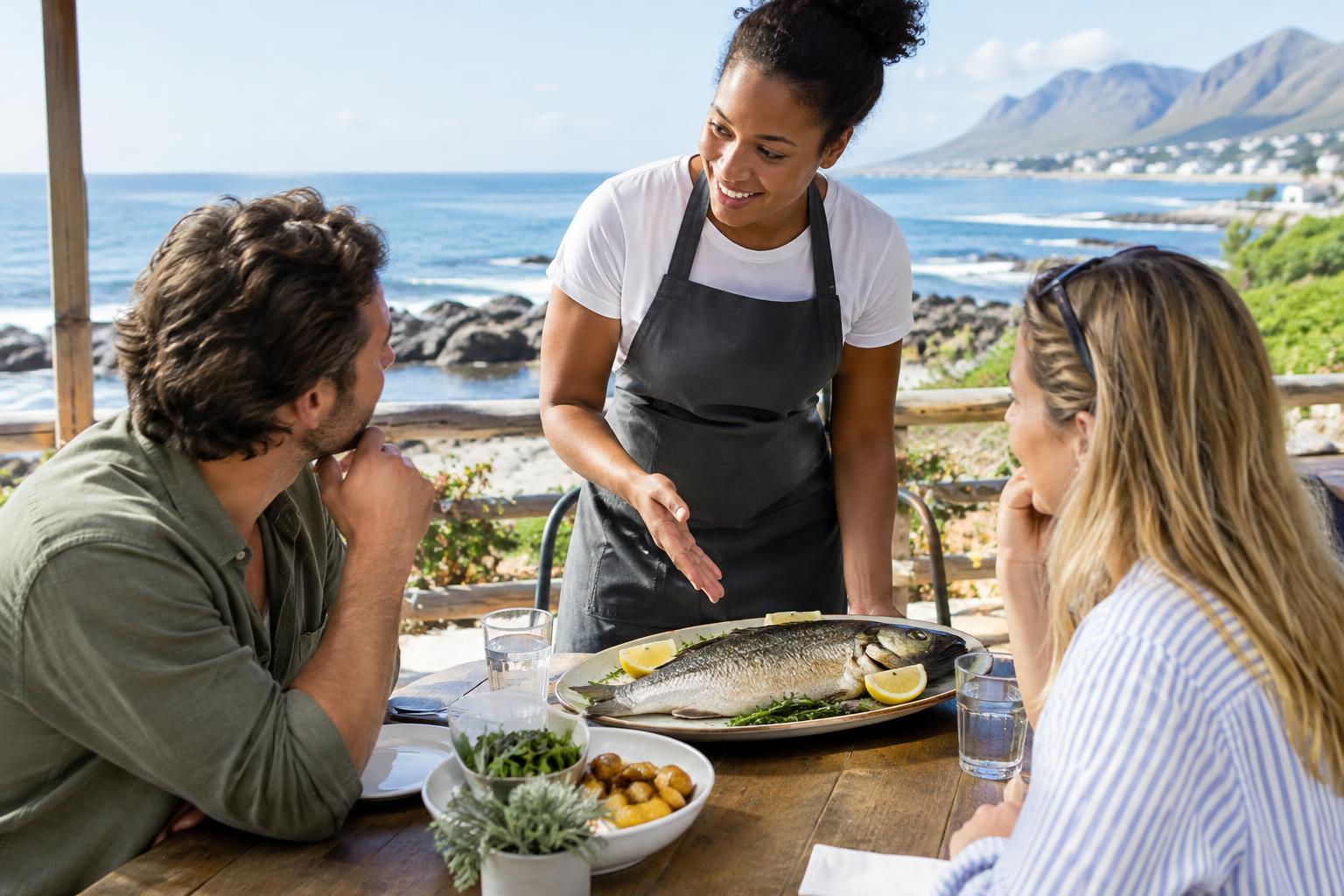
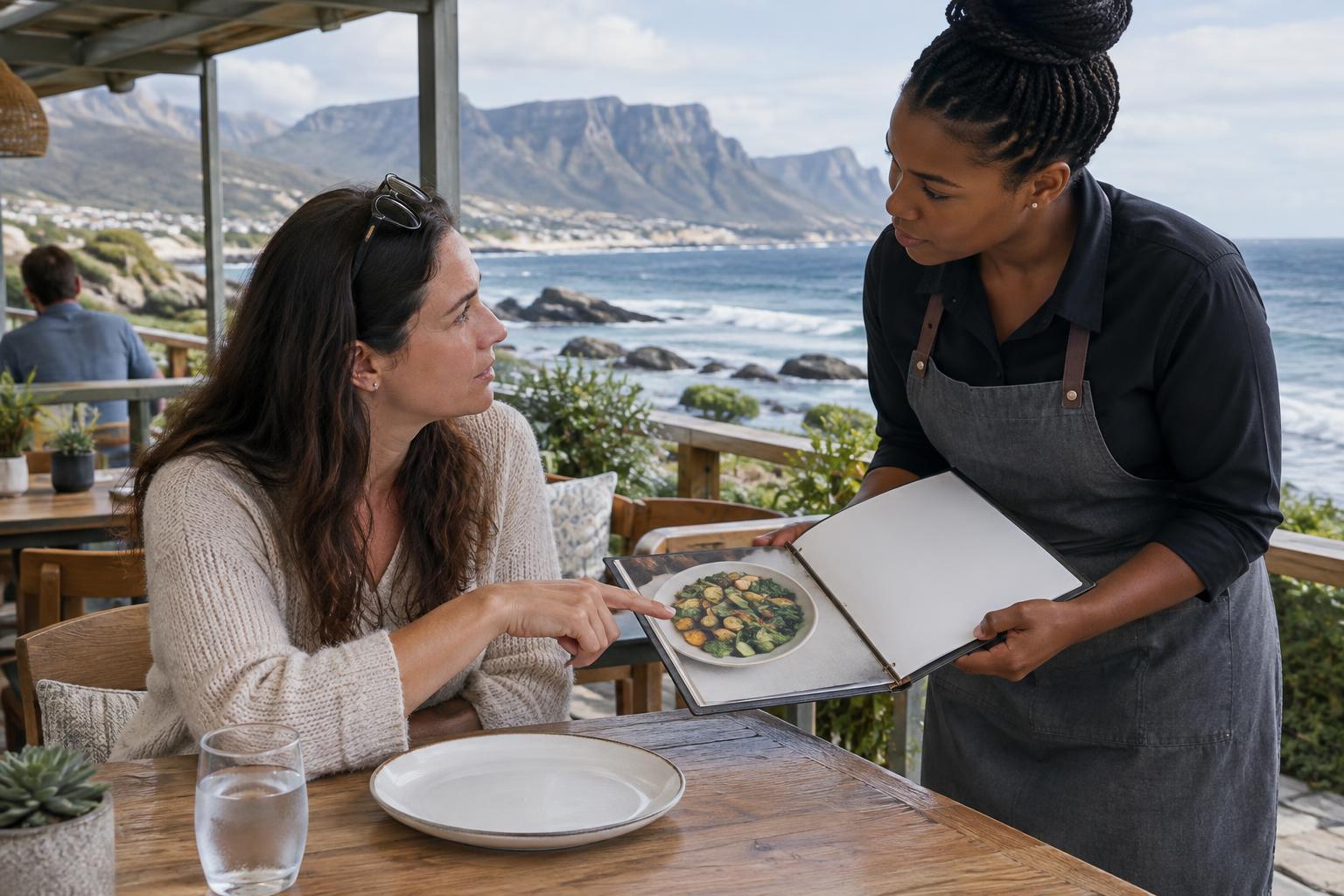
Tell your server clearly that you have a seafood allergy, name the specific foods you must avoid, and ask them to check with the kitchen. Useful questions include: Does the sauce contain fish or shellfish? Is this dish cooked in shared oil or on a shared grill? Can it be prepared with clean utensils and a separate surface? Ask about garnishes and condiments too. A confident-sounding guess is not the same as a checked answer; if details are unclear, it is reasonable to choose something else.
Choose a setting where staff can answer
A short conversation before sitting down can save frustration later. If a restaurant offers a small menu dominated by seafood, it may be difficult for its kitchen to prevent cross-contact, even when staff want to help. A non-seafood dish is not automatically a safer choice in that setting. Consider calling ahead when possible, especially for a group meal or a visit at a busy time, and explain what you need without expecting a venue to promise more than it can deliver.
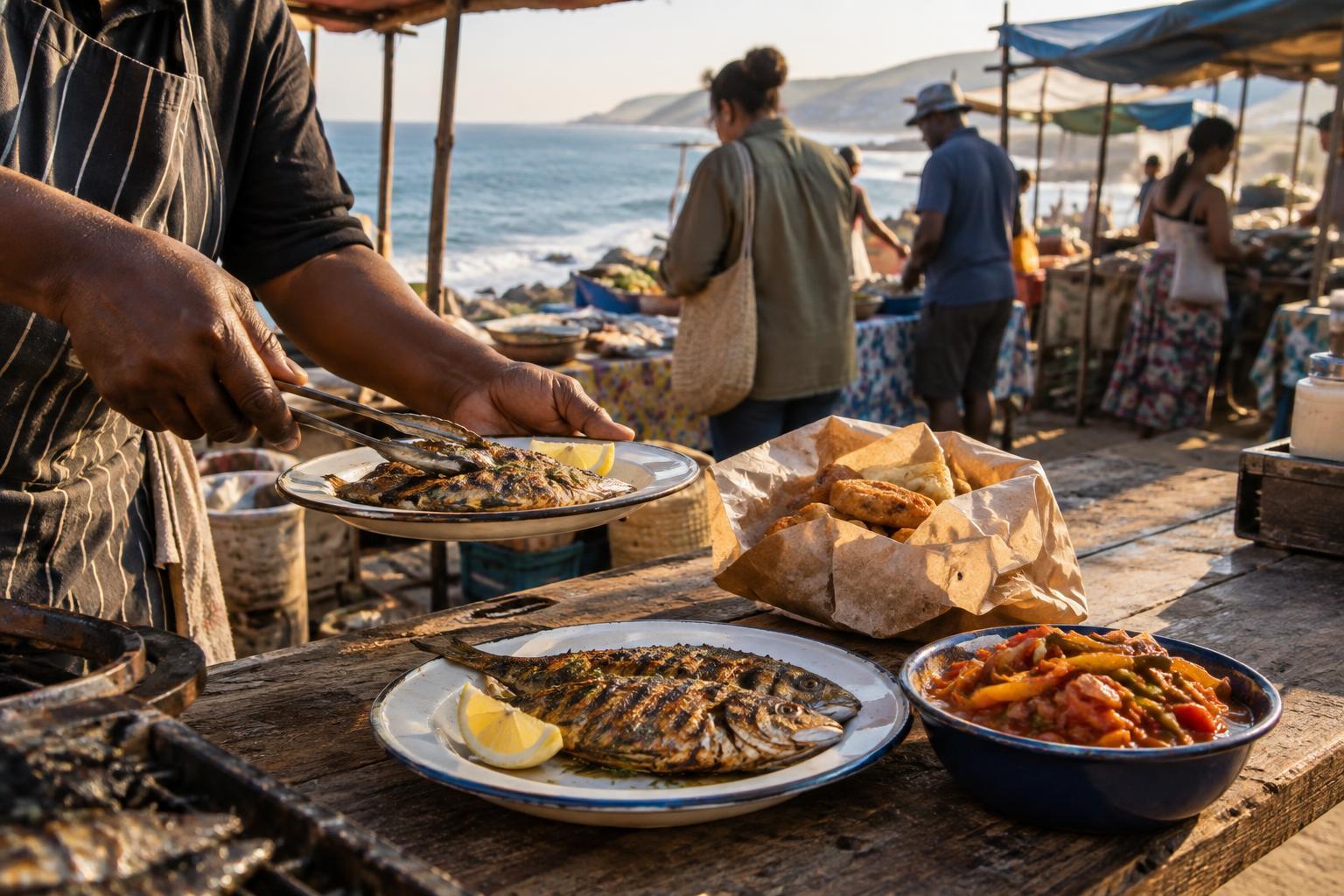
The same questions matter at takeaway counters, food stalls and casual beach cafés. Fried snacks may share oil, braai items may share a cooking surface, and ready-made sauces may have ingredients that staff need to check on the packaging. At a seafood market with nearby prepared food, also consider how food is handled and served. You do not have to make a purchase if you cannot get a clear account of the ingredients and preparation.
Make your needs easy to communicate
Keep your explanation direct and specific: “I have an allergy to prawns and other shellfish. Can the kitchen make this without shellfish ingredients or contact with shellfish?” Adjust the wording to match your own triggers. Saying only “I don’t eat seafood” can sound like a preference and may not prompt staff to check preparation. If you are ordering for a child, make sure the person taking the order understands which plate is theirs and what needs to be avoided.
Travelling with others can help when the group understands your needs, but it is still worth checking your own meal. Ask companions not to swap plates, share dipping sauces or use their seafood utensils on your food. If language or a noisy counter makes communication difficult, a short written note listing your allergens and cross-contact concerns may help staff relay the question to the kitchen. A note supports the conversation; it cannot replace a clear answer.
Keep the day flexible
Plan for the possibility that a kitchen cannot accommodate you. Packing a suitable snack can make it easier to leave and find another option without feeling pressured to accept an uncertain meal. Before heading to a quieter stretch of coast, think about where else you could eat if your first choice does not work out. Check current opening hours and menu details directly with venues rather than relying on an old listing.
Follow the allergy plan given to you by your healthcare professional, including any instructions about prescribed emergency medication. If you think you are having an allergic reaction, seek urgent medical help rather than waiting to see whether it passes. Being prepared does not require turning every meal into a worry: it gives you a straightforward way to ask, assess the answer and enjoy the coastal table when the arrangements meet your needs.