Start with the trip, not the room
A sea view is tempting, but the most useful question is how you want your days to unfold. Will you leave early for walks and return only to sleep? Do you picture slow breakfasts, midday breaks and evenings on a balcony? A short coastal stop may call for convenience, while a longer stay makes space, laundry access and somewhere comfortable to sit more important. Choose accommodation around those routines before comparing photographs.
Along South Africa’s shoreline, a place described as “near the beach” might still involve a steep hill, a busy road or a drive to a suitable swimming spot. Look at the location in relation to the beach access you expect to use, as well as shops, restaurants and the activities on your list. If you will not have a car, consider how you will arrive, buy essentials and get around after dark. The best address is the one that works for your plans, not simply the one closest to the water.
When a guesthouse suits the stay
A guesthouse can be a good fit if you prefer a smaller property and some help settling into an unfamiliar area. Depending on the property, hosts may be able to explain local routes, suggest places to eat or clarify what is nearby. Breakfast may be included, offered separately or unavailable, so check rather than assume. Guesthouses can work particularly well for a couple of nights when you want fewer decisions to make each morning.
The trade-off is that smaller properties may have limited reception hours, shared spaces or particular rules about arrivals and meals. Ask about check-in arrangements if you expect to reach the coast late. If privacy matters, check whether your room has its own entrance and outdoor area. If you are travelling with children or a group, confirm that the room layout gives everyone enough space rather than relying on a broad description such as “family-friendly”.
Why self-catering can make coastal days easier
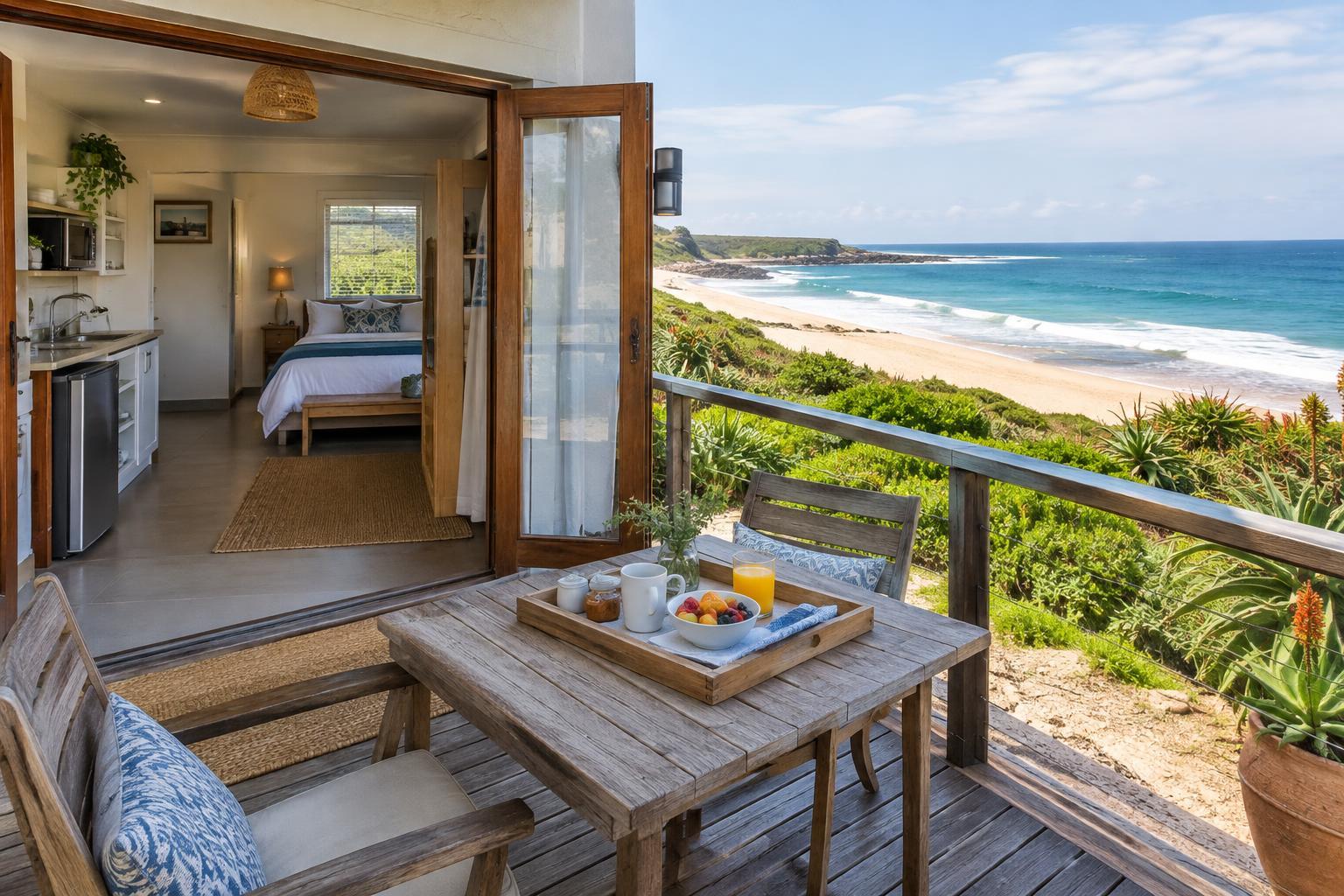
Self-catering accommodation gives you more control over meals and timing. It can suit families managing different appetites, friends sharing costs or anyone who would rather make breakfast before heading out. A kitchen is also useful when beach days end with sandy shoes and tired travellers who do not want another outing for dinner. For a longer stay, the ability to store groceries and prepare simple meals may be more valuable than a daily room service.
Look closely at what “self-catering” includes. A kettle and microwave offer a different stay from a full kitchen with a stove, cookware and dining space. Check whether linen, towels, cleaning supplies and parking are provided, and whether there are extra charges for cleaning or additional guests. If the property is in a residential building, ask about stairs, lifts and any rules that could affect your plans. Independence is a benefit only when the practical setup matches what you need.
When a hotel earns its place
A hotel may appeal when you want services on hand and a clear separation between holiday time and household tasks. Depending on the property, a restaurant, regular housekeeping or staffed reception can make arrival and departure simpler. Hotels can also be useful for a brief trip when you would rather spend your time outdoors than shop for groceries or organise a shared kitchen.
Compare the total experience, not just the nightly rate. Find out whether breakfast and parking are included, what room types actually offer a sea view, and whether facilities you care about are available to all guests. A room beside a busy communal area may feel different from the quiet retreat you imagined. If you plan to work or rest indoors between outings, ask about desk space, Wi-Fi arrangements and noise considerations before booking.
Make a short checklist before you commit
For any accommodation type, separate essentials from nice-to-haves. Essentials might include secure parking, step-free access, a separate sleeping area or a kitchen you can properly cook in. Then compare the full price, including any stated fees and the cancellation terms. Photos can show the mood of a property, but a floor plan, amenity list and clear booking conditions are often better guides to how it will function.
Coastal conditions can shape small comforts. Ask about ventilation or cooling if warm nights concern you, and consider whether there is a place to dry towels and swimwear. Check how far you will need to carry beach gear and whether outdoor space is private or shared. Before publication or booking, verify current access information, property amenities and venue details directly with the relevant provider. Once those basics are settled, you can choose the stay that leaves you free to enjoy the coast your way.