Start with shape and behaviour
A bird crossing the surf can be hard to identify by colour alone. Light changes over the water, distant birds become silhouettes, and young birds may look quite different from adults. For a useful first impression, watch its outline and what it does. Does it glide over the beach, hover before a dive, or fly low with a long neck outstretched? Those clues can often tell you whether you are looking at a gull, a tern or a cormorant before you try to name a species.
South Africa’s coast includes open beaches, rocky shores, estuaries and harbours, each offering different places to watch birds. You need not know every species to enjoy them. Pick a spot where you can stand comfortably without blocking a path or approaching a roost, then spend a few minutes following one bird at a time. Notice its size relative to nearby birds, the shape of its wings and bill, and whether it feeds at the surface or underwater.
Gulls: sturdy, adaptable shoreline birds
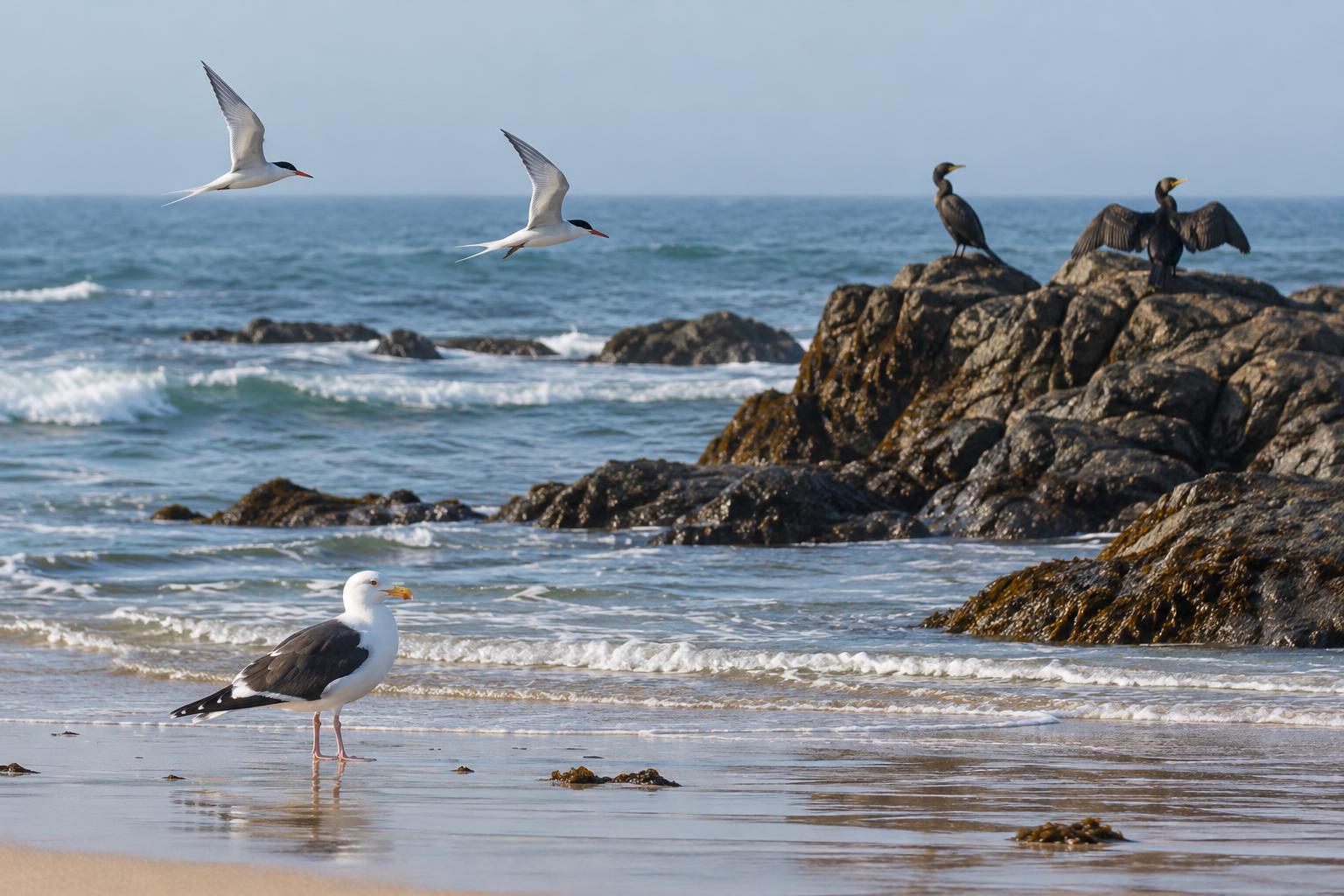
Gulls tend to look solidly built, with broad wings, fairly stout bills and an unhurried manner when walking. They may patrol the water’s edge, rest in groups or circle above fishing activity. Many eat a varied diet, taking food found on the shore as well as catching or scavenging prey. That flexibility is one reason they are familiar around beaches and working waterfronts.
Look beyond the familiar white-and-grey impression. Plumage varies with species and age, so a brown or mottled bird beside a pale adult may still be a gull. Watch how it moves: a gull often floats readily, walks with confidence on sand and can soar or glide between bouts of active flapping. If you want to identify one more closely, note the bill and leg colours, wingtip pattern and size, but do not rely on a single feature seen at a distance.
Terns: slim fliers with a fishing focus
Terns usually appear lighter and more streamlined than gulls. Many have narrow, pointed wings, a slender bill and a forked tail, although the tail shape may be difficult to see in flight. They often move with quick, buoyant wingbeats over the sea or an estuary. A tern searching for fish may pause into the wind before dropping toward the water; others pick food from or near the surface.
From a distance, a resting tern can resemble a small gull. Compare its proportions rather than guessing from colour: the bill may look finer, the wings longer and sharper, and the body less bulky. If birds are feeding together, their behaviour can be especially helpful. Follow an individual through several passes instead of trying to identify it from one rapid glimpse. Seasons and local conditions affect which terns you might see, so treat a first identification as a starting point rather than a certainty.
Cormorants: divers on rocks and water
Cormorants have a different outline again. They are long-bodied waterbirds with slender necks and bills that often show a small hook at the tip. In flight, they may hold their necks out and beat their wings steadily. On the water, they can sit low before slipping beneath the surface to pursue prey. Watching one disappear and then scanning for where it resurfaces is a simple way to appreciate how actively it uses the water below.
You may also see cormorants perched on rocks, posts or other structures, sometimes with their wings spread. It is a memorable pose, but it is not enough on its own to identify a particular kind of cormorant. Size, markings and bill shape can help with closer identification when visibility is good. Keep in mind that dark birds against dark rocks are easy to overlook; a patient scan often reveals more than a quick glance.
Watch well, and give birds room
A small notebook or phone note can turn a casual sighting into a useful learning exercise. Record the habitat, approximate size, flight style and feeding behaviour, then add colours only if you saw them clearly. Binoculars help, but you can practise with the naked eye by comparing birds in the same scene. If you use a field guide later, check several features together; no single silhouette or behaviour is foolproof.
The best viewing position is one that lets the birds carry on normally. Do not chase a flock into flight, approach nesting areas or offer food. Give roosting birds and chicks extra space, keep dogs under control where they are permitted, and take litter away with you. If a bird appears injured or entangled, avoid handling it yourself and seek guidance from an appropriate local wildlife rescue organisation. Quiet observation protects the birds and usually gives you a better look at what they do.