The shore does not go to sleep at sunset
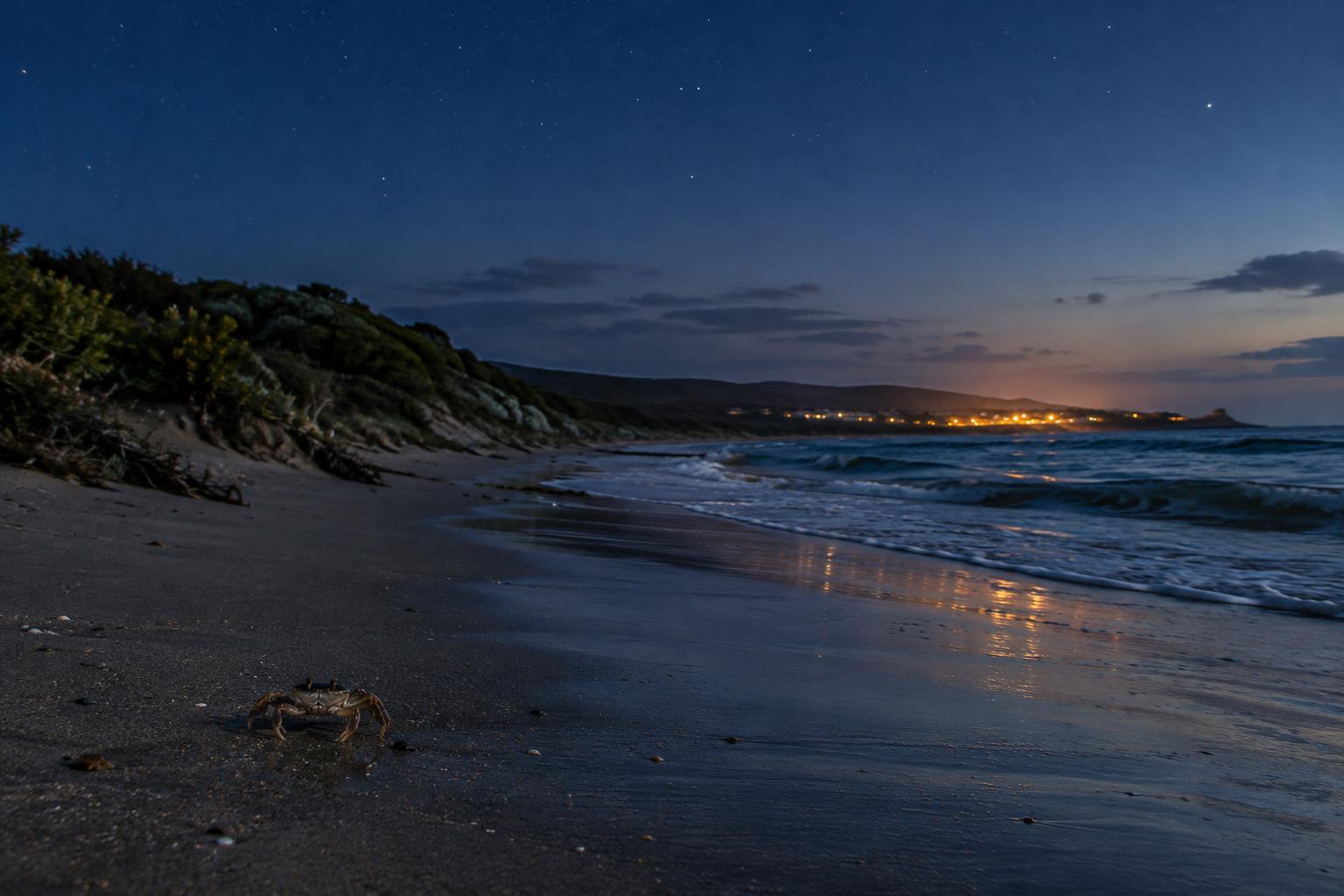
After dark, the coast offers a different set of conditions for animals. Some feed with less exposure to daytime predators, while others move between the sand, dunes and water. What looks like an empty beach to a visitor may be part of a route an animal uses to forage or find shelter. Darkness is therefore more than a backdrop: for some species, it helps shape when and where they move.
Artificial light changes those conditions. A beachfront building, parked vehicle, torch or camera flash can illuminate a small patch of habitat; several lights together may make a much larger area bright. The effects vary by species, season and setting, so it is best not to assume that a light is harmless simply because no animal is visible.
How light can change animal behaviour
Animals that use natural light cues may be distracted by bright lamps or illuminated structures. Light can also make an animal easier for predators to spot, or cause it to avoid an otherwise useful feeding area. Some insects gather around lights, which may change where insect-eating animals search for food. These are possible effects, not a promise that every light will have the same result on every beach.
Sea turtles are a particularly important reason to take coastal lighting seriously in places where they nest. Hatchlings may become disoriented by artificial light instead of moving toward the sea. A nesting turtle may also be disturbed by people and lights nearby. Visitors should not try to guide, handle or photograph a turtle at close range; they should give it space and follow any local conservation instructions.
Use only the light you need
If you are walking on a beach after dark, start by checking whether access is permitted and whether there are local rules about lights or wildlife. Choose a familiar, suitable route and carry a light for safety, but aim it at the ground immediately ahead rather than sweeping it across dunes, vegetation or the water. Use the lowest setting that lets you see hazards. Keep your visit short if the area is known to be sensitive.
For a coastal home or holiday stay, look at where outdoor lights fall. A shielded fitting aimed downward is generally more useful for a path than a bright lamp shining in every direction. Switching off lights when they are not needed, closing curtains and avoiding decorative lighting that spills onto the beach can help keep neighbouring habitat darker. Safety and access lighting still matter; the goal is to make it purposeful rather than excessive.
Keep wildlife viewing low-impact
A night walk should not become a search that pushes animals out of cover. Stay on established access routes where available, avoid trampling dune plants, and keep well back from any animal you encounter. Do not follow it to get a better view. If it stops, changes direction or appears to retreat as you approach, increase your distance. Give nesting areas and any marked conservation zones a wide berth.
Photography can add disturbance even when the photographer stands still. Repeated flashes, video lights and groups gathering around a subject may prolong an encounter that the animal cannot easily leave. Consider putting the camera away and observing briefly from a distance instead. Keep dogs under control in places where they are allowed, and never let them chase wildlife along the tideline or into the dunes.
Make a simple plan before heading out
A lower-impact evening visit begins before you reach the sand. Check the access route and local restrictions, agree on a turnaround point, and bring only the lighting needed to move safely. Tell someone where you are going if the beach is quiet or unfamiliar. Tides, uneven ground and changing weather can make a night visit harder to manage than the same walk in daylight.
When you leave, take your litter with you and check that no lights have been left on unnecessarily. If you come across an animal that appears injured or stranded, keep your distance and contact an appropriate local wildlife response organisation rather than attempting a rescue yourself. Small choices—where you walk, where you point a torch and when you switch it off—can make an evening by the sea more considerate of the life around you.