A dune begins with moving sand
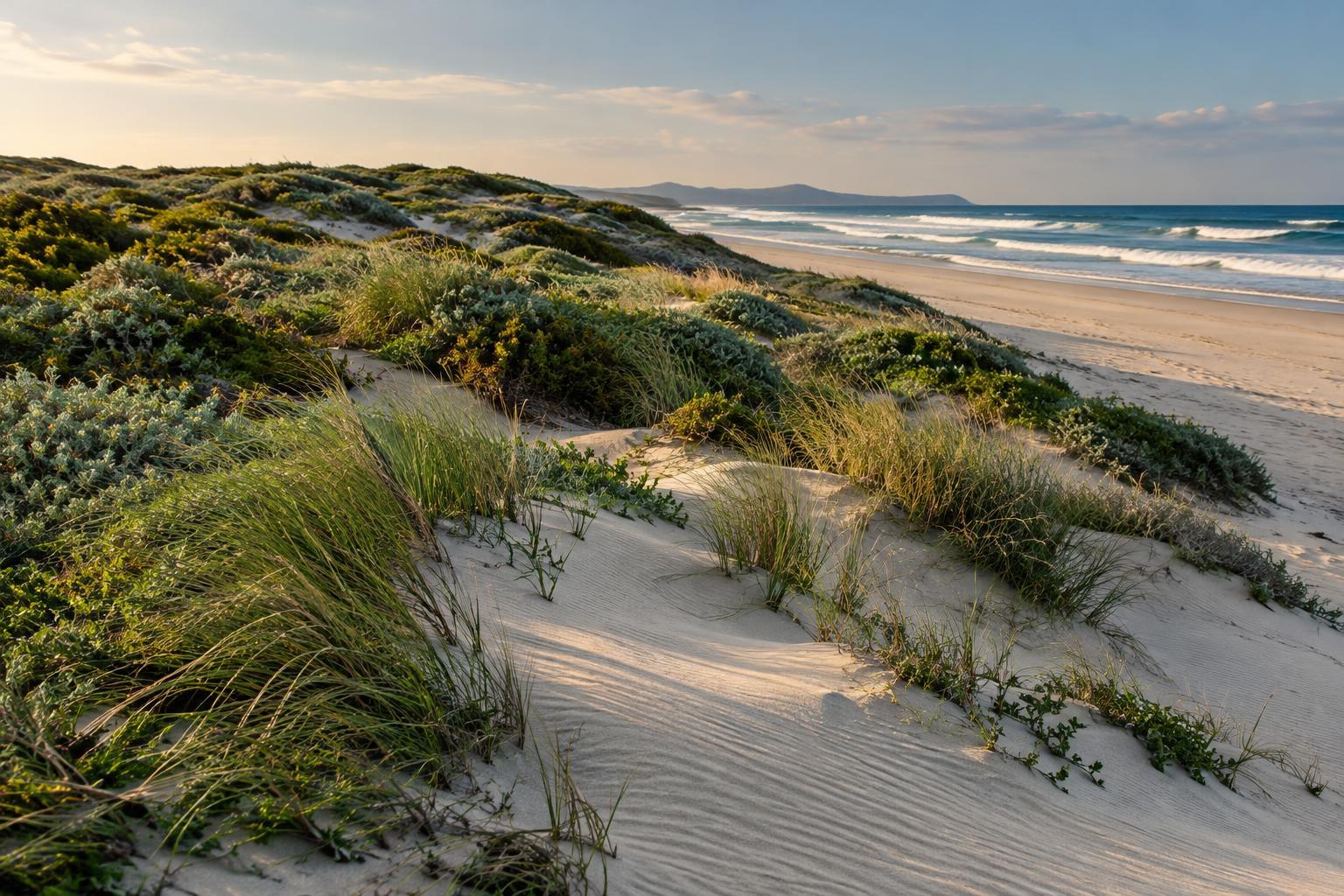
On a breezy beach, dry sand can lift, bounce and roll inland. Where the wind slows around a shell, a piece of driftwood or a plant, some of that sand settles. Repeated often enough, this small accumulation can become a low mound. If conditions allow sand to keep arriving, mounds may grow and join into a line of dunes behind the open beach.
This is not a one-way process. Waves can remove beach sand, strong winds can reshape exposed surfaces, and storms may cut into the seaward face of a dune. At other times, sand returns to the beach and blows inland again. The result is a landscape that changes even when its outline looks familiar. Along South Africa’s varied shoreline, the shape of a dune depends on factors such as sand supply, prevailing winds, beach width and nearby landforms.
Plants help sand stay put
The first plants on an exposed dune have a demanding place to live. They face salt spray, shifting sand, strong sunlight and periods with little fresh water. Low-growing grasses, creeping plants and other coastal species can survive where many garden plants would struggle. Their stems and leaves slow the wind close to the ground, allowing more sand to collect. Roots and runners help hold that new material in place.
As a dune becomes less exposed, a wider mix of vegetation may establish farther inland. Plant cover can add organic matter to the sand and provide shelter for seedlings. This does not mean a healthy dune must be completely green: bare patches and movement can be part of a natural dune system. What matters is that vegetation has room to recover and that people do not repeatedly break the cover where it is needed.
Why a planted dune matters beyond the beach
Dunes form a transition between the active beach and the land behind it. During rough weather, a dune may lose sand at its front while still providing space for the shoreline to adjust. Vegetation helps maintain that reserve of sand, although it cannot make a coast immune to erosion or protect every building. The beach, dune and plants work as parts of one changing system rather than as a fixed wall against the sea.
Dune plants also create places for coastal wildlife. Their cover can offer shelter, feeding opportunities and nesting or resting areas, depending on the location and season. Insects, birds and small animals may use different parts of the dune, including areas that look sparse to a casual visitor. Disturbing plants or cutting a new path can affect more than the patch directly underfoot.
Small shortcuts can become lasting gaps
A single walk across a dune may leave little visible trace, but repeated trips along the same shortcut can wear away vegetation. Once the roots and surface cover are damaged, wind can carry sand through the gap. The opening may widen into a blowout, especially where people continue to use it. Vehicles, dumped garden waste and invasive plants can add other pressures, though the effects vary from place to place.
The simplest way to help is to use established beach access points, boardwalks or marked paths. Give fenced or recovering areas space, and avoid pulling up plants or collecting material from the dunes. If you are visiting with children, a brief look at how leaves trap sand can make the reason for staying on the path easy to understand. Check local signs before walking: access arrangements differ between beaches and may change.
How to read a dune on your next coastal walk
Pause where a permitted path meets the beach and look back inland. You may spot a low ridge nearest the sand, denser growth farther from the surf, or places where wind has carried sand around obstacles. Notice how plant shapes change with exposure. A sheltered slope may look quite different from the windward side only a short distance away.
Try not to judge a dune by neatness. Wind-shaped leaves, uneven mounds and seasonal bare sand can all belong in this setting. A useful question is whether sand has space to move and whether plants have space to establish without constant disturbance. Seeing dunes as living, shifting coastal landscapes makes a beach visit richer—and makes the marked route across them feel like part of the experience, not a detour.