A coastline with more than one food story
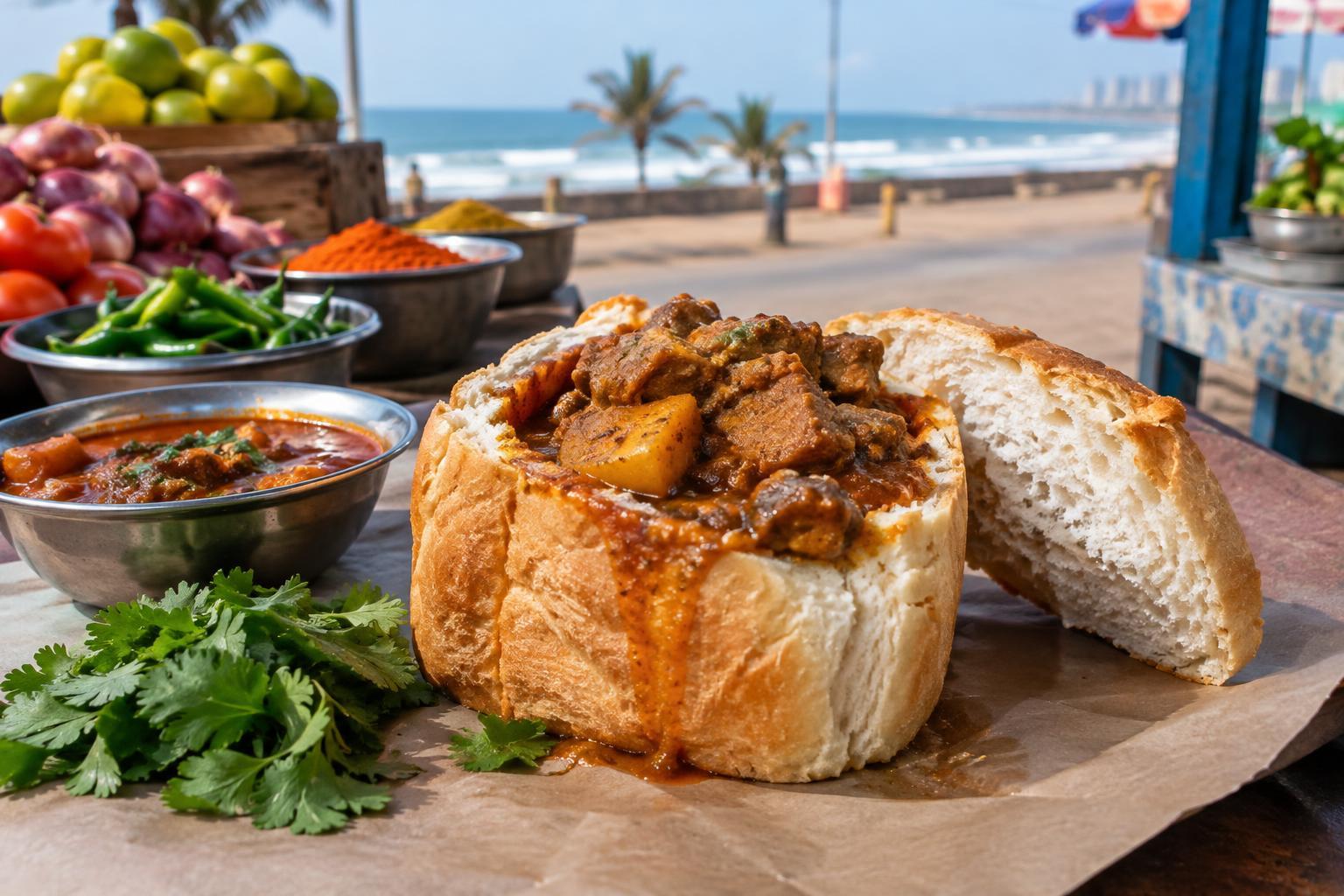
The Eastern Cape’s coastline stretches past working harbours, holiday towns, river mouths and rural communities. Its menus are just as varied. A café near a busy beach may serve familiar fish and chips, while a small guesthouse might offer a home-style meal built around maize, beans or slow-cooked meat. Neither represents the whole province. The most useful way to explore local food is to notice what a particular kitchen chooses to cook, rather than expect one signature dish everywhere.
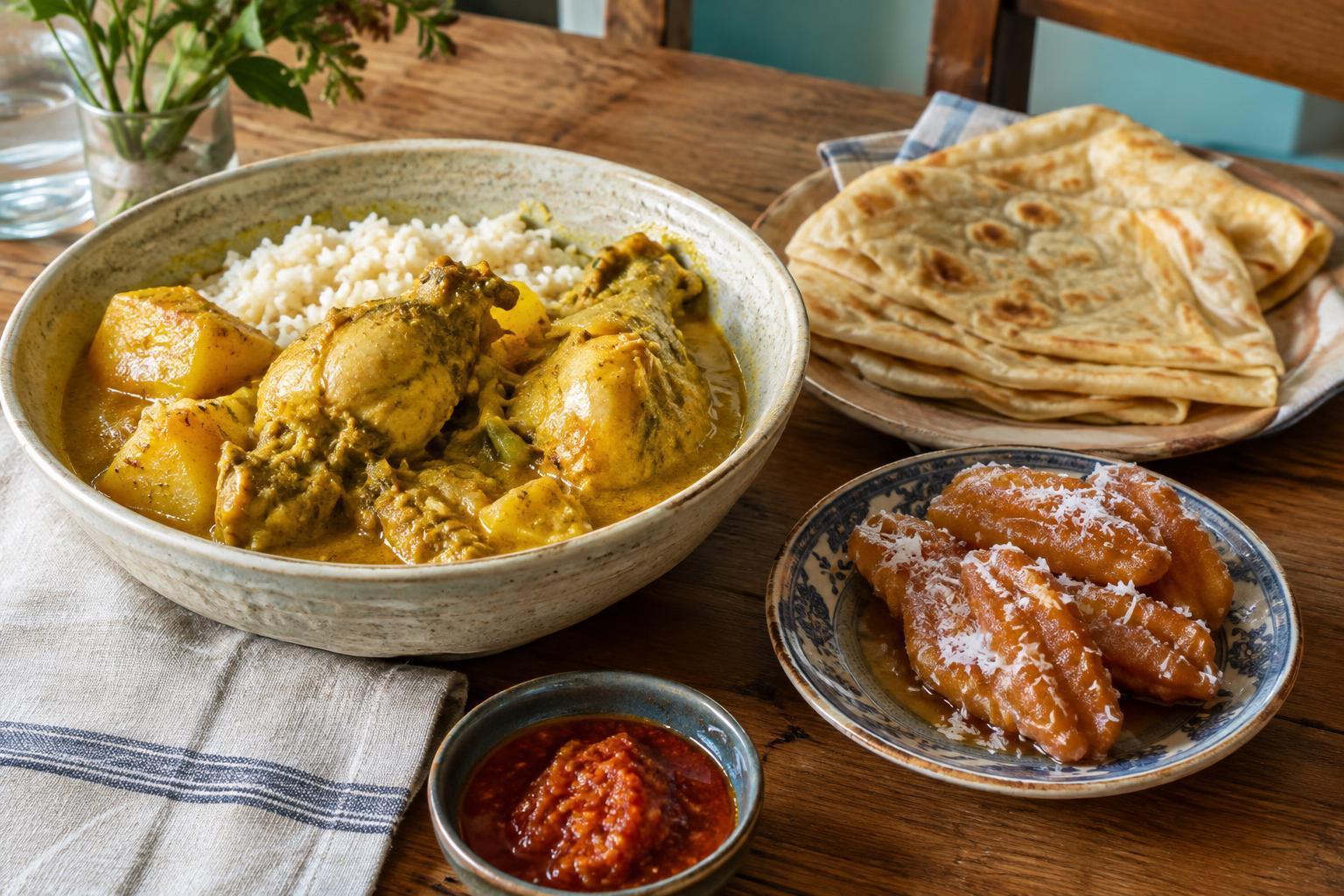
Coastal meals also reflect connections beyond the shore. Seafood can sit beside produce grown inland, and restaurant cooking can draw on recipes passed through families. Names, methods and accompaniments may differ between households and communities, including among Xhosa-speaking families. A menu offers a glimpse of those traditions, not a complete account of them.
What the sea brings to the plate
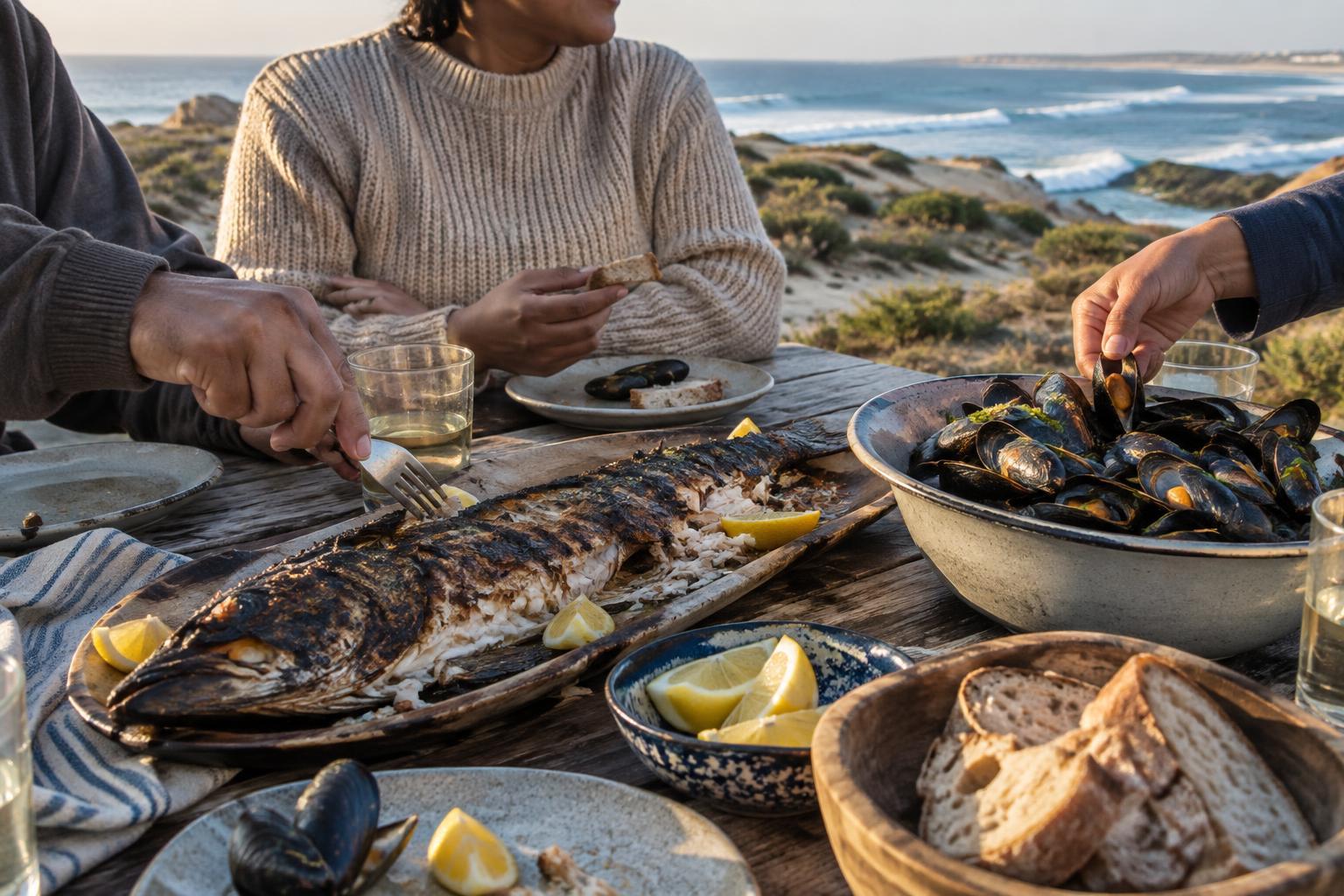
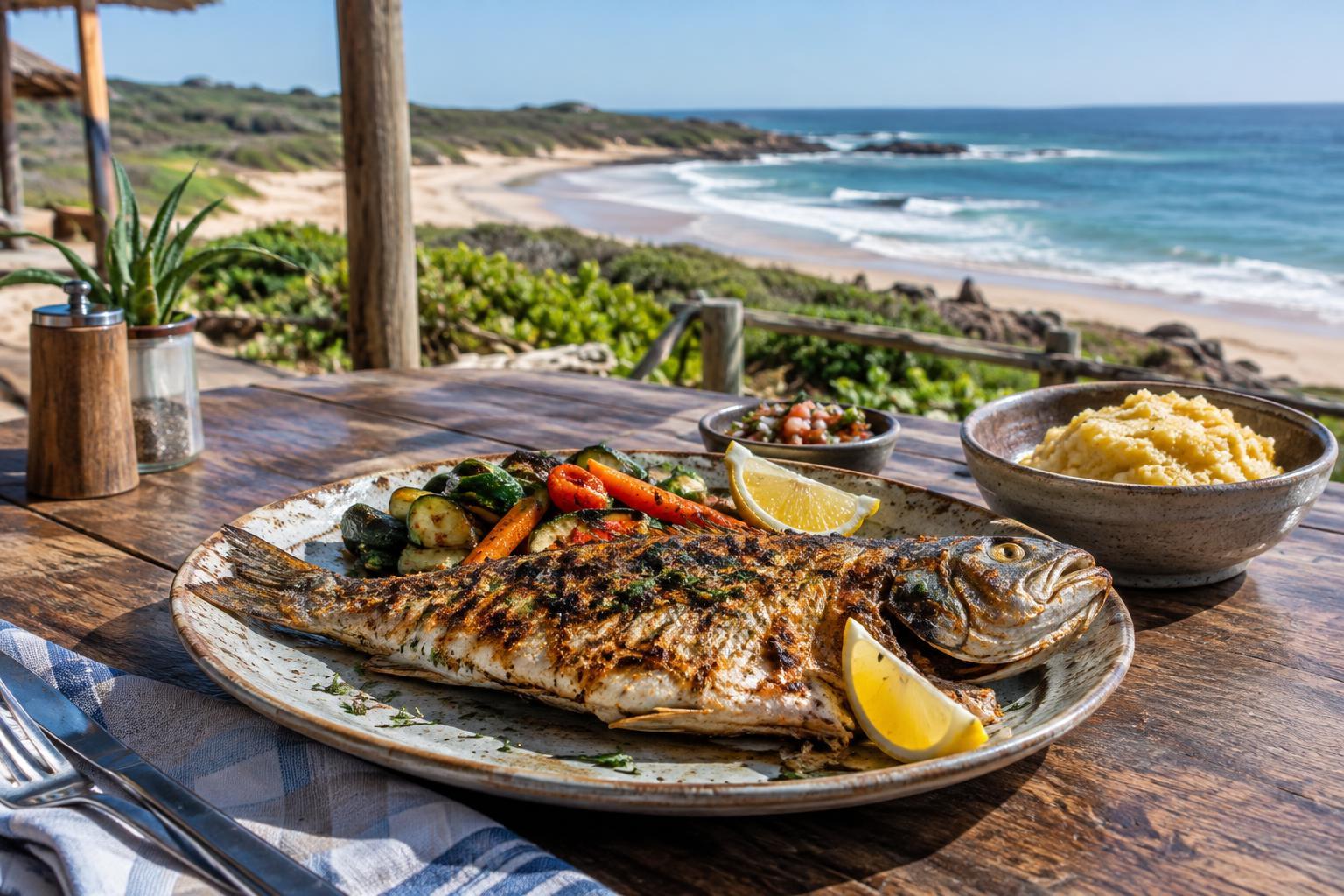
Fish and calamari are common sights on coastal menus, often grilled or fried and served with chips, salad or vegetables. Preparation can be simple: lemon, a sauce on the side and enough care not to overwhelm the seafood. A chalkboard special may be a better guide to what a kitchen has available than a permanent menu, although a listed catch is not necessarily local or freshly landed. If that matters to you, ask where it came from and how it was prepared.
Availability depends on weather, supply and fishing rules, so it is worth being flexible. Shellfish and other marine foods may carry restrictions on harvesting or sale; seeing them near the coast does not mean they are free for visitors to collect. Buying through a reputable food business and respecting local notices helps keep a beach meal separate from the pressures facing coastal habitats.
Home-style dishes have a place at the coast
Not every memorable Eastern Cape meal begins in the sea. Umngqusho, a dish of samp and beans, is one example of the filling foods associated with Xhosa cooking. A version served at a restaurant may be plain and comforting or accompanied by meat and vegetables. Umphokoqo, a crumbly maize dish often eaten with amasi, can appear in home-style settings, though it is not something to assume every coastal restaurant will offer.
These foods speak to everyday cooking as much as to travel. They are worth ordering for their own sake, not as a side quest for the most “authentic” plate. If a dish is unfamiliar, ask what goes into that kitchen’s version and how it is usually eaten. The answer may tell you more than a short menu description, while leaving room for the fact that families prepare familiar dishes differently.
Produce, braais and the shape of a meal
Vegetables, beans, maize and meat help make coastal menus more varied than a seafood-only itinerary suggests. A braai may bring grilled meat together with pap, salad or a relish; a café lunch might put local produce at the centre of a lighter plate. What is available changes with suppliers and seasons. Instead of treating “local” as a guarantee, look for menus that name their ingredients or ask staff what the kitchen is using that day.
It is also worth paying attention to the setting. A takeaway eaten after a swim, a shared braai and a leisurely restaurant lunch are different ways of enjoying the coast. Each can reveal something about how people gather around food. A simple plate, eaten without rushing, may be as satisfying a part of the trip as a carefully composed special.
How to explore a menu with curiosity
Start with a question rather than a checklist: what does this kitchen do well? Read the specials, ask about an unfamiliar dish and consider ordering something to share if you want to try more than one flavour. If you have dietary needs, check ingredients and preparation directly with the venue. Menu wording alone may not tell you enough, particularly with sauces, stocks or shared cooking equipment.
Before making a journey for a particular meal, confirm opening times, booking needs and menu availability with the venue. Coastal restaurants can change what they serve, and a recommended dish may not be on offer when you arrive. Leaving space for that uncertainty makes eating along the Eastern Cape shore more enjoyable: the point is not to find one definitive menu, but to appreciate the ingredients and cooking traditions each stop brings together.