Start with the view, not the furniture
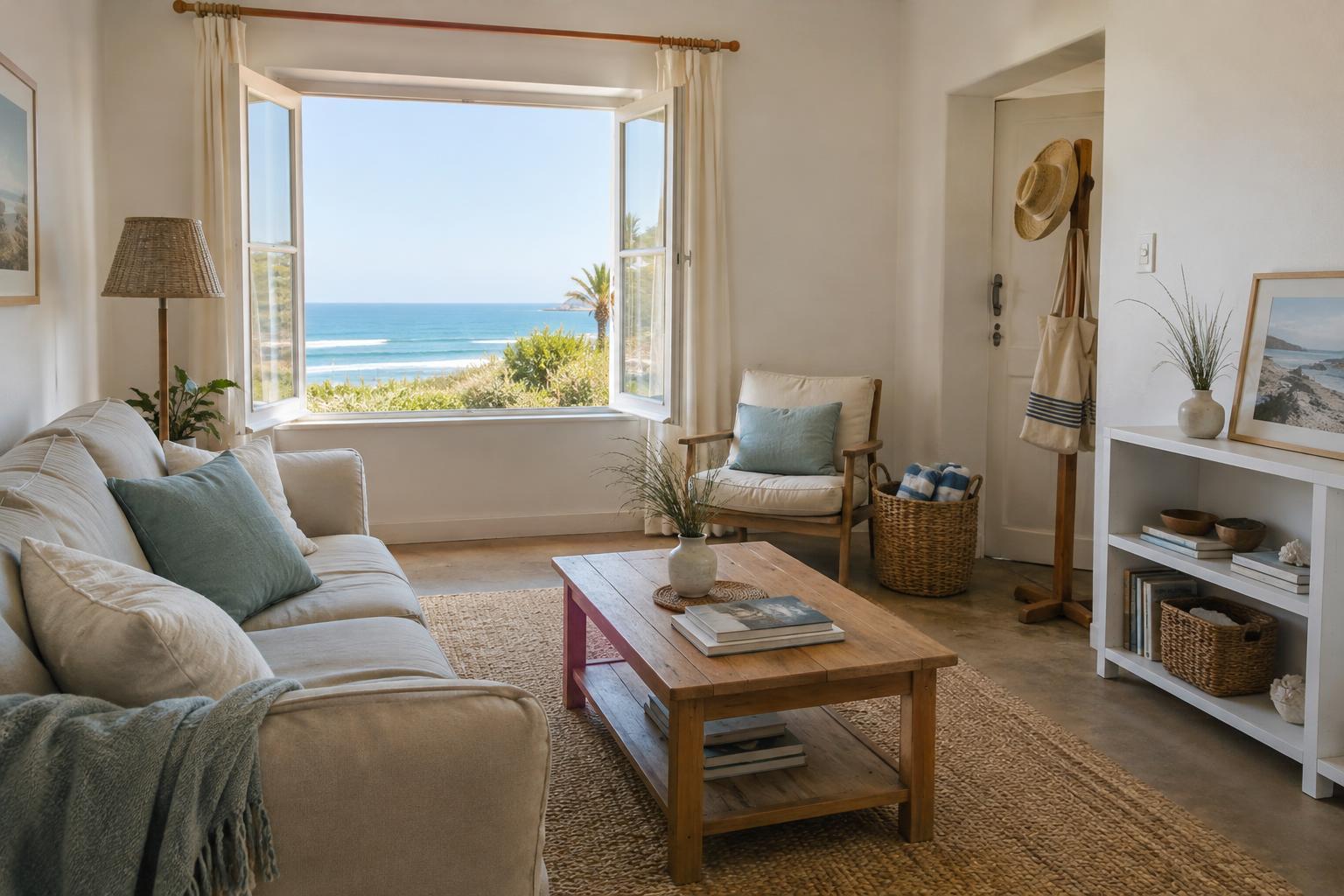
Before moving a sofa, stand at the room’s entrance and at the places where you usually sit. Notice which part of the sea view you want to keep visible. It might be the horizon from an armchair, or a glimpse of water as you walk in. Use those sight lines to guide the layout rather than assuming every piece of furniture must face the window.
Next, map the paths to doors, cupboards and the window. Leave enough room to move comfortably without turning sideways around a coffee table. In a compact room, an open route often matters more than a perfectly symmetrical arrangement. Try marking the footprint of larger pieces on the floor with removable tape before committing to a new position.
Give the best seat a comfortable angle
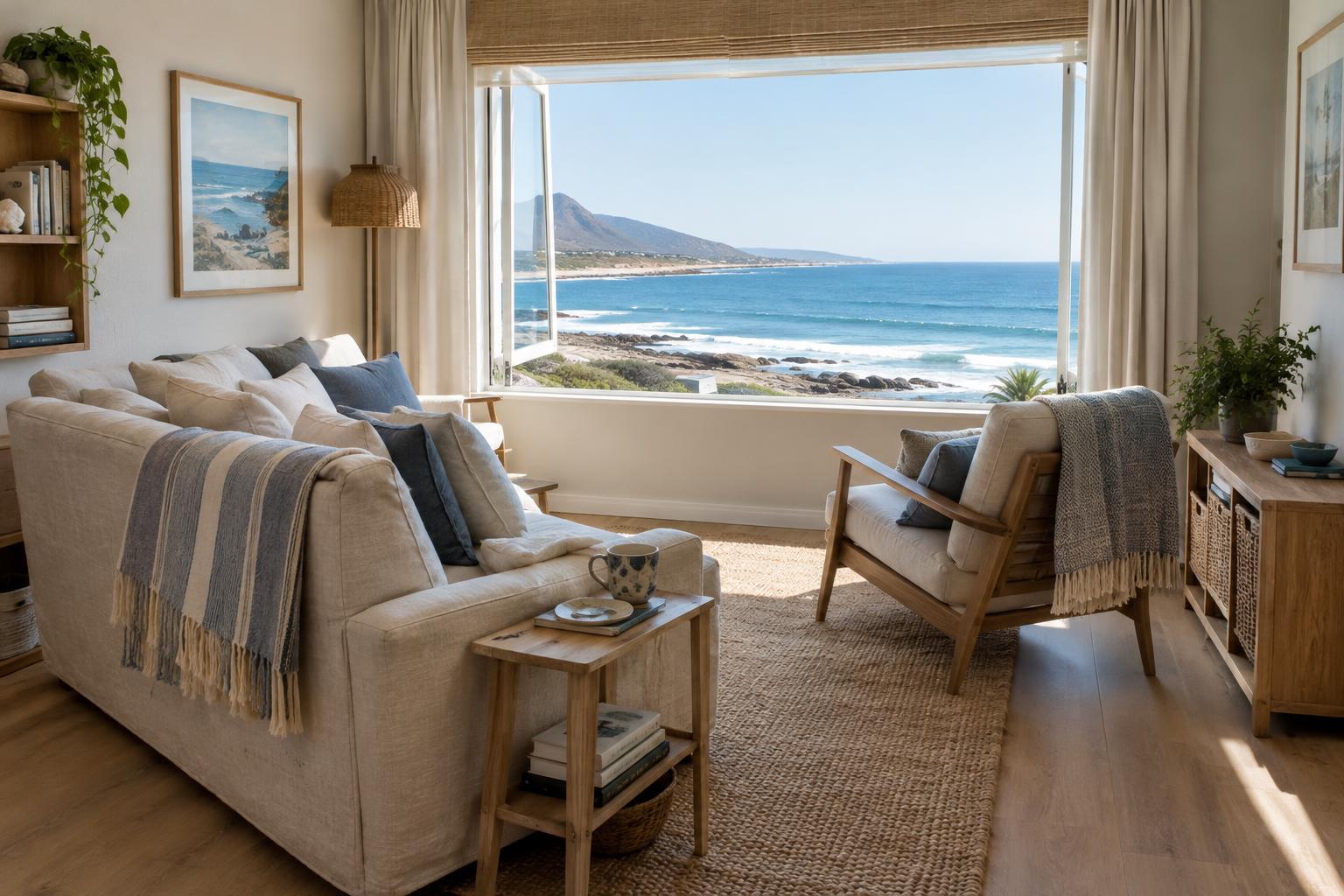
A sofa placed directly against a sea-facing window may seem tempting, but it can block the view from the rest of the room and make curtains awkward to use. If space allows, position the sofa along a side wall and angle a chair toward both the water and the conversation area. That way, the room works when you have company as well as when you want to sit quietly.
Keep the furniture nearest the glass visually light. A low chair, slim side table or open-legged bench can offer a useful perch without forming a solid barrier. If the room also needs a television, consider whether it can sit on a wall beside the view. Competing focal points are easier to live with when seats can turn or shift slightly.
Choose pieces that earn their space
In a small room, a few well-proportioned pieces usually feel calmer than many small ones. Measure the room and the furniture before buying, including the space needed to open drawers and pull out chairs. A compact sofa with raised legs can show more floor, while a round coffee table may be easier to pass than one with sharp corners.
Think about what the room must do on an ordinary day. A storage ottoman might hold throws and provide an extra seat, but it is only useful if there is room to move it. Wall-mounted shelves can free floor space, provided they do not crowd the window. Keep frequently used items within reach and give less-used objects a place out of sight.
Plan for light and coastal conditions
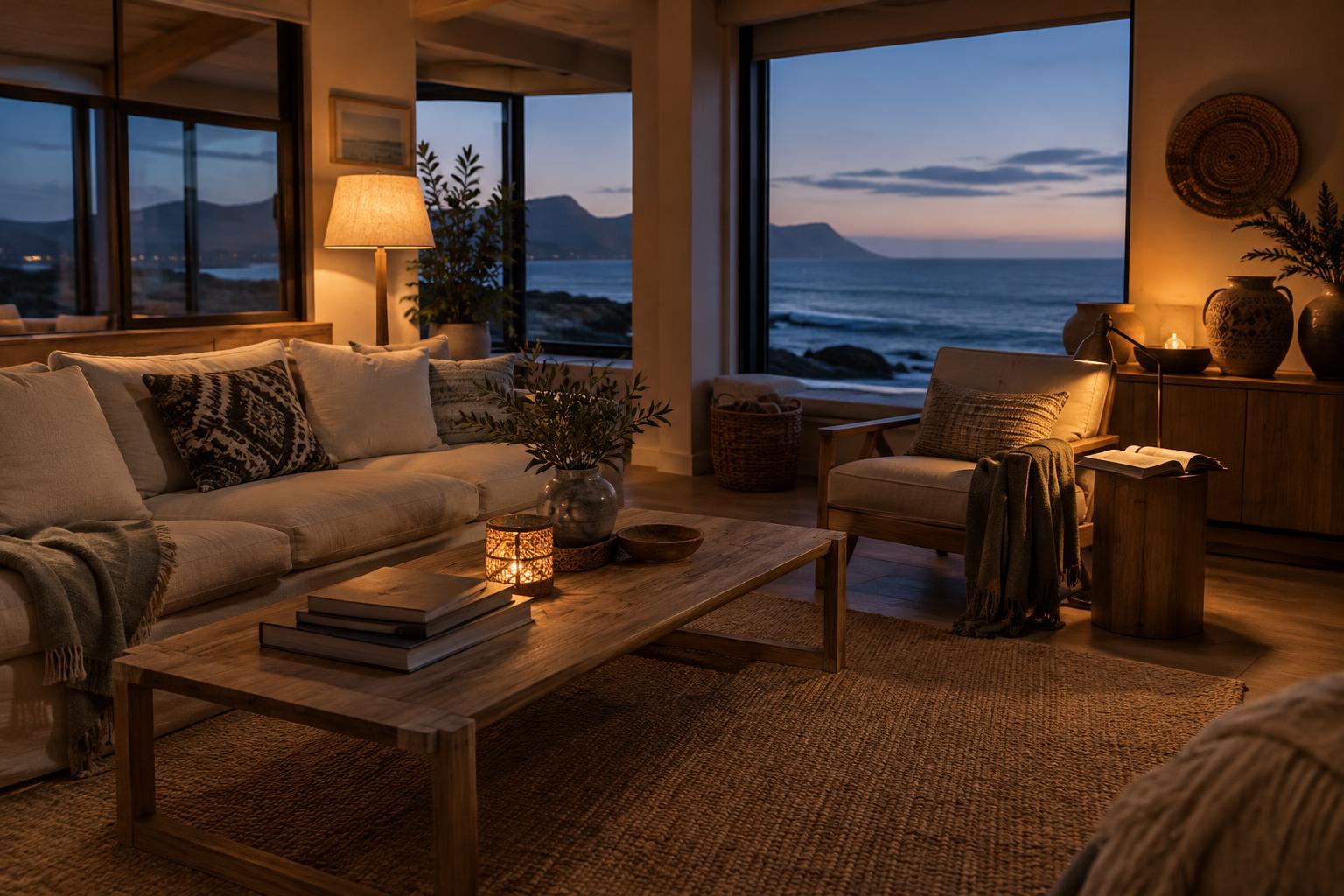
The view will change as the light changes. Sit in the room at different times of day and check for glare on screens, bright patches where you read, and direct sun on upholstery. Adjustable blinds or curtains can soften the light while allowing you to uncover the view when you want it. Avoid placing a favourite seat where the room is uncomfortable at the time you use it most.
Sea-facing homes may also contend with damp air, windblown grit or salt residue, depending on their position and ventilation. Choose finishes you can clean and maintain, and avoid crowding furniture tightly against walls if the room tends to feel damp. Washable covers, durable rugs and a practical spot for sandy shoes can make the room easier to enjoy without demanding constant care.
Edit the layout, then live with it
Once the main pieces are in place, look at the room from the doorway again. Can you see through to the window? Can someone sit down without moving another chair? If an object interrupts the view or the walking route, try relocating it before replacing it. Small changes, such as swapping a tall lamp for a wall light, can give the room more breathing space.
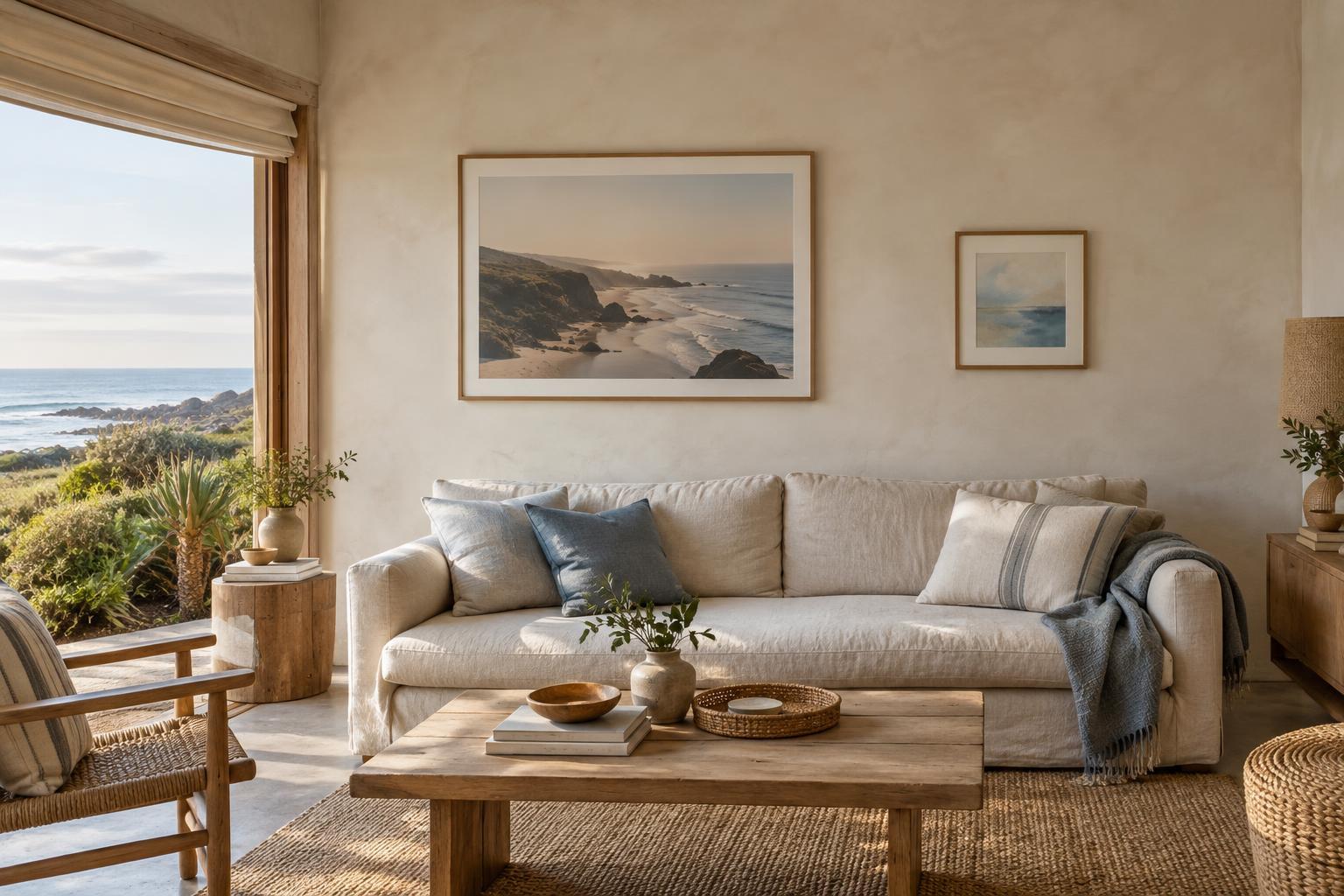
Finish with details that support the view rather than compete with it. A restrained palette can connect the room to the coast without relying on nautical motifs; texture from a rug, timber or woven shade adds warmth. Leave some surfaces clear, then use the space for a few days. The best arrangement is the one that makes looking out—and living inside—feel easy.