Start with the fish, not the special
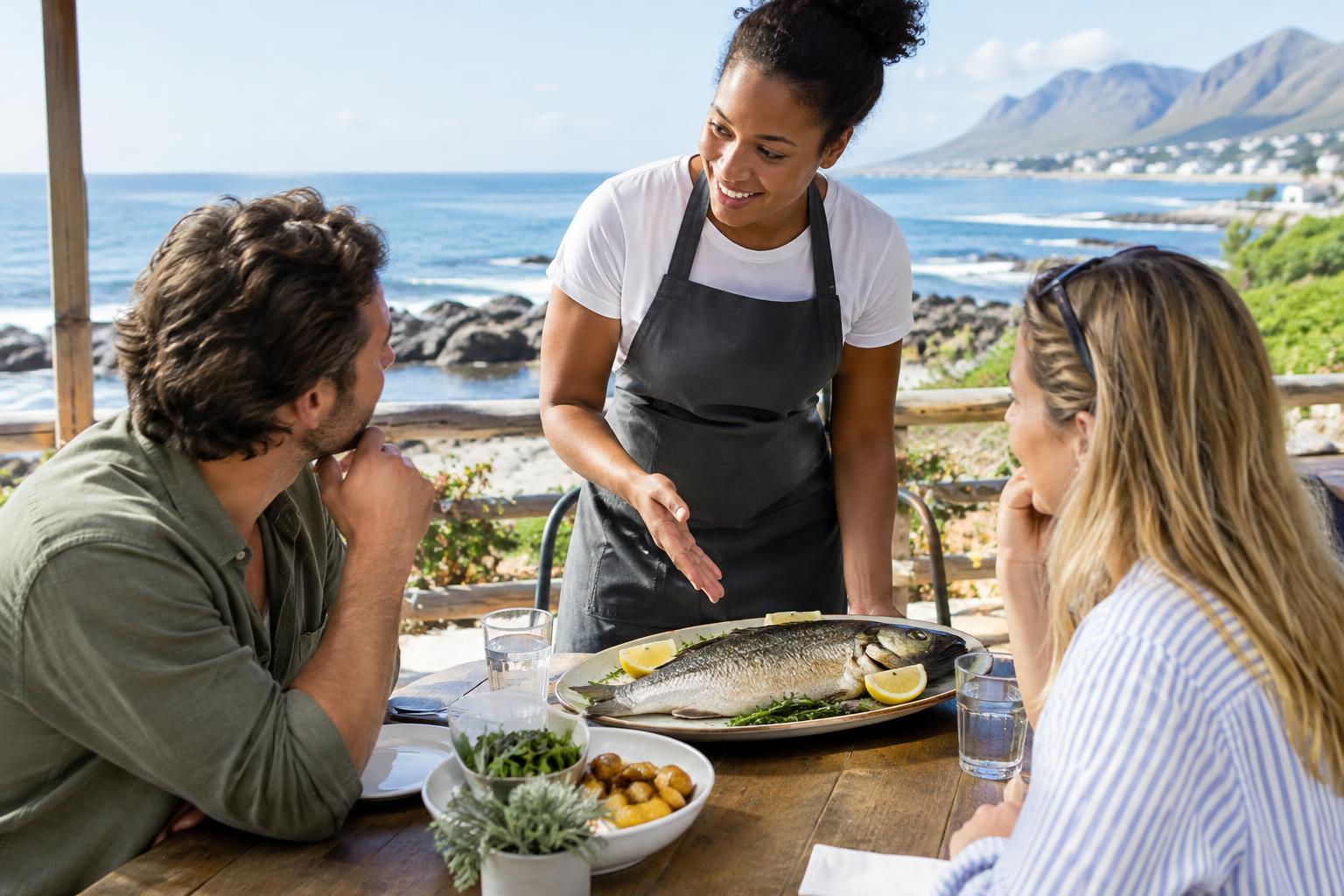
A chalkboard marked “catch of the day” can be inviting, especially after a day by the sea. It does not, however, tell you exactly what will arrive at the table. The fish may vary, and the dish may be a fillet, a whole fish or part of a seafood platter. Before deciding, ask: “What is the catch of the day today, and how is it served?” That gives your server a chance to describe the dish rather than just name a fish.
If the name is unfamiliar, it is reasonable to ask what the fish is like: “Is it mild or strongly flavoured?” and “Does it have many bones?” You can also ask where the restaurant says it comes from, or whether it was previously frozen, if those details matter to you. A catch-of-the-day label alone does not establish when or where a fish was caught. A straightforward question is more useful than making assumptions.
Get the price before you order
Seafood specials are sometimes priced by the portion and sometimes by weight. If the price is not printed on the menu, ask for it in rand before placing your order: “What is the price of this dish today?” If the answer is a price per 100 grams or per kilogram, follow up with: “About how much does a typical serving weigh, and what would that cost?” This helps turn a unit price into a practical estimate for your meal.
For a whole fish, ask whether it will be weighed before or after cooking and whether the quoted weight includes the head and bones. If you are choosing from a display, you can ask for the expected total price of that particular fish. It is also worth checking whether sauce, sides or an alternative preparation cost extra. There is nothing awkward about asking for a final estimate; it lets you enjoy the meal without wondering what the bill will be.
Picture the portion on the plate
Portion descriptions can mean different things from one restaurant to another. “Is this a whole fish or a fillet?” is a useful starting point, followed by “Would you describe it as a light lunch or a full main meal?” A whole fish may look generous but includes parts you will not eat. A fillet may look smaller yet be easier to share or enjoy without working around bones.
Ask what comes with the fish, too: chips, rice, vegetables, salad and bread make different kinds of meals. If you are ordering for two people, try: “Would one portion be enough to share, or would you suggest two mains?” A server may not know your appetite, but they can usually describe the plate and how guests tend to order it. That is more helpful than relying on the word “large” alone.
Clarify how it will be cooked
Once the fish, price and size are clear, find out how it is prepared. Grilled, fried and battered versions can feel like quite different dishes, even when the fish is the same. Ask whether a choice of preparation is available and whether the dish comes with butter, a sauce or seasoning. If you prefer a simpler plate, you might say: “Could I have the sauce on the side?” The kitchen may or may not be able to accommodate changes, but asking early is easiest.
If you need to avoid an ingredient, explain that clearly rather than guessing from the menu description. You can ask staff to check ingredients and preparation practices with the kitchen, including whether equipment is shared. Do not assume that a plain-looking grilled fish is free of other ingredients. If the restaurant cannot answer a question that matters to you, choose something you can assess more confidently.
Keep the conversation easy
You do not need to deliver a long list of questions all at once. A natural exchange might begin: “The catch of the day sounds good. What fish is it?” Then: “Is that price for a portion or by weight?” Finally: “Does it come with a side, and is it enough for one hungry person?” These short questions cover the essentials while giving the server room to explain anything distinctive about the dish.
Coastal restaurants across South Africa range from casual takeaway counters to places where you linger over a long lunch. The same habit works in either setting: check what you are ordering, what it will cost and what will arrive on the plate. You can be curious and polite without feeling obliged to order the special. A clear answer helps you pick the seafood meal that suits your appetite, budget and beach-day plans.