Think about the whole visit, not just the beach entrance
A beach access sign or paved promenade is a useful start, but it does not tell you whether someone can comfortably spend an afternoon there. The practical route begins where you arrive and continues through parking or a drop-off point, the path to the shore, toilets, a place to rest and the return journey. A single step, a steep stretch or a long crossing of soft sand can change the outing.
Start by deciding what a successful visit looks like for your group. Some people want to reach a firm viewing point and enjoy the sea air; others want to sit on the sand or get close to the water. A wheelchair user, someone using a walking aid and someone who can walk short distances may need different arrangements. Ask about those specific needs rather than relying on a broad “accessible” label.
Check the route from arrival to the shore
Look first at arrival. Is there a suitable parking space or a safe place to be dropped off? How far is it from there to a usable entrance? If a route crosses a road, consider kerbs and crossing points. Paths are easier to use when they are continuous, reasonably even and wide enough for the person’s mobility aid. A paved section that ends at loose sand may be enough for a sea view but not for reaching the beach.
South African beaches vary widely in layout, and coastal weather can affect paths and ramps. Ask whether there are steps, steep slopes, gates or sections that become sandy or slippery. If photographs are available, look for the entire approach rather than one close-up of a ramp. Check the route back, too: a downhill path on arrival may feel very different at the end of the day.
Find out what happens beyond the promenade
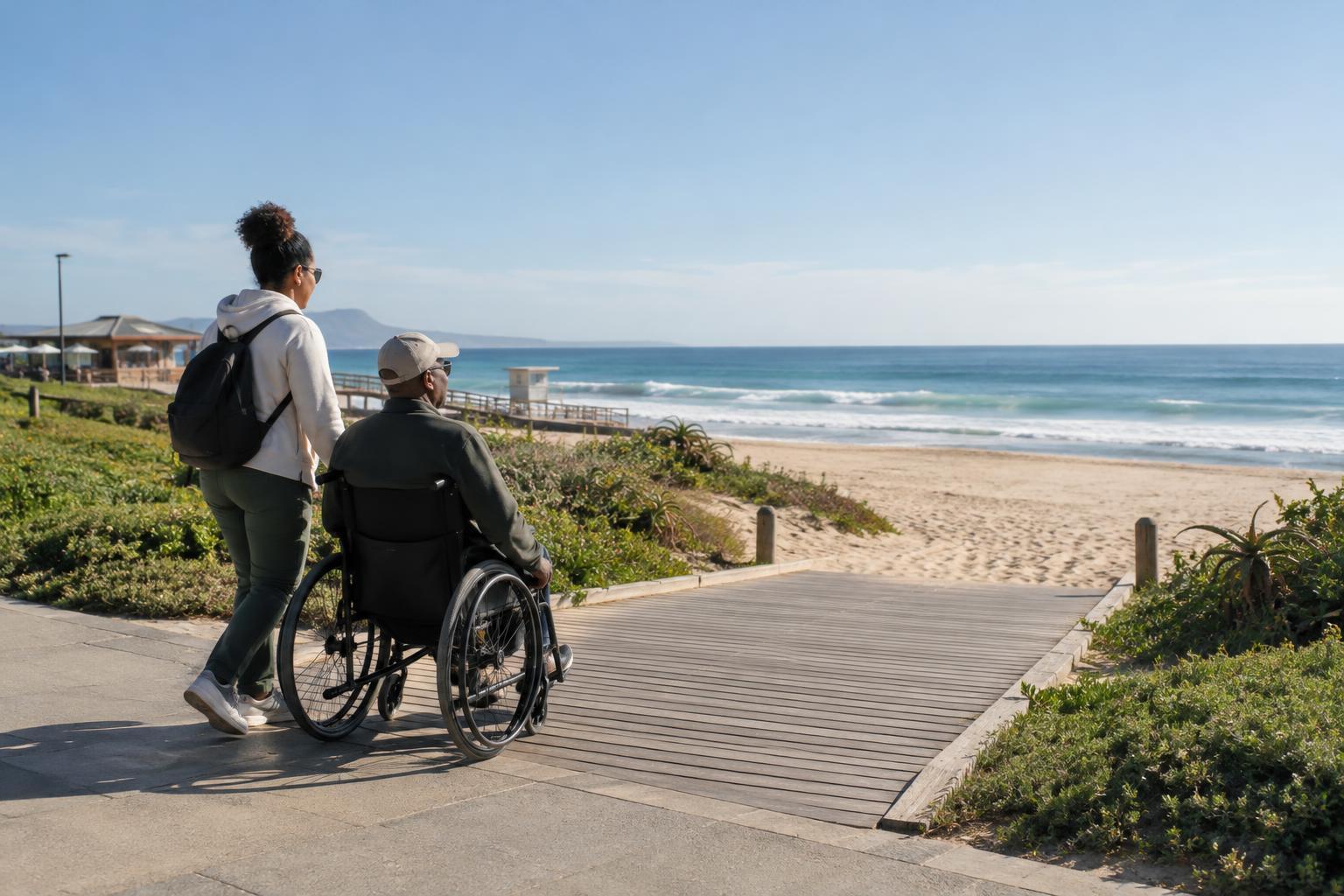
Firm walkways and boardwalks can make a major difference, but their end point matters. Find out whether the walkway reaches a viewing area, crosses the dunes or extends onto the sand. If the aim is to sit near the water, ask what ground lies between the walkway and the chosen spot. Ordinary wheelchairs may be difficult to use on soft or uneven sand, and an accessible path does not necessarily mean that the water is accessible.
Some destinations may offer beach wheelchairs or other assistance, but availability, suitability and arrangements can change. Confirm directly before making plans, including whether equipment must be booked, where it can be collected and whether a companion is needed. Do not assume that help with entering the water is offered. The safest and most enjoyable plan is one that matches the person’s preferences and the support actually available.
Plan for facilities, conditions and comfort
A usable toilet can determine how long a beach visit lasts. Ask where the nearest accessible toilet is, whether it is open during the hours you plan to visit and whether the route to it has steps or sand. It is also worth checking for shade, seating and a sheltered place to pause. Food outlets can be convenient, but a simple packed drink and snack give you more flexibility if a queue or an inaccessible entrance makes a stop difficult.
Beach conditions are not fixed. Tides can alter the amount of firm sand, while wind, heat and rain can make an exposed outing tiring. Plan a realistic distance, allow extra time and keep a shorter visit as an option. If getting into the sea is part of the plan, check local swimming guidance and conditions separately from access information. A route suitable for reaching the shore does not, by itself, make swimming suitable.
Confirm details and keep a pleasant alternative
Before setting off, contact the relevant beach authority, visitor information point or facility operator where possible. Ask concrete questions: Where is the nearest suitable parking or drop-off? Are there steps between it and the viewing or beach area? Does the boardwalk currently reach the sand? Which toilets are open? If you depend on a particular feature, confirm it shortly before travel rather than relying on an old description or photograph.
Build the day around enjoyment, not a single access test. A nearby promenade, shaded lookout or coastal café with a suitable entrance may offer a good alternative if sand, weather or a closed facility changes the plan. Sharing the options with everyone going along helps the person with limited mobility choose the version of the beach day that feels worthwhile to them.