Start with the fish, not the menu description
A seafood dish can sound reassuringly local without revealing much about the animal on the plate. Names such as “line fish,” “white fish” or “catch of the day” may describe a style of sale rather than a particular species. Before ordering, ask what the fish is called. If the answer is unfamiliar, ask whether the kitchen or supplier can provide a more precise name. Different species sold under similar menu descriptions may have very different conservation concerns.
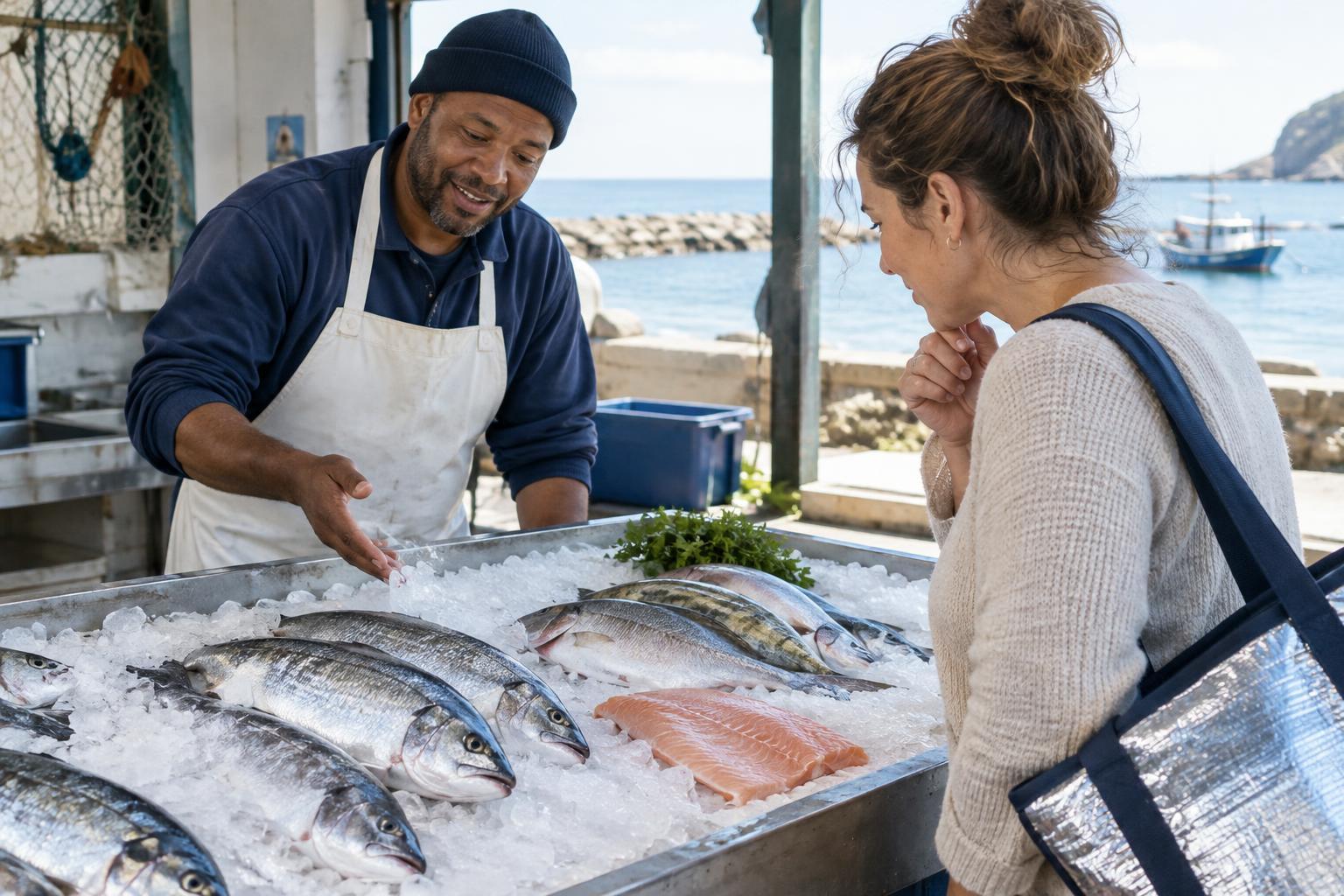
Next, ask where it came from. Seafood served on South Africa’s shoreline is not necessarily caught nearby: it may come from another part of the country or be imported. A broad answer such as “from the coast” is a starting point, but a more specific landing area or country makes it easier to check relevant guidance. If staff cannot say, that does not prove the fish is a poor choice. It does mean you have less information on which to base your decision.
Ask how it was caught or farmed
Harvest method matters because its effects can extend beyond the species you intend to eat. Some fishing gear can catch other animals unintentionally or disturb the seabed; the extent of those effects depends on how and where it is used. Ask whether a wild fish was caught by line, net, trap or another method. A clear answer helps you compare the dish with seafood guidance that considers both the species and the fishery.
Farmed seafood needs its own questions. Farming can reduce pressure on some wild populations, but its impacts vary with the species, feed, site and management practices. Ask where the product was farmed and whether the restaurant knows anything about the producer’s standards. Neither “wild” nor “farmed” is a guarantee on its own. The useful goal is to identify the particular product, rather than treating one word as a shortcut to a verdict.
Check guidance that matches the exact choice
Once you know the species, origin and production method, compare those details with a current, reputable seafood guide relevant to South Africa or to the product’s place of origin. Look for a match that is as specific as possible. Guidance for one fishery may not apply to the same species caught elsewhere, and advice can change as management or stock conditions change. An old screenshot or an unspecific menu badge is less useful than guidance you can check at the time you order.
Treat labels and certifications as information to examine, not as a substitute for the basic questions. If a menu displays a sustainability claim, ask what product it covers and whether it applies to the dish you are considering. Restaurants may change suppliers when availability changes, so a statement about a menu item may need confirming on the day. If the details do not line up with the guidance you find, choose something else rather than guessing.
Make the conversation easy for everyone
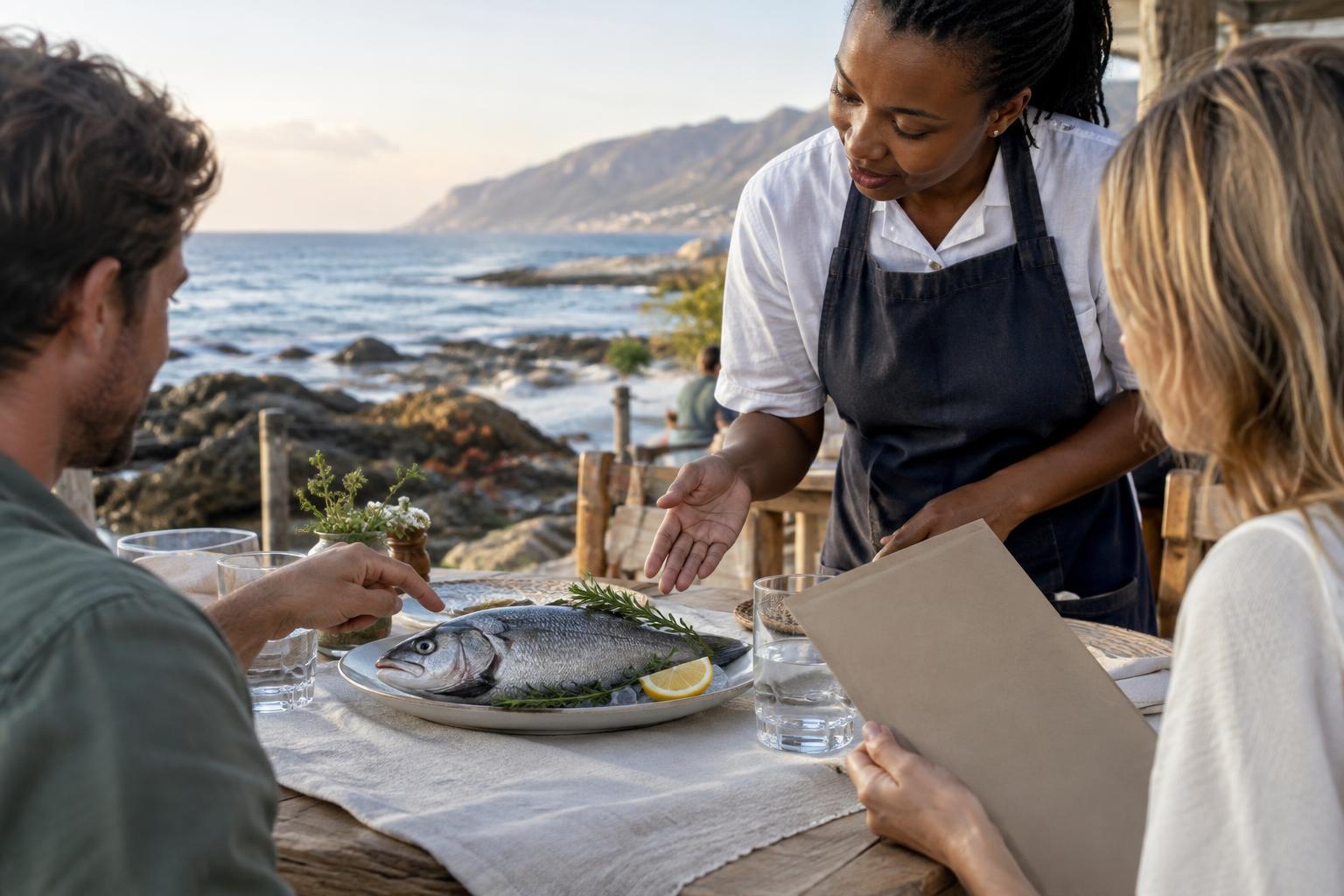
You do not need to quiz a busy server through an entire order. Try three short questions: “Which species is this?”, “Where is it from?” and “Do you know how it was caught or farmed?” If the server needs to check with the kitchen, give them time. Restaurants that can trace their seafood may be able to answer readily; others may still be working toward better information. A friendly question signals that those details matter to customers without putting one person on the spot.
If you cannot get a clear answer, look for a dish whose ingredients are easier to identify, or choose a non-seafood option that appeals to you. You can also ask whether the menu has another seafood item with better supplier details. An informed choice does not have to be perfect, and uncertainty is a reasonable reason to change your order.
Keep a flexible plan for coastal meals
Before a trip or restaurant visit, save a seafood guide you can consult easily, and note a few questions you want to ask. Avoid deciding that a species is always a good choice wherever you find it. The answer may depend on its origin and harvest method, while availability and menu descriptions can change. Keeping your plan flexible lets you enjoy local food without relying on a fixed list.
The most useful habit is to pause between reading the menu and ordering. Identify the seafood, find out where and how it was produced, then check whether current guidance covers that combination. If you cannot establish enough to feel comfortable, pick another dish. That small pause turns a vague promise of “sustainable seafood” into a practical decision you can make at the table.