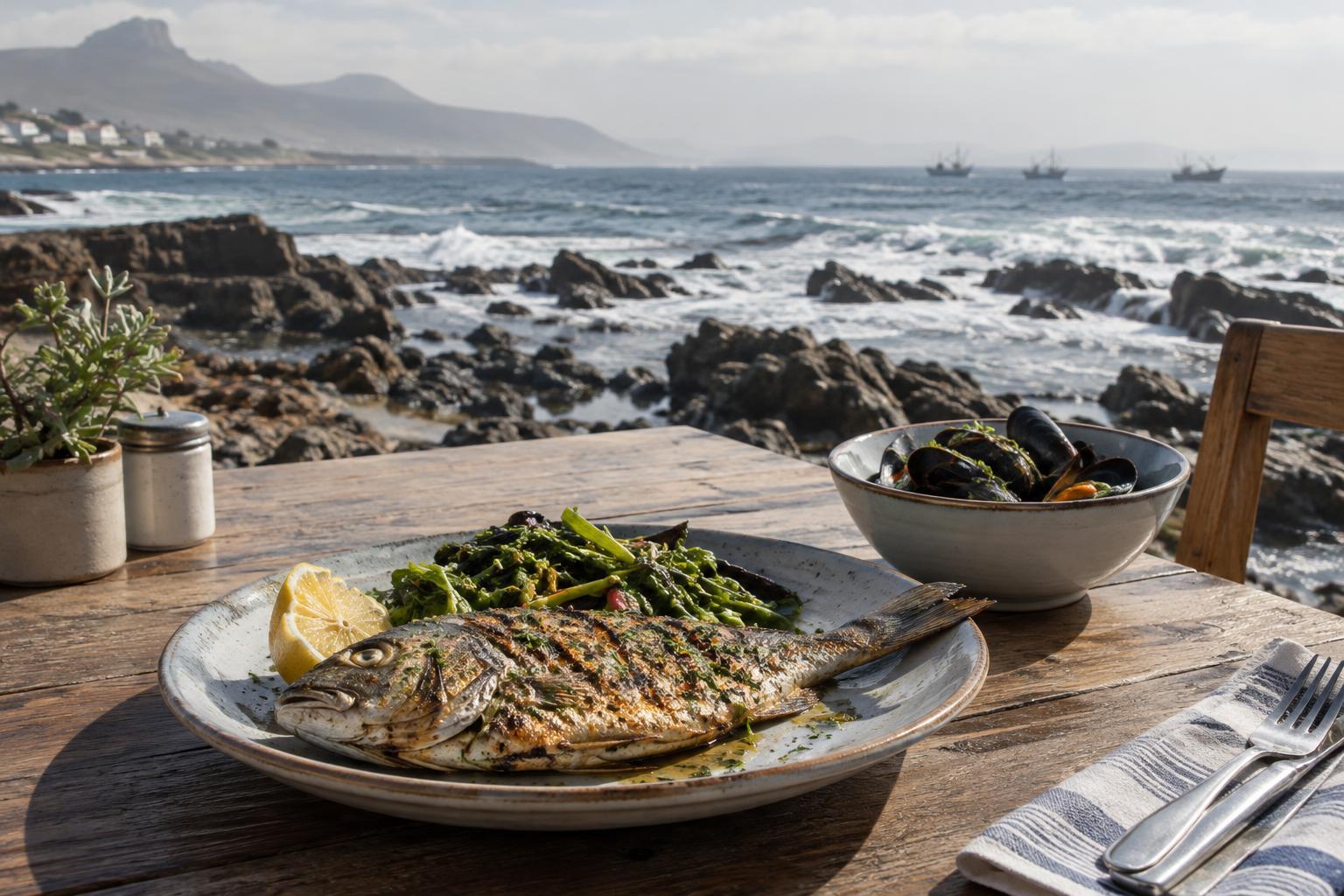
Start with a conversation, not a species list
A coastal fishmonger’s display can change with the catch, the season and deliveries. Rather than arriving set on one fish, describe what you want to cook. Are you planning a quick pan-fried supper, a braai or a fish curry? How many people are you feeding? A good fishmonger can suggest a suitable whole fish, fillet or cut and explain how its texture will behave in the pan or on the coals.
Ask what the fish is called, whether it was caught or farmed, and where it came from. Common names can be broad, so it is worth checking the exact species if that matters to your choice. You can also ask when the shop received it and whether it has previously been frozen. Frozen fish is not automatically a poorer choice; an honest answer helps you plan when to cook it and how to handle it.
Look at the whole display
Before focusing on one fish, notice how the counter is kept. Chilled fish should be displayed cold, with melting ice able to drain away rather than leaving the fish sitting in water. The work area and utensils should look clean, and raw fish should be handled with care. These observations cannot tell you everything about its history, but they can help you decide whether you are comfortable buying there.
For a whole fish, look for skin that appears moist rather than dried out, and flesh that looks firm rather than collapsed. Clear, bright eyes and red or pink gills may be useful clues, but neither is a perfect test: appearance varies by species and can change during handling. Consider the fish as a whole. If it looks tired or damaged, ask to see another option instead of relying on a single attractive feature.
Use your nose and check the cut
Fresh fish generally smells mild and clean, perhaps faintly of the sea. A strong sour, rotten or ammonia-like odour is a reason to pass. Fish sold as fillets may have no eyes or gills to inspect, so look closely at the flesh instead. It should appear moist and intact, not dry around the edges or breaking apart. Some natural colour variation is normal, and the expected shade depends on the species.
If you are buying a cut portion, ask to see the surface that was against the tray as well as the top. A fishmonger may be able to show you a fillet or portion more clearly before wrapping it. You can also ask for pin bones to be removed or for a whole fish to be scaled and gutted. Confirm what preparation is included before you leave, especially if you are cooking somewhere with limited kitchen equipment.
Make a choice that suits the meal
The best-looking fish on the counter is not necessarily the best fish for your recipe. A firm cut can be easier to manage on a braai, while a more delicate fillet may suit gentle pan-cooking. For a stew or curry, ask which available options will hold together and which are likely to flake. If you are unfamiliar with a fish, start with a simple preparation that lets you learn its flavour and texture.
Price and portion size matter too. Whole fish may offer good value if you are happy to prepare it or use the bones for stock; fillets are more convenient but leave less room for trimming. Before buying, check how many portions you will get and whether the weight includes the head and bones. If sustainability is important to you, ask for the exact species and origin so you can check appropriate, up-to-date local guidance rather than assuming every fish sold under one common name has the same status.
Keep it cold on the way home
Choose fish near the end of your shopping trip, especially on a warm beach day. Ask for it to be wrapped securely, keep it separate from ready-to-eat food and place it in a cooler bag with ice packs for the journey. Avoid leaving it in a parked car while you explore. If you cannot keep it properly chilled, it may be better to buy it on another day.
At home, refrigerate the fish promptly and follow any storage advice supplied by the fishmonger. If your plans change, ask whether the fish is suitable for freezing and pack it well before doing so. Wash hands, boards and utensils after handling raw fish, and cook it thoroughly. A little planning after the purchase protects the quality you took care to choose at the counter.