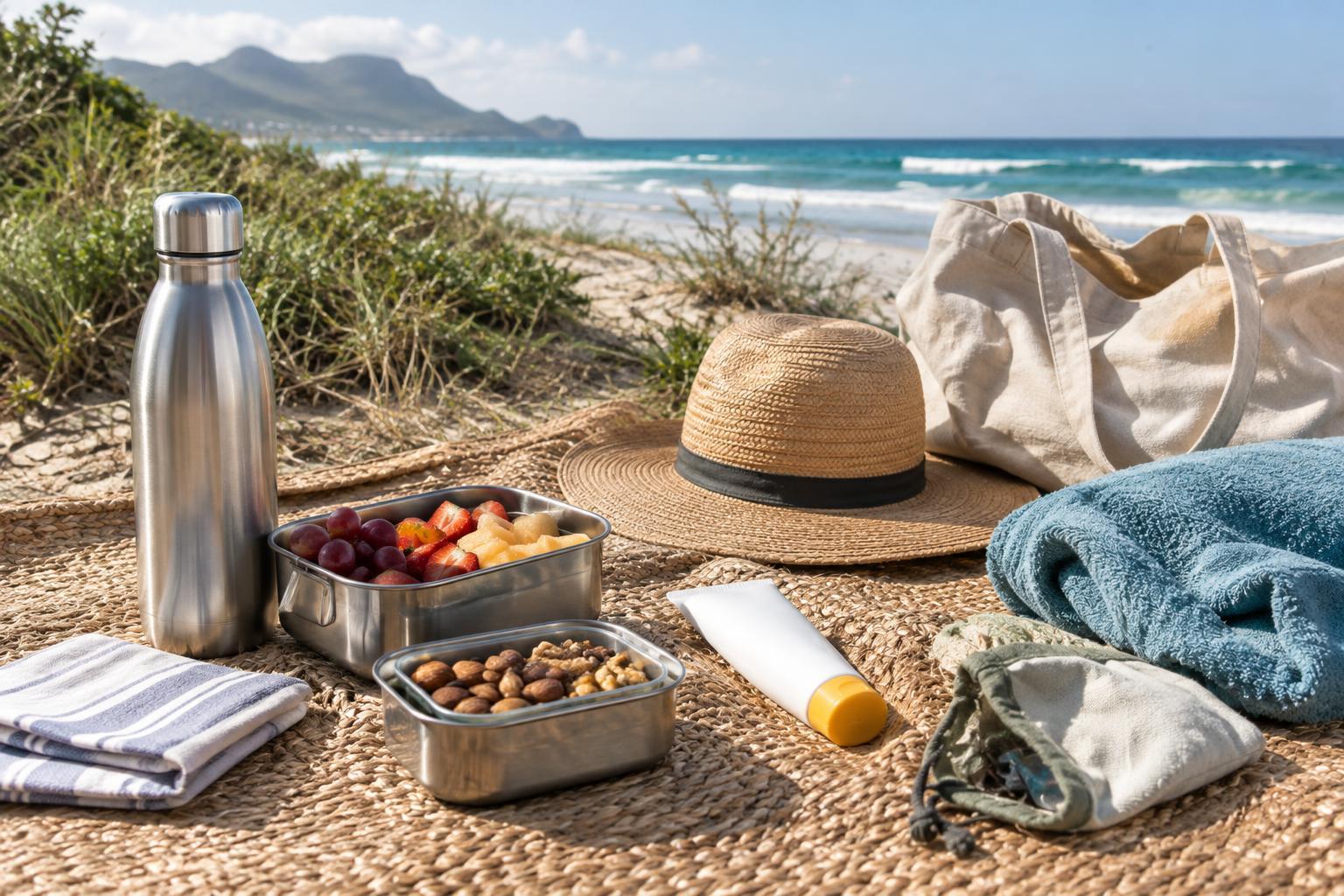
Start before you leave the beach
The easiest sand to clean is the sand you never pack. Before leaving, give towels, mats and bags a firm shake away from other beachgoers. Brush dry sand from feet, footwear and toys, and check pockets, bag seams and the folds of a beach chair. If your swimwear is still wet, resist rubbing it against a towel: damp sand tends to cling more tightly and can work its way into the fabric.
Keep damp items separate from clean clothes for the journey home. A washable wet bag or a dedicated tub can contain drips without trapping everything together. Carry rubbish away with you, and avoid using soap or detergent at the beach, where wash water can reach the sand or sea.
Unpack and sort as soon as you get home
Even after a short coastal outing, a closed bag can hold moisture against fabric and metal fittings. Empty it when you get home, rather than waiting until the next morning. Put towels and swimwear in one pile, hard items such as buckets and sandals in another, and anything delicate or electronic somewhere dry. Turn bags inside out if their design allows it, and empty any hidden sand from corners and pockets.
Let sandy fabric dry briefly before trying to remove stubborn grains. Once the sand is dry, shake the item outdoors or use a soft brush. For a heavily coated towel, a second shake before washing may help keep sand out of the machine. Check care labels before laundering, especially on lined bags, hats and items with coatings.
Rinse salt without overcomplicating the wash
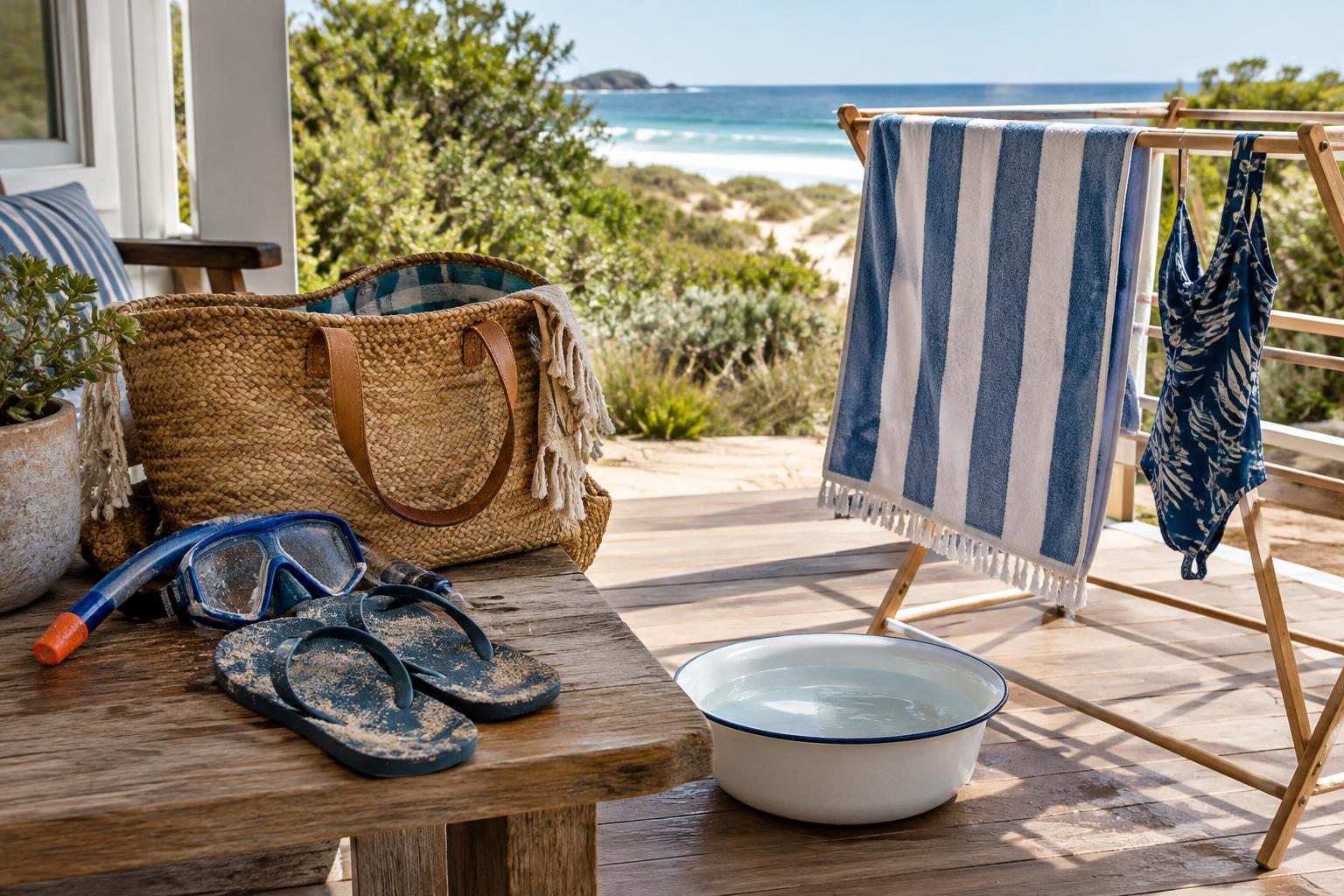
A fresh-water rinse is a useful first step for swimwear, reusable water bottles, snorkelling gear, plastic toys and the metal parts of chairs or umbrellas. Work water into seams, zips and joints where salt can linger. For items that touched food, such as a cooler or lunch container, wash food-contact surfaces according to the maker’s instructions rather than relying on a quick rinse.
Wash towels and washable clothing according to their labels, using an appropriate amount of detergent. Swimwear often benefits from a gentle wash and thorough rinse, but its care label should guide you. Avoid scrubbing elastic or decorative finishes aggressively. If you need to spot-clean a beach bag, test a small area first and keep the bag open while it dries.
Dry every layer, seam and pocket
Clean gear can still develop an unpleasant smell if it is stored damp. Spread towels out fully on a line or rack rather than leaving them folded over themselves. Hang swimwear where air can reach both sides, and turn thick items partway through drying. Follow care labels for sun exposure and tumble drying; prolonged heat or strong sun may not suit some fabrics and finishes.
Open cooler lids, unzip bags and extend folding chairs so air reaches concealed surfaces. Tip water out of toys and containers, then leave them upside down to drain before turning them over to finish drying. Pay particular attention to umbrella sleeves, chair joints and the base of a beach bag. If an item feels cool or damp inside a pocket or seam, give it more time before packing it away.
Handle delicate gear and pack for next time
Keep cameras, phones and other electronics out of the general rinse-and-wash routine. Remove loose sand gently without grinding it into buttons or ports, and follow the device maker’s cleaning guidance. Likewise, check the instructions for specialised gear such as masks, fins and insulated bags; materials and coatings differ. Do not force a gritty zip. Brush away loose grains first, then clean it as the item’s instructions allow.
Once everything is completely dry, store it loosely in a clean, ventilated place. Refill a small beach kit with a spare bag for wet items and a soft brush, so the next trip begins with less preparation. The routine need not be elaborate: shake off sand, rinse away salt where appropriate, wash what needs washing and give every item enough time to dry.