Think of each pool as a small habitat
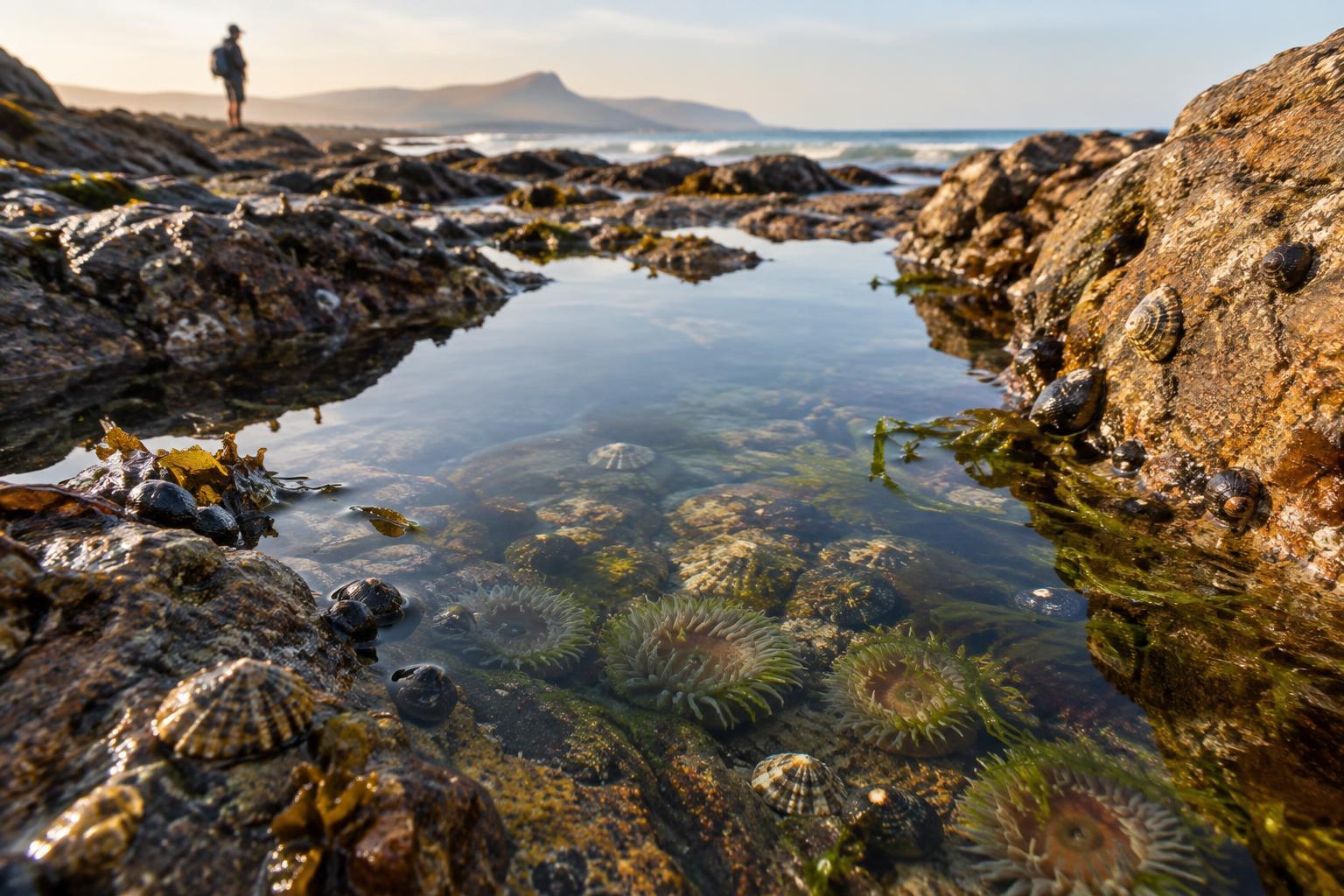
At low tide, the rocky shoreline reveals pools that may hold anemones, small fish, crabs, snails and other marine life. For visitors, they offer a chance to slow down and notice details that are easy to miss from the beach. For the animals inside, however, a rock pool is not a display case. It is shelter, feeding ground and a place to wait for the sea to return.
The simplest approach is to look first and touch as little as possible. Pause at the edge of a pool and let your eyes adjust. An animal that seemed invisible among the stones may start moving when the water settles. Watching quietly often reveals more than lifting rocks or chasing creatures around a pool.
Choose the right moment and a safe place to stand
Plan your visit around a suitable low tide, but check local tide information and conditions before setting out. A low tide does not make every stretch of coast safe: swell, slippery rock and rising water can still create hazards. Stay well back from breaking waves, keep an easy route to shore in sight and leave before the incoming tide narrows your way back. If the rocks look unsafe, enjoy the shore from a distance instead.
Move slowly between pools. Wet rock and seaweed can be slick, while loose stones may shift underfoot. Choose firm, bare footholds where possible rather than stepping into pools or onto living growth. With children, set a clear boundary for where they may explore and stay close enough to help them navigate uneven ground. A pair of shoes with secure soles can make careful walking easier.
Watch without rearranging the pool
It can be tempting to lift a crab, turn over a stone or move a shell for a better view. Each action may expose a sheltered animal to sun, air or a predator, or disturb a hiding place you did not notice. Leave animals where they are, including those that appear still. An empty-looking shell may be occupied, and an animal tucked beneath a rock may be there for protection.
Avoid scooping creatures into buckets, even briefly. A small container can warm quickly in the sun, and animals may be injured during handling or forgotten when it is time to leave. If you want a closer look, crouch beside the pool and observe from above. A photograph or a simple description of what you saw makes a better keepsake than anything taken from the water.
Keep the water and rocks as you found them
Rock-pool life depends on the pool’s conditions as well as its hiding places. Do not pour fresh water, drinks or food into a pool, and keep soap, lotions and other products out of the water. If you have applied sunscreen, avoid putting your hands into pools unnecessarily. Leave seaweed attached, and do not pry animals from rock surfaces; they may be holding on firmly to stay safe.
Take litter away, including small pieces such as wrappers or fishing line if you can pick them up safely. Leave natural objects in place rather than building dams, stacking stones or making channels between pools. These changes may seem minor from above, but they can alter shelter or water movement for the creatures living there. Follow any signs or local restrictions at the shore you visit.
Make curiosity part of the care
A gentle rock-pool visit is not about identifying every creature. Try noticing how animals use their surroundings: which ones cling to shaded rock, which hide in crevices and which move only when the water is still. Look for patterns and colours without needing to test how an animal responds to touch. If you are unsure whether something is living, leave it undisturbed.
Before you go, take one last look around for belongings and check that you have not left anything in or beside a pool. The best visit ends with the habitat much as you found it. Along South Africa’s varied rocky shores, that small habit leaves the next visitor the same chance to discover what is living at the water’s edge.