Start with the place, not a must-eat list
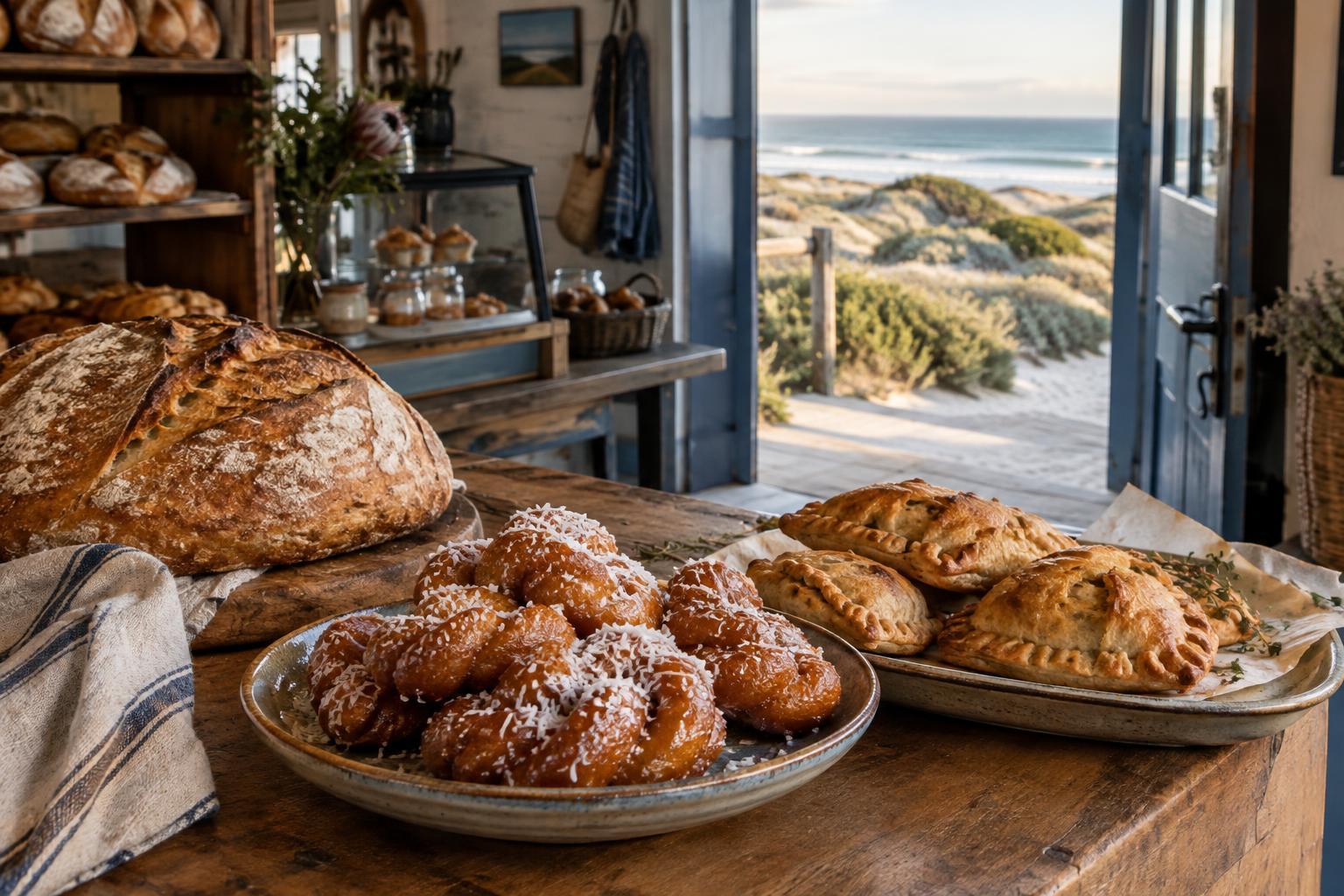
A bakery visit is an easy way to add local flavour to a coastal trip. You can pick up breakfast before a beach walk, pause over tea on a windy afternoon, or buy something to share at your next stop. The pleasure is partly in seeing what people around you choose. A tray that empties quickly may tell you more about a bakery than its most photogenic display.
Rather than arriving with a fixed list of foods to find, look at what is actually being baked in that town. South Africa’s shoreline includes cities, fishing communities and small holiday villages, each with its own mix of customers and food traditions. A speciality may be closely associated with a region, made by one family, or offered only on certain days. Ask what the bakery makes in-house and what regulars tend to buy.
Look for regional influences on the counter
Around Cape Town and parts of the Western Cape, you might encounter Cape Malay koesisters: warmly spiced, syrup-soaked doughnuts often finished with coconut. They are distinct from the plaited, syrup-dipped koeksisters sold elsewhere. Both are worth trying if you see them, but neither should be treated as a feature of every coastal bakery. Ask whether a batch is available that day rather than assuming it will be on the shelf.
Along the KwaZulu-Natal coast, Indian-influenced snacks such as samoosas may appear alongside bread and sweet pastries. Fillings and seasoning vary, so a question at the counter can help you choose. In the Eastern Cape, you may come across umbhako, a traditional bread associated with Xhosa food culture, particularly through markets, small food businesses or community recommendations. It is not necessarily a standard bakery item. Across the coast, rusks, milk tart, vetkoek and familiar pies can also make a satisfying stop; they are enjoyed well beyond any one region.
Pay attention to local twists without assuming every ingredient is locally sourced. A baker might use a nearby dairy product, a seasonal fruit or a house-made spice mix, but it is best to ask before describing a bake as a regional speciality. Sometimes the most revealing answer is a story about who taught the baker a recipe or why customers request it.
Build a small, unhurried tasting route
One or two bakery stops are usually enough for a day out. Choose a morning stop near your accommodation or walking route, then leave room for an afternoon visit in another neighbourhood or town. Bakeries often sell out of popular items, while smaller places may have limited trading hours. Check current opening times and access details before setting off, especially if you are making a detour.
At each stop, try a mix of something familiar and something new. A plain loaf or simple pastry gives you a feel for the bakery’s everyday baking; a recommended speciality adds a sense of place. If you are travelling with others, buying a few items to share lets everyone taste more without turning the outing into a contest to eat the most. Keep a note of names you want to remember, particularly when similar-looking bakes have different histories or preparations.
Ask well and buy thoughtfully
A short, friendly question often leads to the best recommendation: “What do you make here?” or “Is there something people from this area especially like?” If the counter is busy, make your choice and save longer questions for a quieter moment. Staff may know how an item is served, whether it contains nuts or dairy, and how long it will keep. If you have a serious allergy, explain your needs clearly and do not assume a small bakery can prevent cross-contact.
Consider what will travel well. Rusks and sturdy loaves are easier to carry than cream-filled pastries; sticky treats may need a container and a napkin. Bring a reusable bag, but accept protective packaging when it will keep food clean and intact. If you hope to photograph a baker at work or post someone’s story online, ask permission first.
Let the stop shape the rest of the day
A coastal bakery visit works best when it fits naturally into your plans. Take your purchase to an appropriate picnic spot, save it for a post-swim snack, or sit down if the bakery has space. Check beach rules before bringing food onto the sand, and pack away wrappers so they do not blow into the dunes or sea.
There is no single definitive coastal bakery trail. The rewarding approach is to notice how recipes, family traditions and everyday tastes change as you travel. Follow a local recommendation, ask one useful question, and leave time to enjoy what you bought. That is often enough to make a simple bakery stop a memorable part of the journey.