Start with the shore beneath the bird
A bird’s surroundings are the first clue to its identity. Along South Africa’s coast, sandy beaches, rocky intertidal areas and estuary mudflats offer different feeding opportunities. Watch where a bird chooses to search: in the wash of a receding wave, among exposed rocks, or in shallow water at the edge of a lagoon. Habitat alone will not identify it, but it can help narrow the possibilities before you study its colours.
Take a moment to judge size and shape, too. Is the bird sparrow-sized or much larger? Does it run in short bursts, walk steadily, or stand almost still? Light, distance, age and seasonal plumage can all change the colours you see. Bill shape, leg length and repeated feeding movements often provide more dependable clues than a quick impression of brown, grey or white.
Match the bill to the feeding method
A short, straight bill is useful for picking food from the surface. Sanderlings, often seen running after retreating waves on open sand, use their small dark bills to search the wet beach. White-fronted plovers also have short dark bills, but tend to move in stop-start bursts as they pick at food on sand. To separate the two, look beyond the bill: sanderlings often feed close to the swash line, while a plover may pause on drier sand and stand more upright.
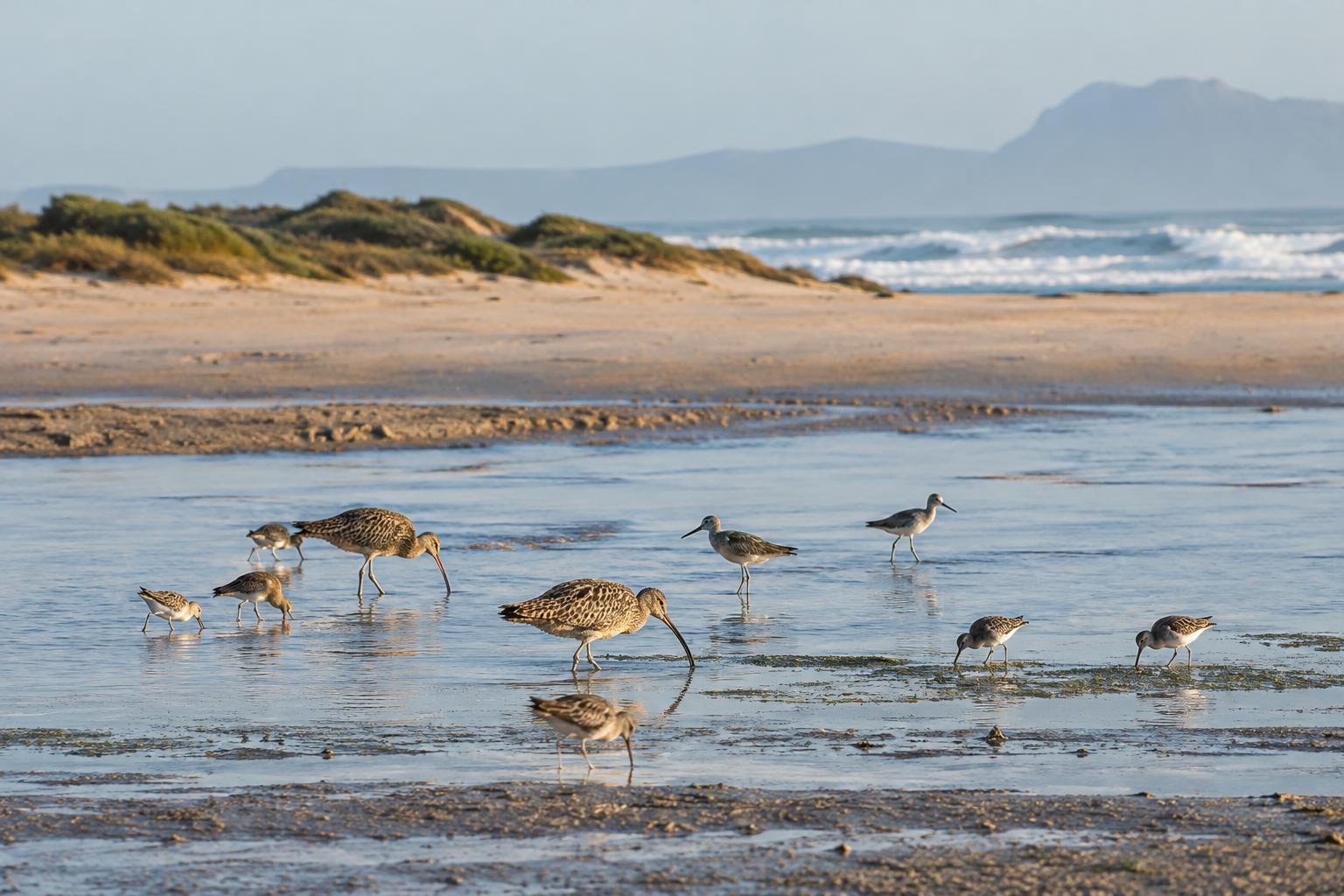
Longer bills reach food below the surface. A curlew sandpiper probes mud with a slim bill that curves slightly downward, while a whimbrel has a much longer, more obviously downcurved bill. On shallow estuary water, a pied avocet’s fine upturned bill is especially distinctive. Rather than probing straight down, it often sweeps the bill from side to side. Watch the action for several seconds; a single still view may hide the feature that makes the bird recognisable.
Use legs to read depth and movement
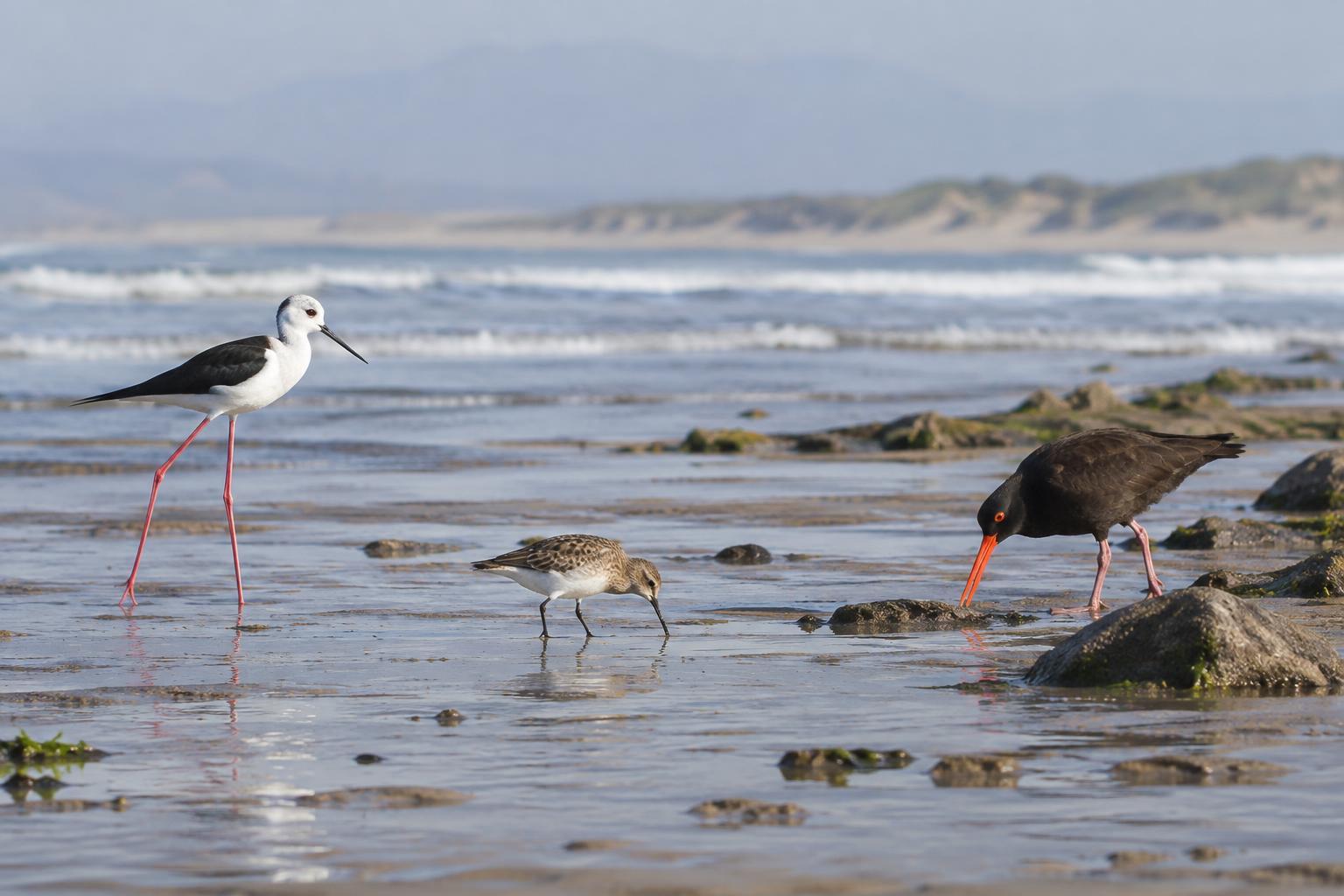
Leg length tells you how deeply a bird can wade. A black-winged stilt stands high above shallow water on exceptionally long pinkish legs, with a thin, straight dark bill. A pied avocet also wades, but its pale bluish-grey legs and upturned bill give it a different outline. Both may be seen around suitable wetlands and estuaries, so check the whole silhouette rather than relying on a black-and-white impression.
Smaller shorebirds demand a closer look. Sanderlings have short, dark legs suited to quick runs across wet sand. White-fronted plovers have dark legs as well, so their shorter-billed, rounder appearance and stop-start feeding style matter more than leg colour alone. Mud on the legs, shadow and glare can obscure colour; note whether the legs look long or short relative to the body before trying to name their exact shade.
Look for specialists on rocks and estuary edges
On rocky shores, the African oystercatcher is hard to confuse with the small sand-runners. It is a substantial, mostly black bird with a long red bill and reddish legs. Watch it search the intertidal zone, where it can feed on shellfish and other shore animals. Its bright bill is a useful clue, but where and how it feeds are just as helpful—especially when distance makes colours difficult to judge.
At a quieter estuary edge, a common sandpiper may walk along the waterline, picking at small prey and repeatedly bobbing its rear end. It has a medium-length, fairly straight bill and relatively short legs, giving it a different outline from a long-legged stilt or long-billed whimbrel. Shorebirds move between feeding and resting places as water levels change, so returning to the same viewpoint at another tide may reveal a different mix.
Build an identification without disturbing the birds
Try a simple sequence: note the habitat, estimate size, sketch the bill’s length and curve in your mind, then compare the legs with the depth of water. Finally, watch at least a few feeding movements. “Small bird, short straight bill, dark legs, chasing waves on open sand” is a more useful field note than “grey bird on beach.” A photo or brief written description can help you check an uncertain identification later; it is fine to leave a bird unnamed.
Give feeding and resting birds room. Use binoculars instead of moving closer, avoid walking through groups, and step back if birds stop feeding or repeatedly move away. Be particularly careful around birds on upper beaches, where nests or chicks can be difficult to spot. From a respectful distance, you can spend longer observing—and learn how each bird’s bill, legs and habits fit the place it calls home.