Start with what you already own
A low-waste beach kit does not need to be a collection of new products. Before buying anything, look through your cupboards for a sturdy tote, refillable bottles, food containers and a towel that still does its job. Reusing familiar items is often simpler than finding space for specialised beach gear, and it makes packing easier to repeat.
Choose one bag that is comfortable to carry from the car, bus stop or accommodation to the sand. Put smaller items in washable pouches or containers so they are easy to find. If your trip involves a long walk, pack lightly: a kit is only useful if everyone can carry it back, including wet towels and empty containers.
Pack food and drinks with the return trip in mind
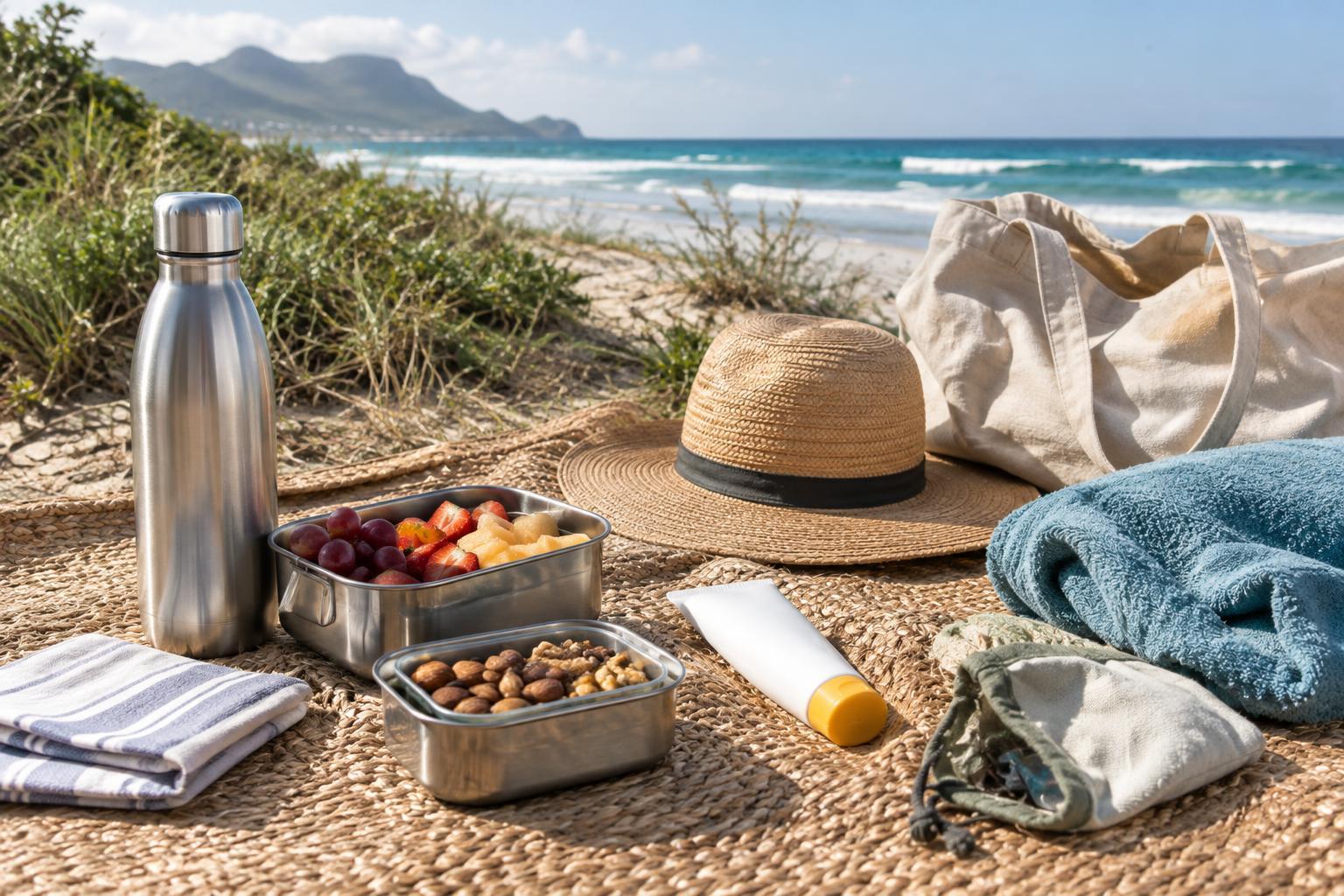
Fill a reusable water bottle before you leave and consider an extra bottle if you expect to spend several hours outdoors. Pack snacks in lidded containers or reusable wraps rather than loose packaging that can blow away. Fruit, sandwiches and other foods that are easy to serve without disposable plates can keep the meal straightforward. Bring a reusable cup or cutlery only if your menu calls for them.
Give leftovers and scraps their own container or sealable bag. That includes fruit peels: even natural food waste does not belong on the beach. If you buy food nearby, ask whether you can skip items you will not use, such as extra napkins or single-use cutlery. Keep perishable food cool as appropriate, and choose a menu that suits the time you will be away from refrigeration.
Make room for comfort and sun protection
A shade option, hats and clothing you can comfortably wear between swims may reduce how often you need to reach for disposable extras. Pack sunscreen that suits your needs and follow its label for application and reapplication. A small towel for drying hands can also replace a handful of paper towels. None of these choices has to be perfect; the aim is to bring useful items you will actually use.
For South Africa’s varied coastline, check the forecast and the conditions at your chosen beach before setting out. Wind can scatter lightweight belongings quickly, so keep wrappers, hats and empty containers secured. Where available, follow local safety signs and lifeguard guidance, and check the beach’s current access rules before your visit.
Carry a simple clean-up pouch
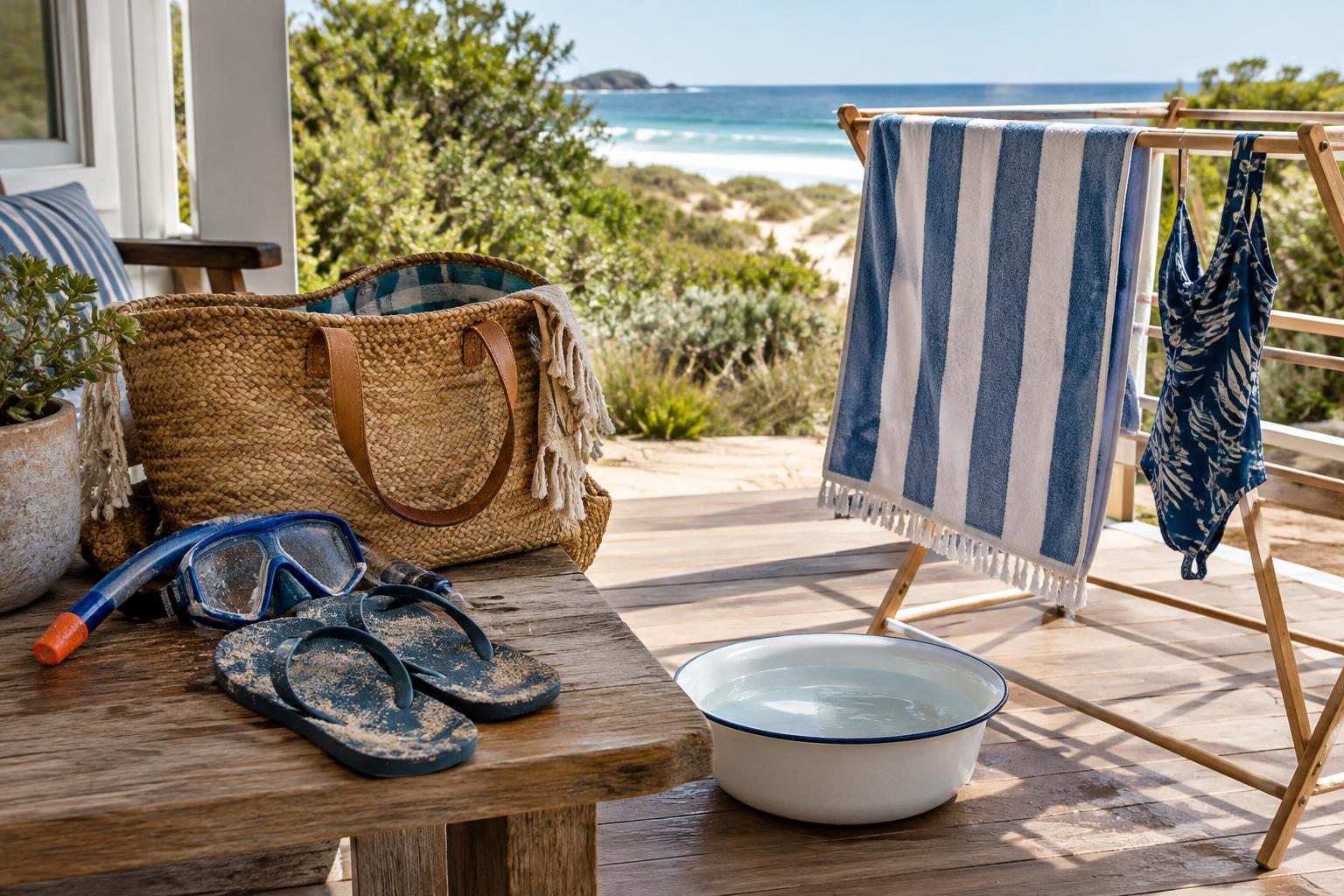
Add a reusable bag for your own rubbish, plus a separate washable or reusable bag for damp swimwear. Keeping the two apart makes unpacking less unpleasant. A small container with a secure lid can hold tiny items such as snack ties until you reach a suitable bin. If you bring anything breakable, check local rules first; avoiding glass is a practical choice on busy sand.
Bins may be full, far from your spot or absent altogether. Plan to take your rubbish home rather than relying on finding one. If you choose to pick up stray litter, use care: leave sharp, suspicious or potentially hazardous items alone. A relaxed beach day is not improved by taking unnecessary risks.
Reset the kit when you get home
Before leaving the beach, pause for a final look around your spot, including beneath towels and chairs. Shake sand from belongings where appropriate, collect every container and check that small items have not slipped out of pockets. Leave shells, plants and other natural materials where they are, and follow any posted rules for the area.
At home, empty the rubbish bag, wash reusable food containers and dry towels and pouches before putting them away. Make a quick note of anything you carried but never used, as well as anything you wished you had brought. After a few trips, your kit will fit the way you actually spend a day at the coast: comfortable, easy to carry and ready to leave the beach as you found it.