Plan the menu around the journey
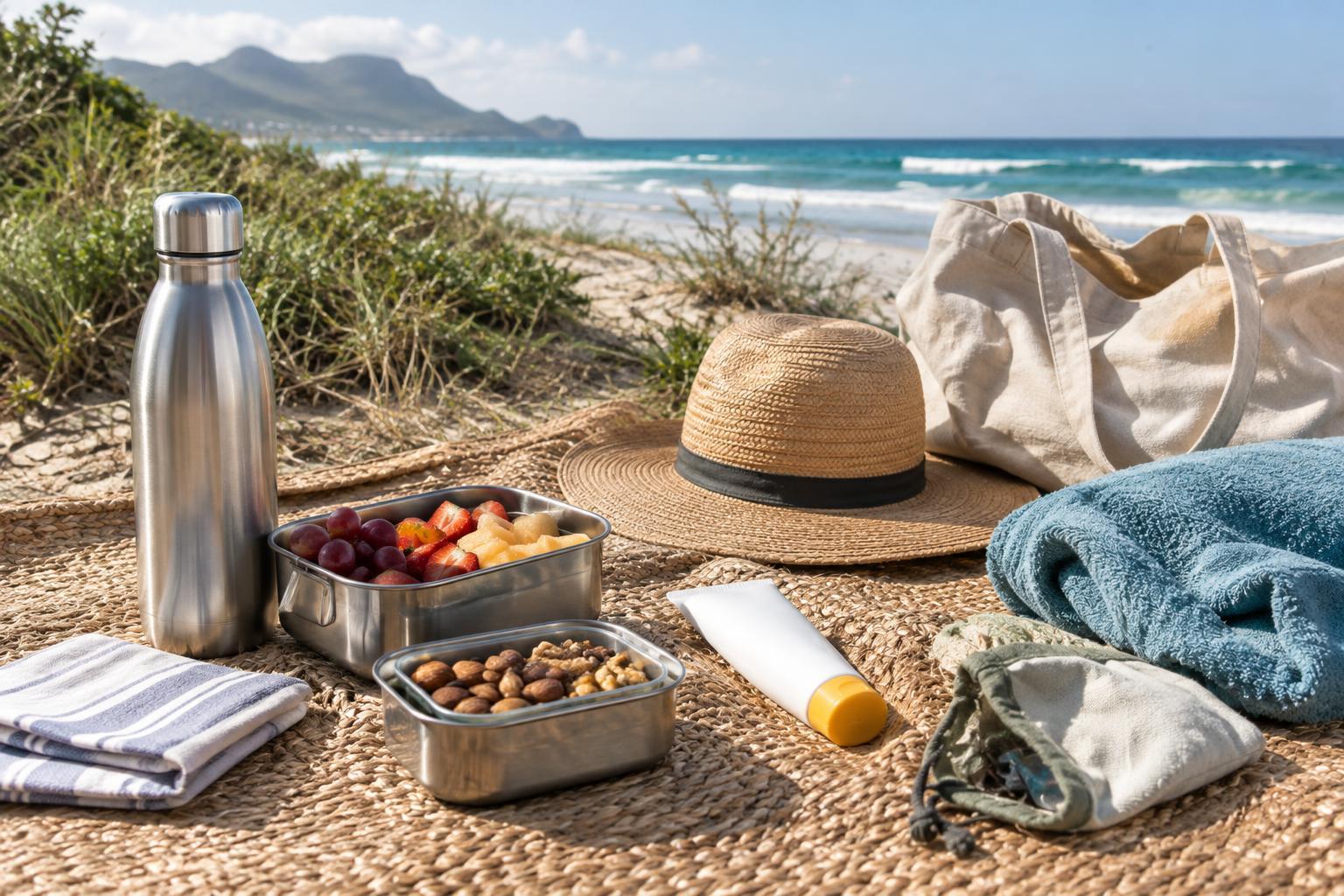
A good beach picnic begins before you reach the sand. Think about the full journey: time in the car, the walk from parking to your spot, and how long you expect to stay. If you cannot keep a food cold until you eat it, choose something less perishable instead. Whole fruit, crackers, bread, sealed nut butter and shelf-stable snacks are often easier to manage than creamy salads or filled rolls.
For foods that need chilling, prepare them shortly before leaving and refrigerate them until it is time to pack. Keep ingredients for sandwiches separate if you can; this helps bread stay fresh and lets you assemble only what you will eat. Pack modest portions rather than one large shared dish that will sit open through a long afternoon. If anyone has a food allergy, label their portion clearly and use separate utensils to reduce mix-ups.
Pack cold food so it stays cold
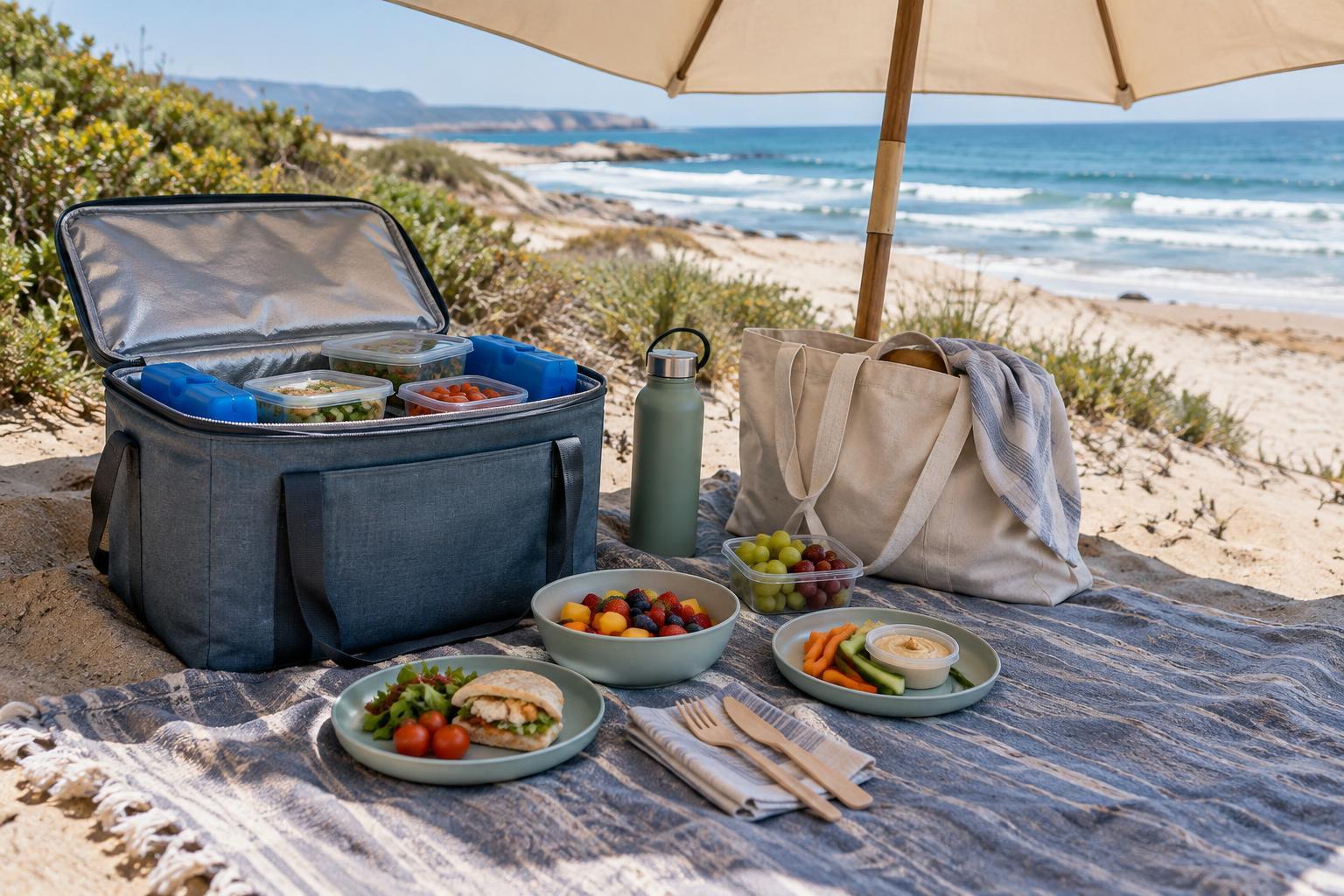
Use an insulated cooler or cooler bag with plenty of frozen ice packs. Chill the food and drinks first: a cooler helps maintain a cold temperature but will struggle to cool down warm items. Put chilled foods together near the ice packs, close containers securely, and fill empty space where possible so warm air has less room to circulate. Leakproof containers also help protect food if ice packs collect condensation.
Consider separate bags for drinks and food. People tend to open a drinks bag often, letting warm air in each time. Keep the food cooler closed until you are ready to serve, and place it in shade rather than leaving it in a hot vehicle or on sun-warmed sand. On a South African beach, a short stroll can feel much longer when you are carrying supplies, so choose a cooler you can comfortably take all the way to your picnic spot.
Keep hands, utensils and serving surfaces clean
Sand, seawater and sticky fingers are part of a beach day, but they do not belong in the lunchbox. Wash hands with clean water and soap when facilities are available, especially before handling food and after using the toilet. Bring hand sanitiser as a useful backup for hands that are not visibly dirty, along with clean water for rinsing fruit or utensils if needed. Do not rely on seawater to wash food or food-contact surfaces.
Pack a small clean mat or tray to create a serving area above the sand. Use utensils for shared foods instead of having everyone reach into the same container. Keep raw foods separate from ready-to-eat foods; for a simple beach picnic, it is usually easier to leave raw meat and seafood at home. Bring a bag for rubbish and another for used utensils so they do not end up beside clean plates or food.
Serve in small rounds, then close the cooler
Bring out only what people are ready to eat. Keep the rest covered and chilled, particularly dairy products, cooked meat, seafood, eggs, cut fruit and prepared salads. Return a container to the cooler promptly after serving rather than letting it sit on the picnic blanket while everyone swims. If you are unsure whether a food has stayed properly chilled, do not use its smell or appearance as the deciding test; harmful changes are not always obvious.
Make drinking water easy to reach, and give each person a cup or bottle they can recognise. A few simple choices can also make the meal more relaxed: fruit that can be peeled on the spot, individual snack portions and sandwiches assembled with clean hands just before eating. These reduce handling and leave less exposed food to watch over when the wind picks up.
Pack up with leftovers in mind
Before leaving, separate unopened food that remained properly chilled from anything that has spent time out in the warmth. Perishable leftovers that sat in the sun, lost their chill or were handled repeatedly are better discarded than carried home for another meal. If you cannot tell how long something was warm, err on the side of caution. Keep any food you do take home in the cooler for the return journey and refrigerate it promptly.
A successful picnic does not require an elaborate spread. A manageable menu, a well-packed cooler and a few habits that protect food from heat and sand will make lunch simpler. Then you can spend less time worrying about the basket and more time enjoying the shoreline.