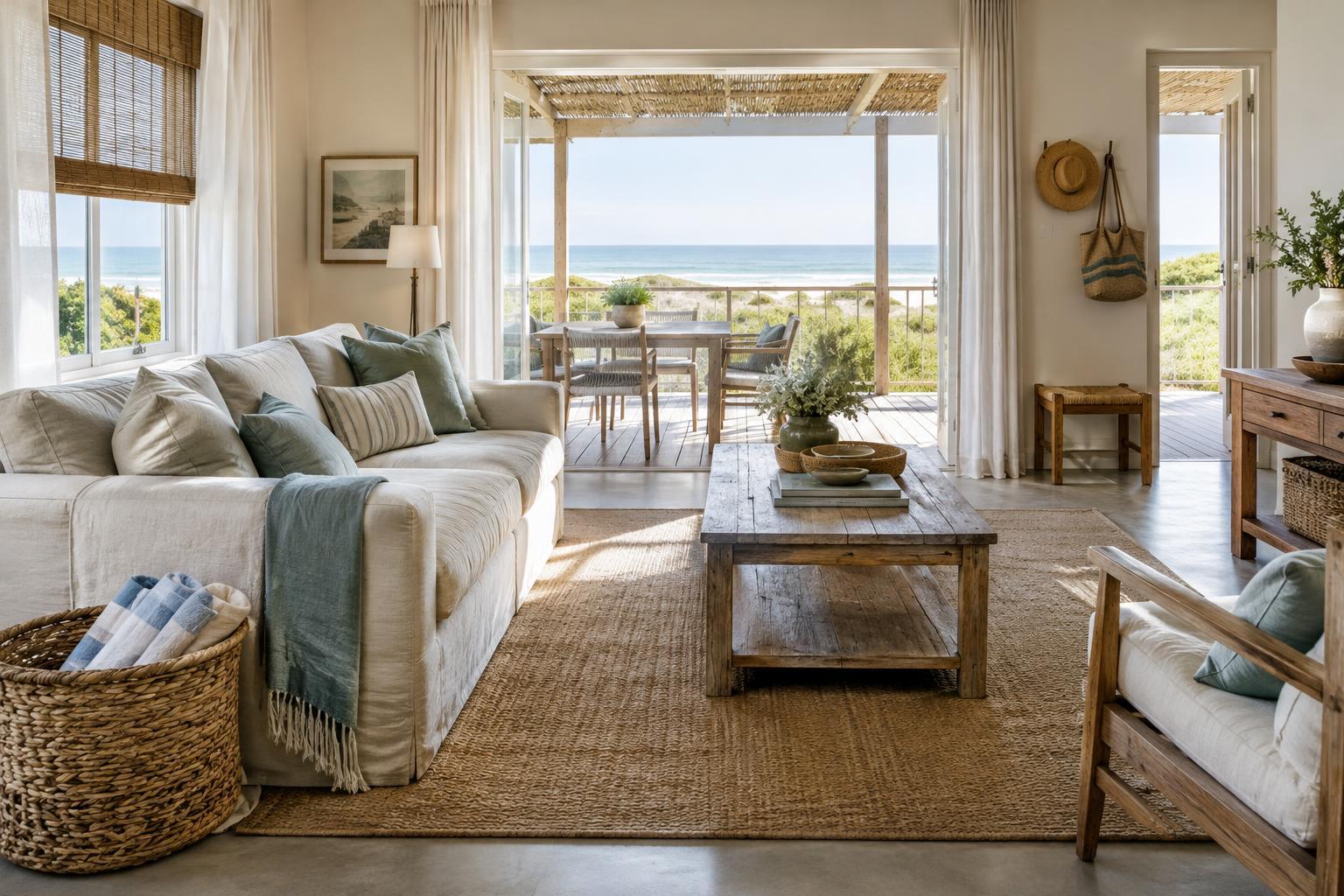
Start by watching the wind
The best place for an outdoor table is not always the place with the widest view. Before moving furniture or building a screen, spend time outside at different points in the day. Notice where a breeze feels pleasant, where it funnels around a corner, and whether the house, a boundary wall or planting already offers shelter. A position that works for a quiet morning coffee may feel very different during an afternoon meal.
On a South African coastline, conditions can vary considerably from one property to the next. Nearby buildings, dunes, vegetation and the shape of the land all affect how wind reaches a patio. Test a few possible spots with movable chairs before committing to a permanent layout. Keep paths to doors, taps and outdoor cooking areas clear so the sheltered spot remains easy to use.
Make shelter without shutting out the coast
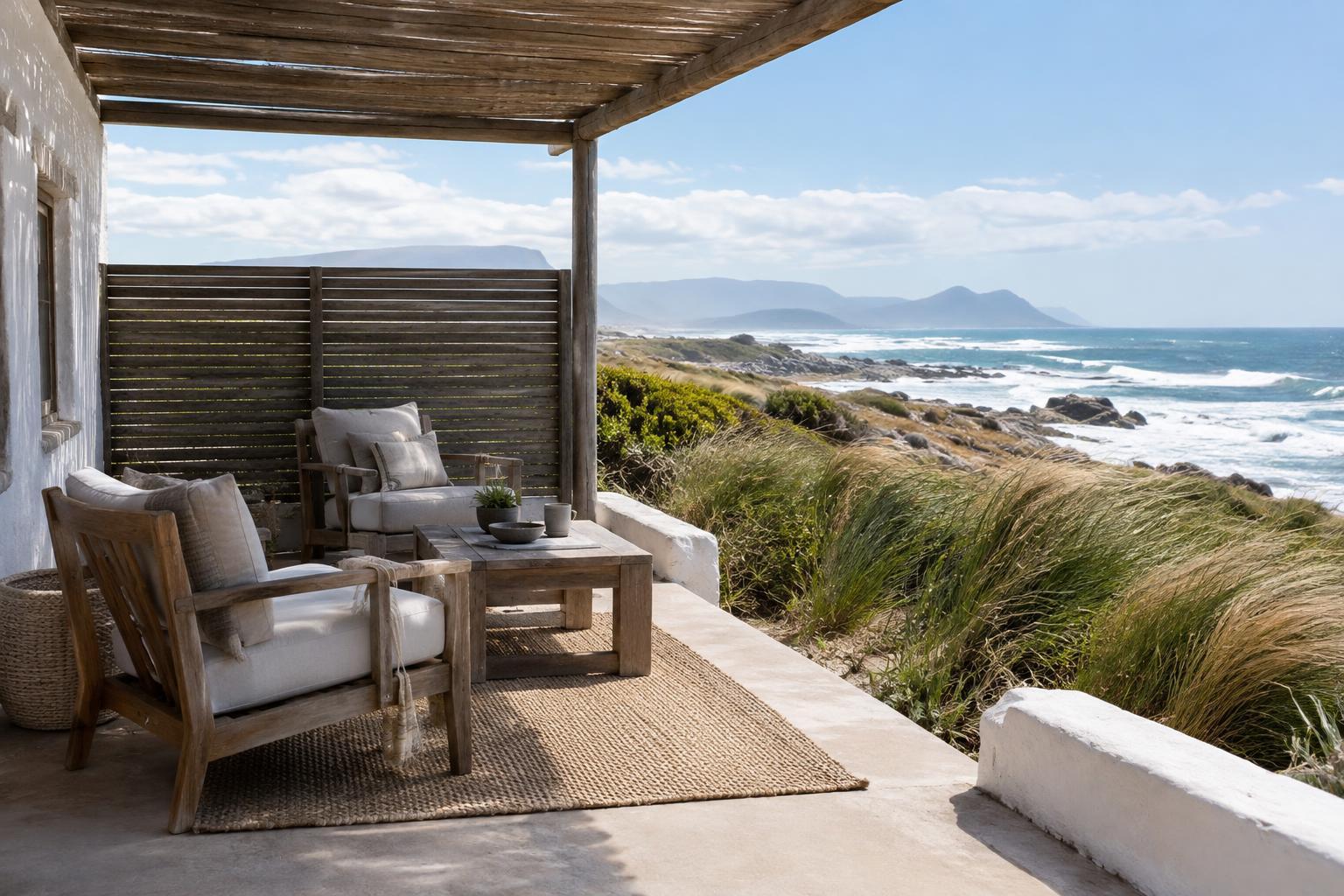
A solid barrier may block wind directly behind it but leave the space feeling enclosed, and gusts can curl around its edges. A slatted screen, suitable outdoor fabric panel or well-placed planting can soften the breeze while preserving light and glimpses of the sea. The most comfortable arrangement often protects the side facing the troublesome wind rather than enclosing the entire seating area.
Think about the height and position of a windbreak from a seated person’s perspective. A low screen might shelter ankles while leaving faces exposed; a tall one might interrupt the view you hoped to enjoy. Movable planters offer a way to experiment, but they need enough weight and stability for exposed conditions. If a screen, pergola or shade structure needs permanent footings, seek appropriate local guidance on safe installation and any permissions that may apply.
Choose furniture for salt, sun and easy storage
Salt air, strong sunlight and wind put outdoor furniture under steady wear. Look for pieces intended for outdoor use, with finishes and fixings suited to a marine environment. Even durable materials benefit from routine rinsing and care according to the maker’s instructions. Try chairs before buying: a stable, comfortable seat you can move into shelter is often more useful than a delicate set chosen only for its appearance.
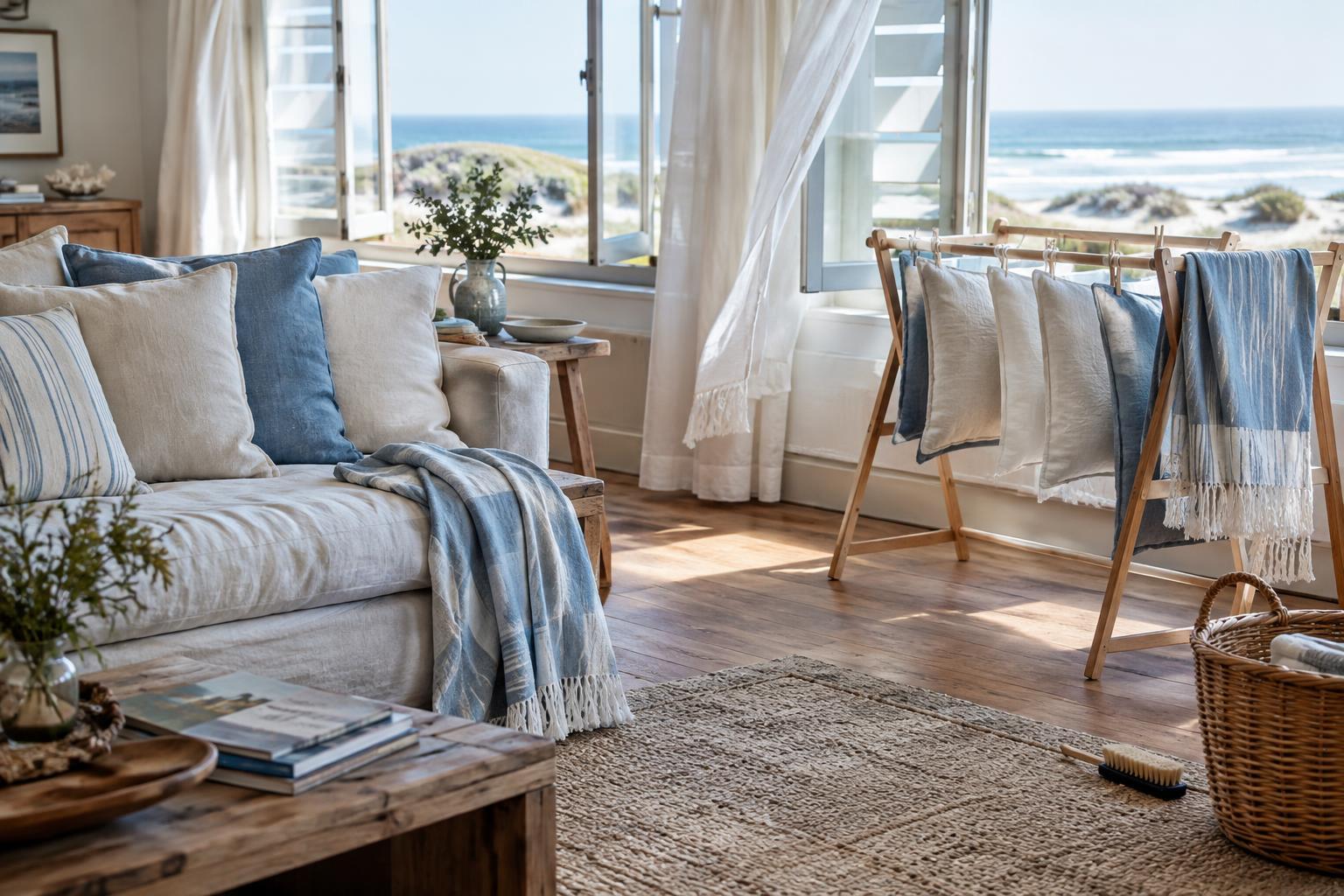
Cushions make a coastal patio inviting, but they should be simple to remove and store when conditions change. Choose washable covers where possible, and give damp fabric time to dry before packing it away. Keep loose accessories to a minimum on exposed days. A small storage bench or an accessible indoor cupboard can make the difference between using the space regularly and treating every visit as a setup task.
Plan for shade, rain and everyday comfort
Shelter from wind is only part of the picture. Consider where the sun falls when you are most likely to sit outside, and whether shade will still reach the table as the day progresses. An umbrella can be useful in a protected corner, but it must be secured and closed when conditions call for it. Fixed shade should be planned with the same attention to exposure and installation as a windbreak.
Leave room for people to pull out chairs and pass behind them without brushing against a wall or planter. A surface that drains after rain and is comfortable underfoot makes the area easier to enjoy. If you add lighting, keep it gentle and practical: enough to see steps and the table, without turning a relaxed evening outdoors into a brightly lit room.
Build a space that can change with the weather
A coastal seating area works best when it has more than one mode. Lightweight side tables, movable chairs and removable cushions let you shift between a breezy lunch spot and a more protected place for cooler evenings. If space allows, arrange seating so people can talk without all facing directly into the wind. Keep the view as a pleasure, not a requirement for every chair.
After living with the arrangement for a while, note what you actually use and what stays untouched. You might find that one screen needs adjusting, a planter belongs elsewhere or the table would work better closer to the house. Small changes made in response to everyday use can create a more welcoming space than trying to solve every coastal condition at once.