Why coastal hardware needs attention
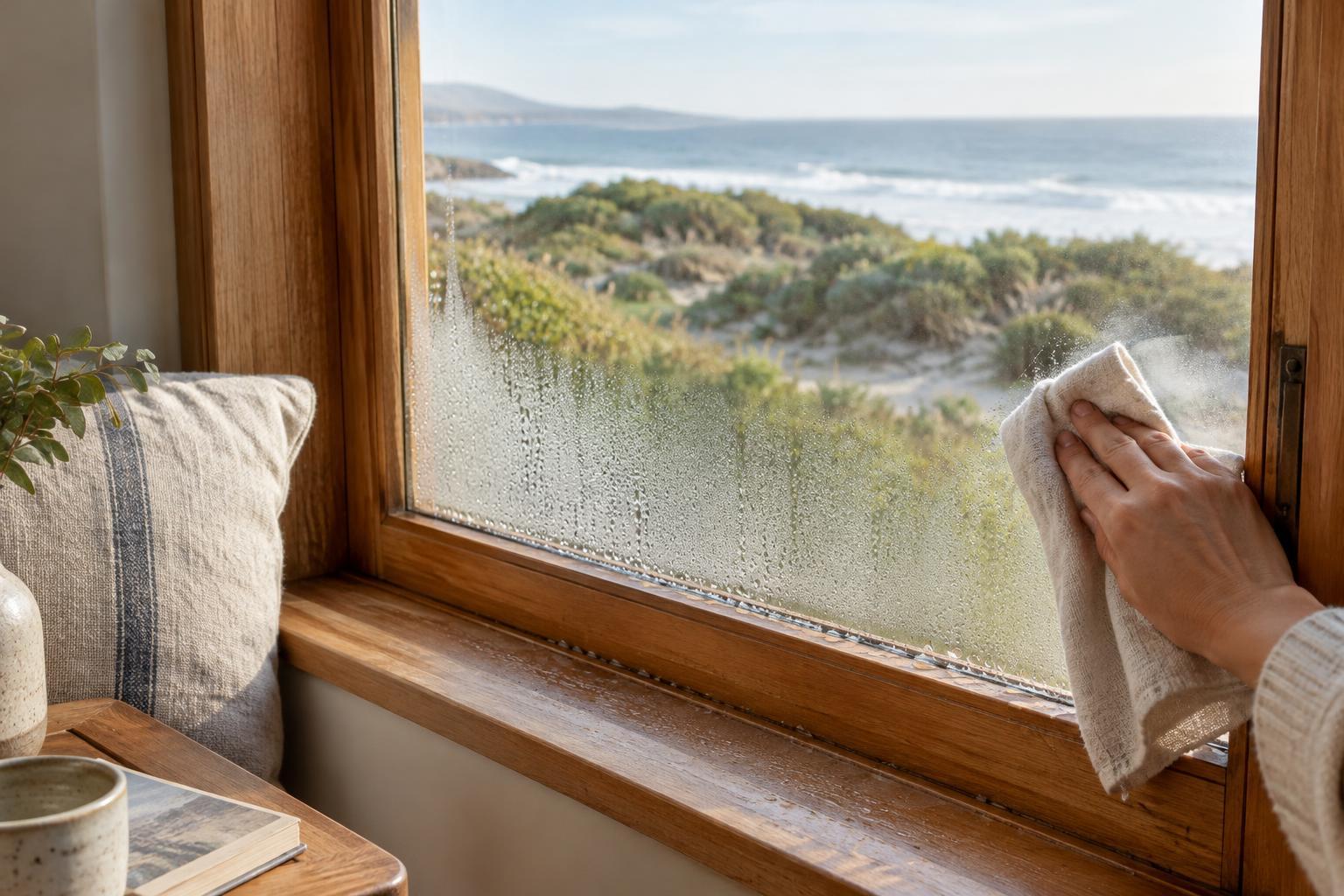
Living near South Africa’s shoreline means accepting a little sand on the floor and salt on the windows. The same airborne salt can settle on door handles, hinges and outdoor light fittings. When it remains on a surface with moisture, it can encourage corrosion, particularly where a coating is scratched or water collects in a joint. Even hardware that looks sound from a distance may develop staining around screws, seams or moving parts.
The aim is not to make a coastal home maintenance-free. It is to remove deposits before they build up and to spot small problems while they are still manageable. Hardware exposed to sea spray, prevailing winds or rain may need attention more often than items in a sheltered room. After windy weather, a quick look at exposed fittings can tell you where your home’s trouble spots are.
Clean gently, then dry thoroughly
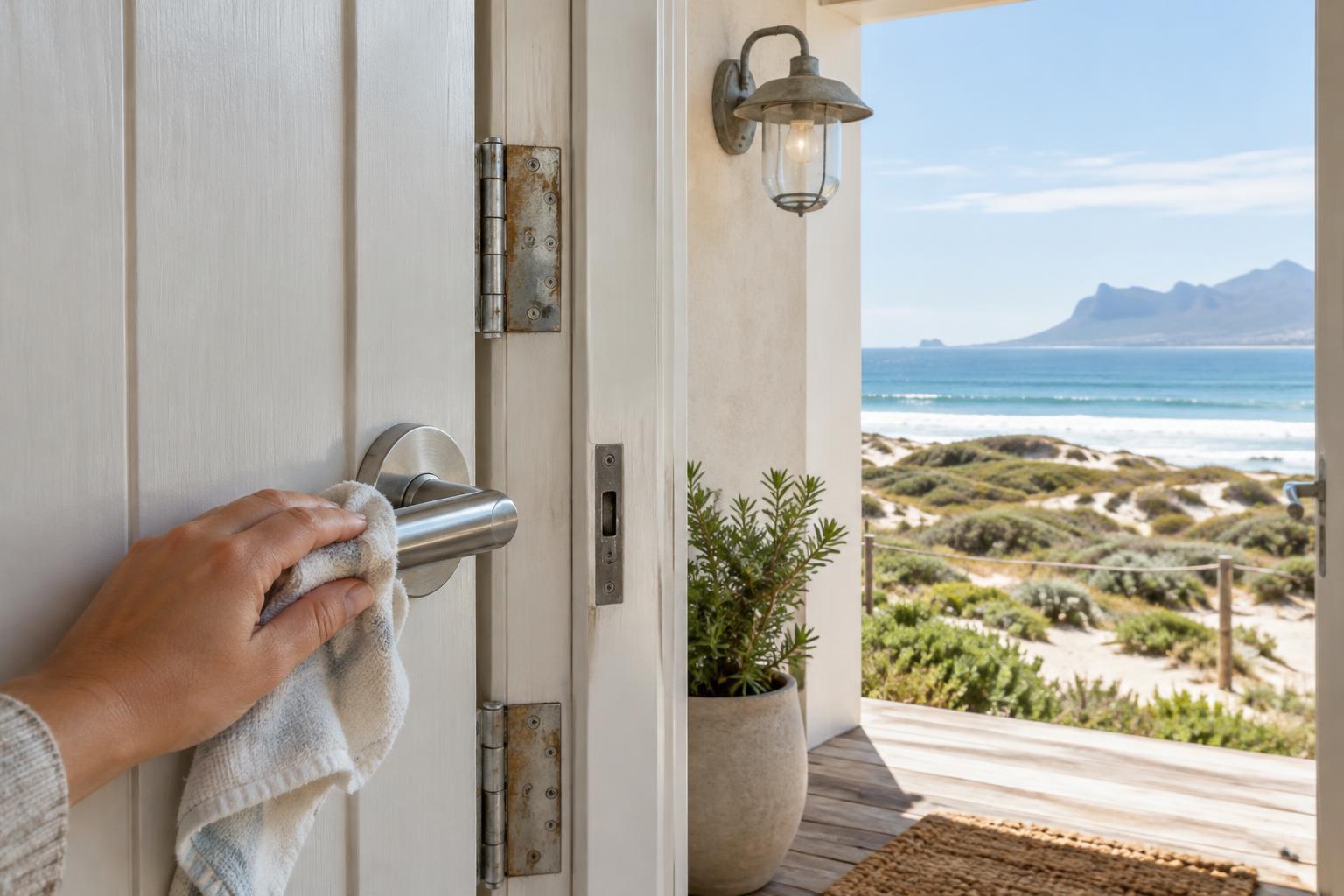
For most handles and accessible hinge surfaces, start with a soft cloth dampened with fresh water. If grime remains, use a little mild soap, then wipe away the residue with a separate damp cloth. Dry the surface and its edges carefully; leaving water around screw heads or in crevices defeats the purpose. A soft brush can help lift deposits from decorative details without scraping the finish.
Avoid steel wool, harsh abrasives and strong cleaners unless the hardware manufacturer specifically recommends them. They can mark protective finishes or leave particles that later rust. Test any unfamiliar product on an inconspicuous area first, and follow the care instructions for plated, painted or lacquered surfaces. A clean cloth is usually a better starting point than a bottle of polish.
Keep hinges moving without trapping grit
Hinges need a slightly different approach because salt and sand can reach their moving parts. Wipe the accessible surfaces, paying attention to the knuckle and the area around each screw. If a hinge squeaks or feels stiff, check its care guidance before applying a small amount of suitable lubricant. Wipe off excess so it does not collect grit or run onto a painted door.
Look beyond the hinge itself if corrosion keeps returning. A door that catches, a loose screw or water running down the frame can place extra strain on the fitting. Replace damaged fasteners with compatible ones rather than mixing metals without checking suitability; some combinations can corrode more readily in damp, salty conditions. A badly worn hinge, or one no longer holding a door securely, is a repair job rather than a cleaning job.
Treat light fittings as electrical equipment
Outdoor lights may have metal trims, screws and brackets that collect salt just like a door handle. Clean only the accessible exterior, using a lightly damp cloth rather than spraying water or cleaner onto the fitting. Keep moisture away from openings, switches and wiring, and follow the manufacturer’s instructions. Let the fitting cool before touching it, and switch it off before routine exterior cleaning.
Check for cracked covers, failing seals, rust around mounting points or moisture visible inside the fitting. Do not open an electrical fitting to clean corrosion unless you are qualified to do so. If water appears to have entered, the light behaves unusually or its mounting looks insecure, leave it off and ask a qualified electrician to assess it. A fitting designed for the exposure at its location is a better long-term choice than repeated cleaning of one that cannot keep moisture out.
Choose replacements with the location in mind
When hardware is due for replacement, consider the whole item: handle or fitting, screws, mounting plate and finish. Materials sold as corrosion-resistant can still stain or deteriorate, especially if neglected or installed with unsuitable fasteners. Ask the supplier what the product is made from, whether it is intended for coastal exposure and how its finish should be maintained. For outdoor lighting, choose a fitting specified for the position where it will be installed.
A simple routine is often enough to make maintenance feel manageable: wipe exposed hardware when you clean nearby doors and windows, dry it, and note any new staining or stiffness. Give the most exposed items an extra check after salt-laden weather. If a finish is peeling, a screw is crumbling or corrosion has reached a moving or load-bearing part, consider repair or replacement promptly. Small, regular checks are easier than trying to rescue every fitting at once.