Start by taking less
The easiest valuable to protect is the one you leave at home. Before heading to the beach, decide what you will actually need: perhaps a phone, car key, one payment card and a small amount of cash. Leave spare keys, jewellery and extra electronics in a secure place rather than packing them “just in case”. A smaller set of essentials is easier to keep track of when everyone is moving between the sand, water and nearby cafés.
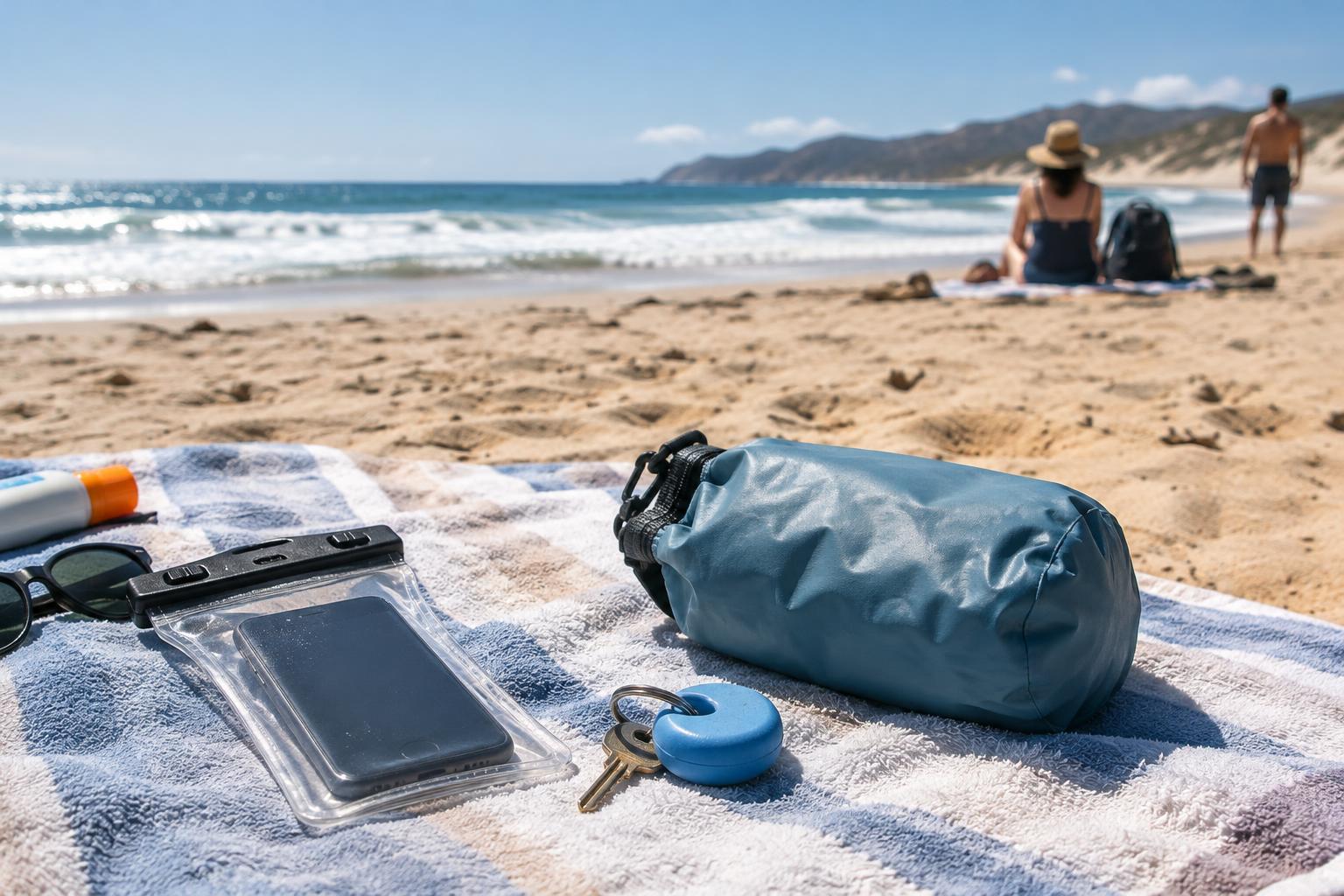
Keep what you do bring together in a small pouch that fits inside your beach bag. Give each item a regular place, then check the pouch before leaving the car, after a swim and before heading home. If you are driving, make sure you know which key or fob you have brought; an electronic fob may need more careful protection from water than a plain metal key.
Choose protection for sand and water
A zippered pouch or small dry bag helps keep loose sand and splashes away from your belongings. For a phone, use a protective case or waterproof pouch suited to the activity you have planned, and follow its instructions. “Water-resistant” does not mean safe for every swim, wave or period of submersion. Check closures for trapped grains of sand, and test a new pouch with a piece of tissue inside before trusting it with a device.
Keep electronics out of direct sun where possible. A shaded spot inside a bag is generally better than leaving a phone on a hot towel, but do not wrap an overheating device so tightly that it cannot cool. If your hands are sandy or wet, pause before opening its case. A little patience at the shoreline can prevent grit from reaching charging ports, buttons and seals.
Have a plan before anyone swims
A towel over a bag is not a security plan, and burying keys in the sand can make them difficult to find. If your group wants to swim, agree who will stay with the belongings and take turns in the water. Choose a spot where bags remain within your view, without assuming that a busy beach is automatically a safer place to leave them.
If everyone wants to go in at once, consider whether you can leave valuables in a secure place elsewhere or carry a minimal set in suitable protection. Check any storage option before relying on it: availability and conditions can vary by beach and venue. Avoid leaving valuables visible in a parked car, and do not place them in the boot while someone nearby can watch where you put them. The best arrangement is one that does not depend on an unattended bag.
Keep keys and payment essentials simple
Car keys deserve their own plan because losing one can change the whole day. Attach a plain key to a secure clip or lanyard if you intend to carry it, but check that the attachment will not easily come loose during your activity. Keep electronic fobs dry unless you have suitable protection for them; a pouch that works for light splashes may not be appropriate for a long swim.
Carry only the cards or cash you expect to use, and keep them in a separate inner pocket so they do not fall out whenever you reach for sunscreen. If you are sharing a bag, tell your companions where essentials are kept rather than moving them between pockets without warning. On a South African coastal outing that includes a drive, a walk and a stop for food, that small habit can save a lot of searching.
Check everything before you leave
Build a brief departure check into your beach routine: phone, keys, card, bag compartments and the patch of sand around your towel. Shake out towels away from small items and look beneath bags and shoes. It is easier to spot a missing key while you are still at your chosen spot than after you have reached the car park.
Back at your accommodation or home, remove sand from the outside of cases and pouches before opening them. If an item has been exposed to salt water, consult its care instructions rather than assuming it is fine once dry. No pouch or packing trick eliminates every risk, but bringing less, keeping essentials attended and checking them at each transition makes them much easier to manage.