Start with the name, then look for the details
A seafood menu is easier to read when you treat the fish name as a starting point, not a complete description. The same fish can taste quite different depending on whether it is grilled, fried, smoked or served with a rich sauce. If a name is new to you, look first for the cooking method and accompaniments. They often tell you more about the meal you will receive.
Hake is a familiar choice on many South African menus, often offered battered or grilled. Snoek is a distinctive fish that may appear smoked or prepared over a fire. You might also see yellowtail, kingklip or kob. These names identify fish, but they do not promise a particular portion size, flavour or texture in every kitchen. A brief question to the server can be more useful than guessing from the name alone.
Know what the broad menu terms leave out
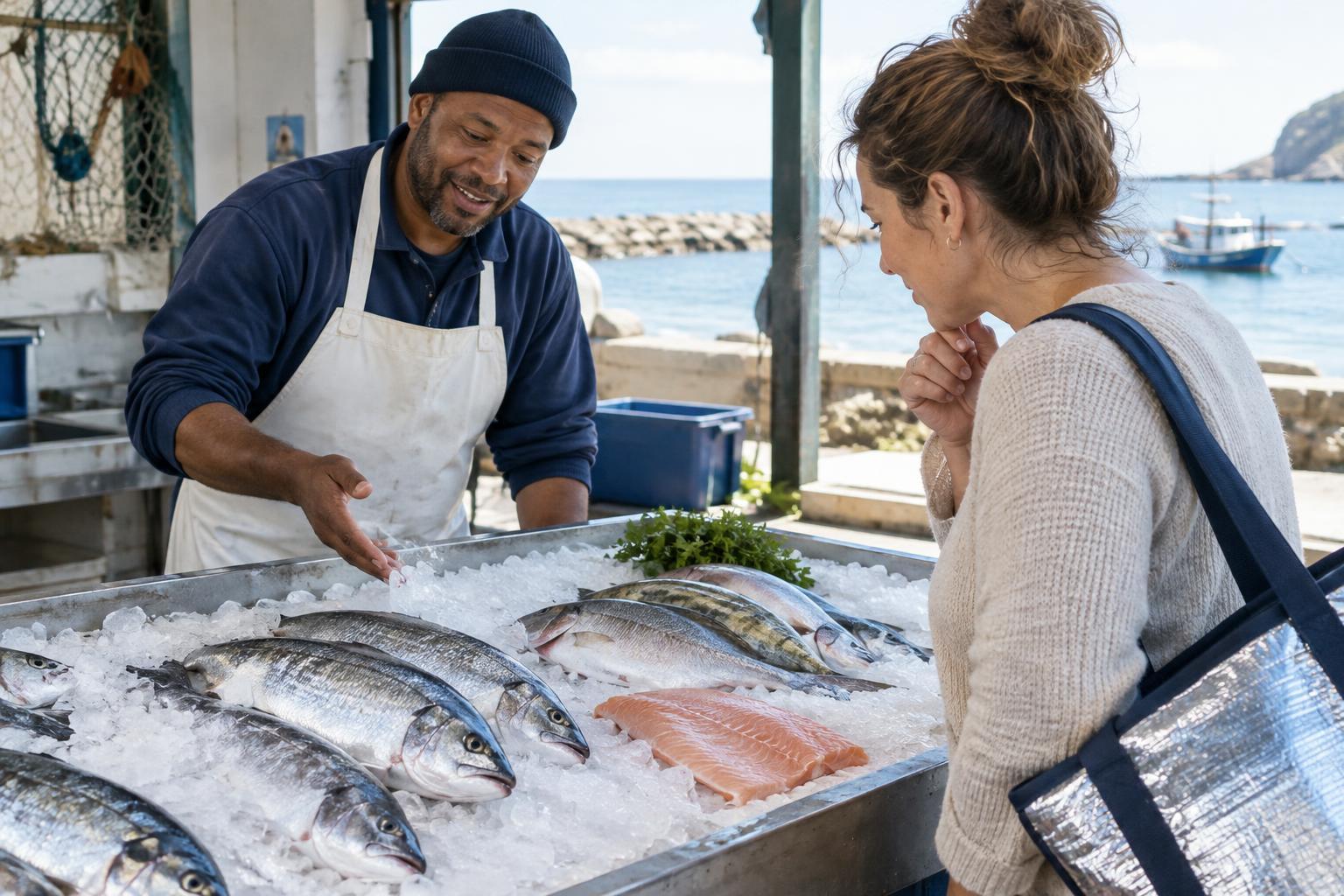
Some descriptions do not name a species at all. “Linefish” generally refers to fish caught by hook and line rather than to one kind of fish. “Fish of the day” and “catch of the day” can also change according to what the kitchen has available. If the menu uses one of these terms, ask which fish is being served today. It is reasonable to ask whether it is local and whether the portion comes as a fillet, a whole fish or a cut with bones.
A name on a board may not tell you where a fish was caught, and a restaurant near the sea does not necessarily serve only nearby catches. If origin matters to you, ask rather than assume. The kitchen may be able to tell you more about its supplier or how a particular fish arrived on the menu; it is also fine if you decide you need a clearer answer before ordering.
Read the cooking words as carefully as the fish names
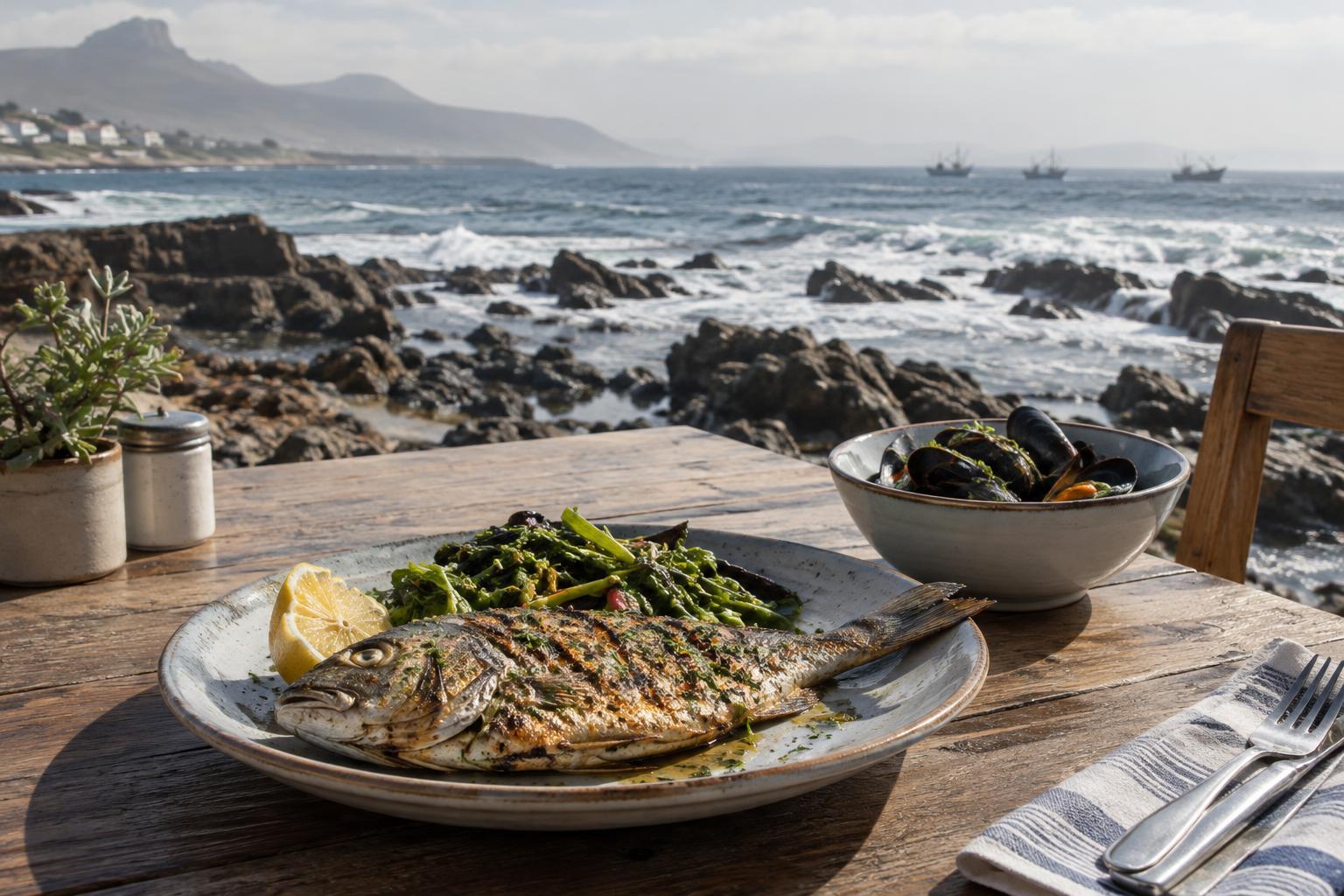
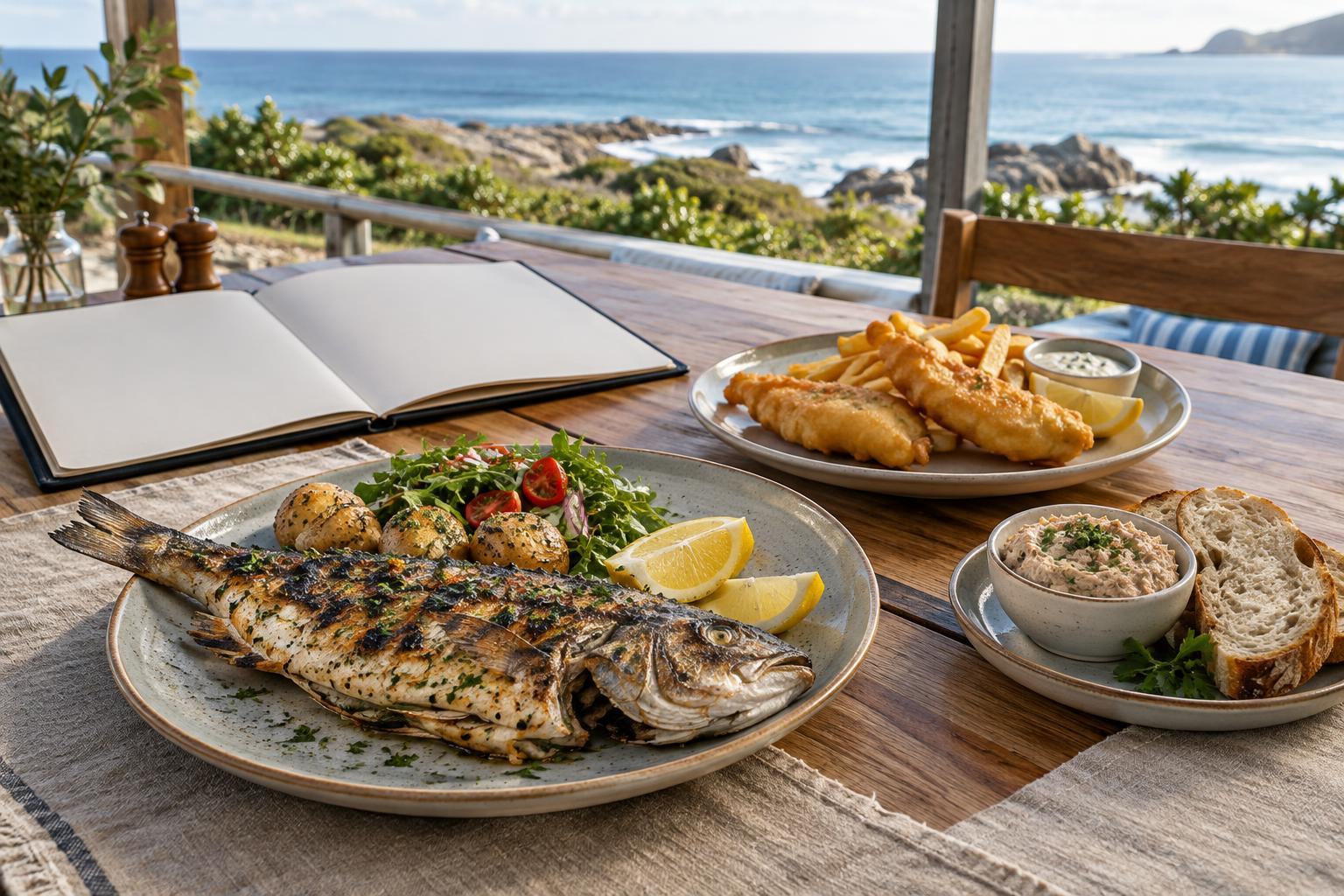
“Grilled” is a useful choice if you want the fish itself to be prominent, although sauces and marinades can still shape the flavour. “Battered” or “crumbed” usually points to a crisp coating, often paired with chips. A braai-style preparation suggests cooking over fire, which may add a smoky character. Smoked fish has a more pronounced flavour and may be served cold or worked into a warm dish, so check the description if you have a preference.
Then look at the finishing touches. Lemon butter makes a different plate from a chilli or peri-peri sauce, even when the fish is the same. If you prefer mild food, ask how much heat a dish has rather than relying on a short menu label. For a lighter meal, you can ask whether sauce comes on the side and what vegetables or salads are available instead of chips.
Check what comes with the seafood
A seafood platter can be appealing when you want to try several things, but “platter” does not tell you exactly what is included. Check which items are fish, which are shellfish, how each is cooked and whether the price is for one person or for sharing. Calamari might be grilled or fried; prawns may arrive in their shells; mussels may come in a sauce that is as much a part of the dish as the mussels themselves.
Portion descriptions deserve a second look, too. A whole fish is a different eating experience from a boneless fillet, and a fish dish may contain bones even when that is not obvious from its name. If you avoid particular ingredients, ask about the full preparation, including marinades, coatings and sauces. Clear questions help the kitchen guide you towards a dish you will enjoy.
Order with curiosity, not guesswork
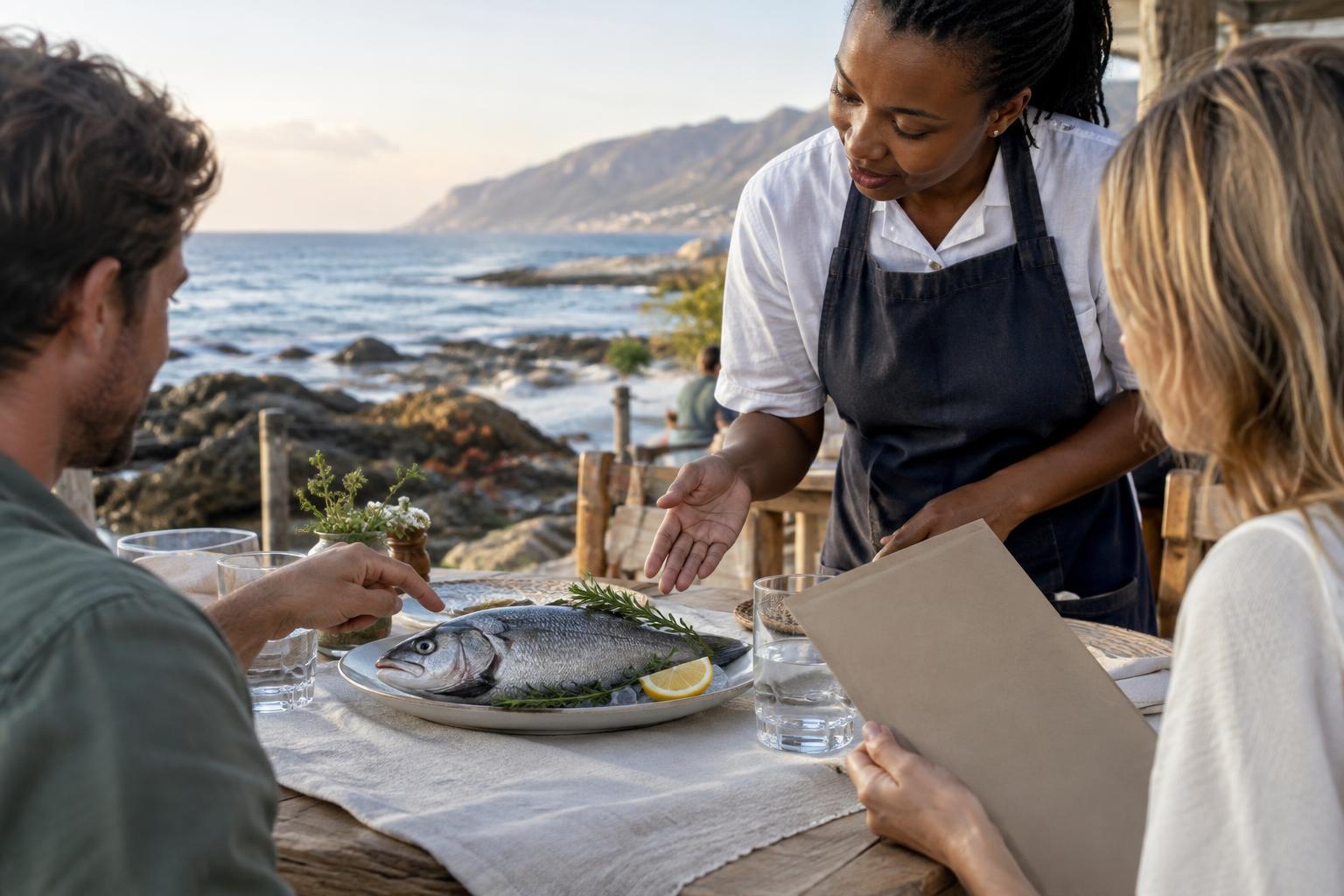
You do not need to memorise a list of South African fish before sitting down at a coastal restaurant. A few simple questions will usually do: “Which fish is the linefish today?”, “How is it cooked?”, “Does it have bones?” and “What comes with it?” If the price is listed by weight or as a market price, ask for an estimate for the portion you are considering before you order.
When you are choosing between unfamiliar options, describe what you like. Tell the server if you would prefer a mild flavour, a firmer texture, a crisp coating or a simple grilled dish. Their answer can help you compare what the kitchen is actually serving that day. The aim is not to order the most adventurous item on the menu; it is to find a seafood meal that makes sense to you.