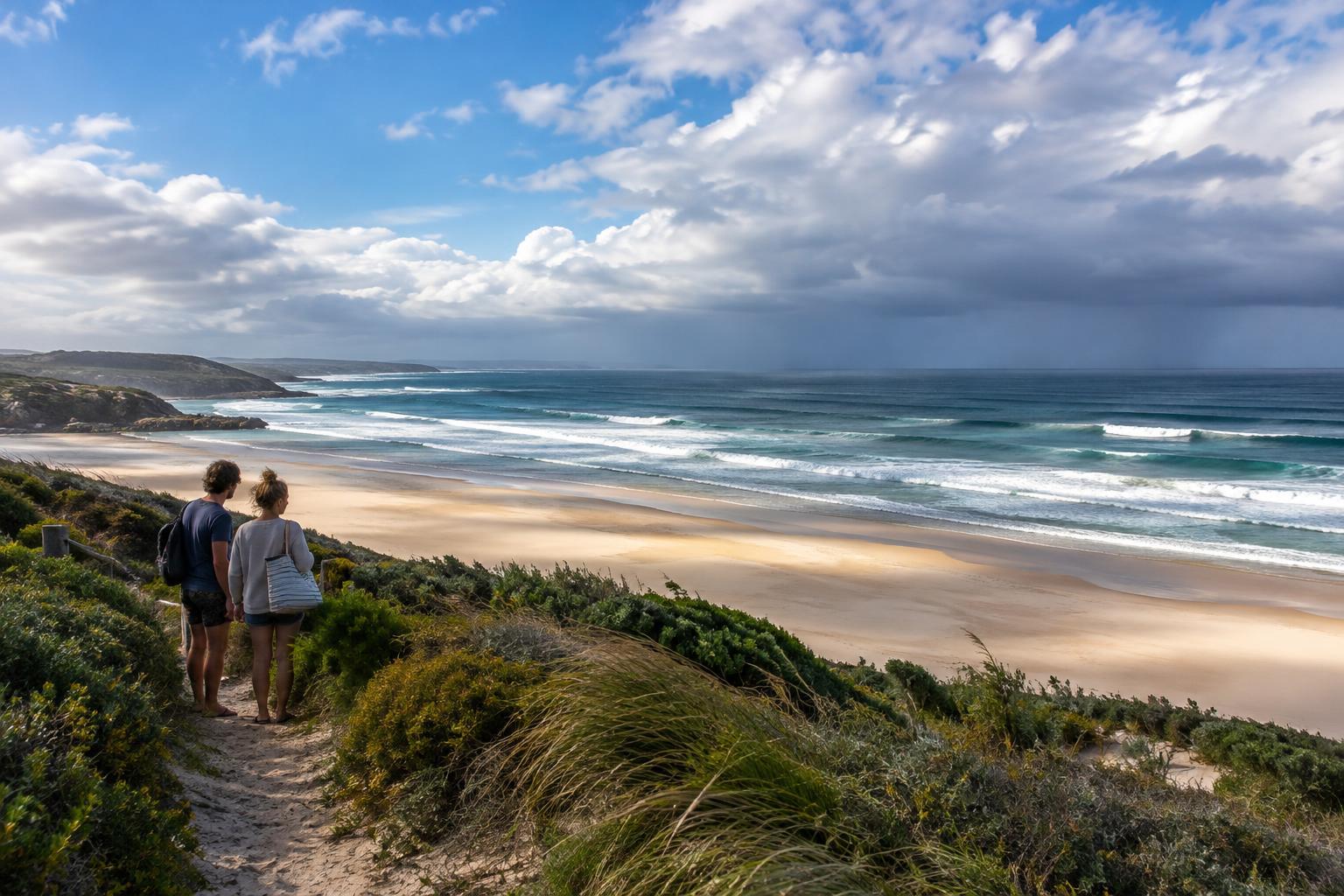
Start with the beach you plan to visit
A coastal forecast describes conditions over an area, not exactly what you will feel on one patch of sand. A headland, dune or harbour wall can shelter one beach while a nearby stretch is exposed. Before leaving, check the forecast for your chosen beach or the closest coastal location, then look at the expected conditions for the hours you will actually be there. A calm morning can turn into a windy afternoon.
Think about the kind of day you want. A breezy, overcast beach may still be pleasant for a walk, while the same conditions could make a picnic awkward. If you hope to swim, treat the forecast as a starting point rather than permission to enter the water. Check local notices and lifeguard guidance when you arrive; access, swimming areas and conditions can change.
Read wind as both speed and direction
Wind speed helps you anticipate comfort on the sand. A stronger wind may blow sand into food and towels, make shade difficult to secure and leave you feeling cool after a swim, even when the air is warm. Forecasts may also show gusts, which are brief stronger bursts. If you are taking a beach umbrella, loose gear or a small child, gusts deserve attention alongside the average wind speed.
Direction matters because beaches face different ways. An onshore wind blows from the sea towards land and can make the shoreline feel blustery and the surface of the water choppy. An offshore wind blows from land towards the sea and may leave the sand feeling more sheltered, but it can push floating items away from shore. Do not assume that smoother-looking water is safer. Compare the wind direction with the orientation of your beach, and keep inflatables out of the sea.
Understand what swell tells you—and what it does not
Swell is wave energy travelling across the ocean. Forecasts commonly describe its height, direction and period, or the time between waves. A longer period can mean more energetic waves even if the listed height does not look dramatic. The same swell can break differently from beach to beach depending on the seabed, shoreline shape and tide. It is therefore more useful to ask whether a beach is exposed to the incoming swell than to rely on one number alone.
For a relaxed swim, watch the water for several minutes before entering. Waves may arrive in larger sets separated by quieter spells. Look for breaking waves, strong movement along the shore and places where water appears to be flowing back out. Rip currents can be difficult to recognise, so use a lifeguarded swimming area where available and follow the flags and instructions on site. If the surf looks beyond your comfort or ability, keep your beach day on the sand.
Look beyond the rain icon
A forecast chance of rain does not tell you precisely when a shower will reach your towel. Check the hourly outlook, expected intensity and any thunderstorm indication. Light, passing rain might call for a change of clothes and a sheltered lunch plan; persistent rain can make the trip less enjoyable. If you hear thunder or see lightning, leave the beach and seek proper shelter rather than waiting under an umbrella.
Rain can also affect the water after the clouds clear. Runoff may carry sediment and other contaminants into the sea, particularly near river mouths, stormwater outlets and built-up areas. Avoid swimming in visibly discoloured water or near flowing outlets, and pay attention to any local water-quality notices. Clear skies later in the day do not, by themselves, confirm that water conditions are suitable.
Make a flexible plan before you go
Check wind, swell and rain together, then add the tide forecast if you intend to walk a long stretch of shore, explore rock pools or set up close to the water. A rising tide can reduce usable beach space and change how waves break. Leave room to move your belongings, and never rely on a dry-looking route that could be cut off by the tide.
Pack for the conditions you expect, with a little margin for change: sun protection, drinking water, a layer for wind and a dry bag for essentials are useful on many South African beach days. Choose a backup activity, such as a coastal walk or a meal away from the exposed sand, so a change in weather does not spoil the outing. Finally, reassess when you arrive. The best forecast is the one you use alongside what you can see and the guidance provided locally.