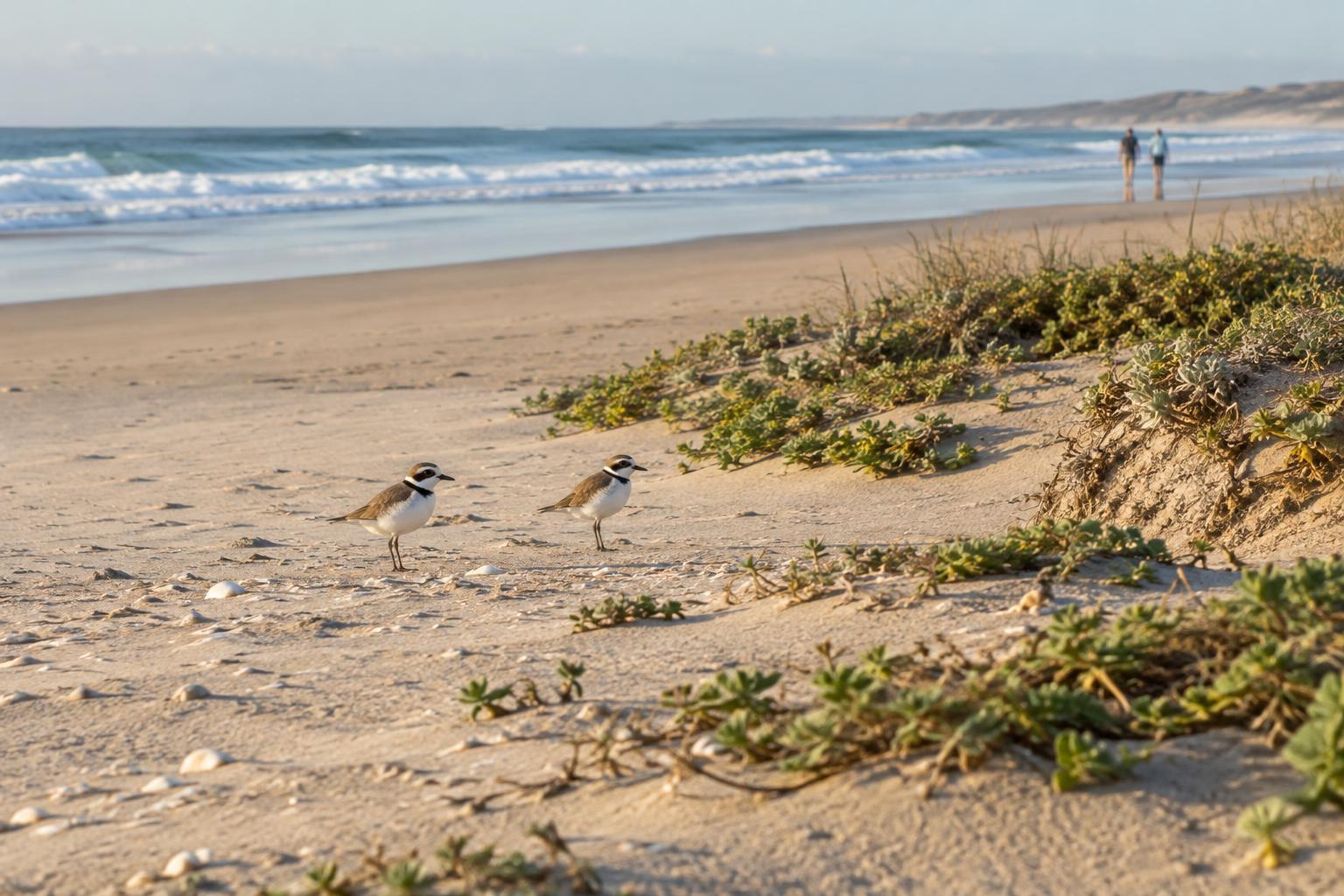
Why a quiet stretch of beach may be a nesting area
A shorebird nest may be little more than a shallow hollow among sand, shells or small stones. Eggs and chicks can blend into their surroundings, so a beach that appears empty may still be in use. On South Africa’s shoreline, potential nesting places can include open sand above the usual reach of the tide, dune edges and sheltered stretches of shore. Not every bird you see on a beach is nesting there, but it is worth treating a quiet, undisturbed area with care.
Birds need room to settle, shelter their young and move between nesting and feeding areas. If people repeatedly approach, adults may leave eggs or chicks exposed while they respond to the disturbance. The most useful habit is simple: notice birds before they have to react to you, then choose a route that gives them space.
Recognise clues without searching for a nest
Start with the setting rather than trying to find eggs. Look for birds spending time on a dry upper beach, a low dune edge or a patch of shingle, especially where there is little cover. A bird that repeatedly calls, circles, runs ahead of you or seems reluctant to leave one small area may be warning you away. An adult may also draw attention to itself away from a nest or chicks. None of these behaviours proves that a nest is present, but each is a good reason to back off.
Signs, temporary fencing and marked routes offer clearer guidance where they have been put in place. Respect them even if you cannot see birds nearby: a nest may be hard to spot, and adults may be away feeding. Use binoculars or a camera from a distance if you want a closer look. Walking towards a bird to identify it or photograph it can defeat the purpose of observing it.
Choose a route that leaves birds room
Before crossing an open beach, pause and scan the ground and shoreline ahead. Use established paths and beach access points, and follow any local signs. If birds are resting or feeding near the water, do not assume the wetter sand is a disturbance-free route; choose a way around them instead. Avoid cutting through dune vegetation or a fenced area to make a detour.
Give flocks and individual birds enough space that they can carry on what they were doing. There is no single distance that works on every beach: the bird’s response is a better guide. If it stops feeding, calls persistently, moves away or takes flight as you approach, increase your distance. Where the beach is narrow, it may be kinder to wait, turn back or visit another stretch rather than squeeze past.
Keep the whole beach party low-impact
Dogs can disturb shorebirds even when they do not chase them. Check the rules for the beach before bringing a dog, keep it under close control wherever dogs are permitted, and avoid areas where birds are nesting, feeding or gathering. Children can help by watching from a distance rather than running towards birds or looking for eggs. Beach games, kites and drones can also cause birds to move; choose an open area well away from them and follow local rules.
Pack up food scraps and litter, and resist the urge to move shells, stones or drift material around a place that may be used for nesting. These small choices help keep a beach usable for wildlife as well as people. They also make for better birdwatching: settled birds are easier to observe than birds repeatedly startled into flight.
What to do if you get too close
If you notice a possible nest, eggs or chicks, stop and quietly move back along your approach route while watching where you place your feet. Do not touch or move anything, and do not wait nearby for an adult to return. If a bird is calling or displaying at you, retreat until it settles, then take a different route. Keep other people and dogs in your group from following you into the area.
Where a nest appears exposed to heavy foot traffic, you can let the local beach manager or conservation authority know so they can decide whether action is needed. Avoid posting a precise location publicly, which could draw more visitors to a vulnerable spot. Access rules and protected areas vary by beach, so check local guidance before your visit. A little preparation, followed by a willingness to change course, lets you enjoy the shore without making its wildlife give way.