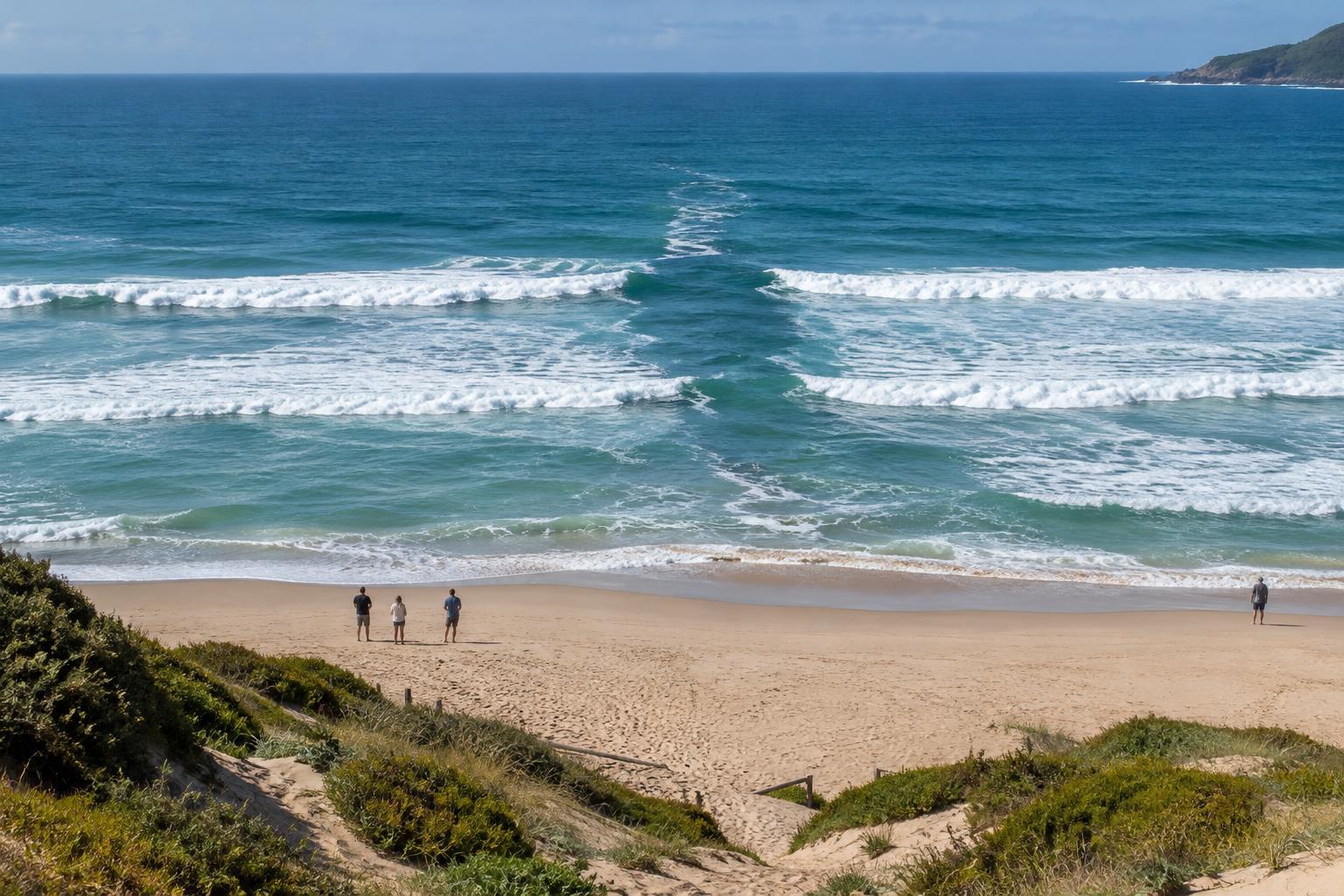
What a rip current does
A rip current is a concentrated flow of water moving away from shore. As waves push water toward the beach, some of that water flows back out through a channel. Rips can form near sandbars, rocks, piers or other features that shape the surf. Their position and strength can change with the waves and tide, so a place that looked manageable earlier may feel different later.
A rip current does not usually pull a swimmer underwater. Its danger is that it can carry someone away from the beach faster than they expect. Trying to swim straight back against it can be exhausting. That matters on any surf beach, including along South Africa’s varied coastline, where conditions may differ greatly from one beach or stretch of beach to the next.
Clues to look for before entering the water
Pause above the waterline and watch the surf for several minutes. A rip may appear as a darker or deeper-looking channel between shallower areas where waves are breaking. You might notice a gap in an otherwise continuous line of breaking waves, a narrow patch of choppy water, or foam and seaweed moving steadily away from shore. Sometimes the water in a rip looks deceptively smooth beside the white water on either side.
These are clues, not a reliable test. Light, wind and wave conditions can make a rip hard to see, and a calm-looking gap is not proof that it is safe to swim. If lifeguards are on duty, ask where the safer swimming area is and stay within the area they indicate. Follow posted signs and flags, and avoid assuming that yesterday’s safe spot is safe today.
Make the safer choice before you swim
Choose a lifeguarded beach and swim during supervised hours where possible. Before getting in, identify where you entered and note a fixed landmark on shore. Check the surf, wind and tide conditions, and stay out if the water looks beyond your ability. If you are unsure, enjoy the beach from the sand rather than testing the current.
Keep children close enough to help immediately, even in shallow water; a sudden drop-off or moving water can catch anyone off guard. Swim with another person rather than alone, and avoid going far out simply because the sea appears gentle. Conditions and access arrangements can change, so check local beach information and on-site guidance when planning your visit.
What to do if a rip carries you out
First, try to stay calm and conserve your energy. Do not try to overpower the current by swimming straight toward shore. Float or tread water while you regain your breathing and bearings. If you can swim, move parallel to the shoreline to get out of the narrow flow, then head back toward the beach at an angle when you are clear. Follow a lifeguard’s directions if one is responding.
If you cannot make progress, keep floating and signal for help by raising an arm and calling out. A rip may weaken farther from shore, but do not rely on that happening quickly. Concentrate on staying afloat until help reaches you. Once back on land, rest and seek assistance if you feel unwell or have swallowed water.
If you see someone else in trouble
Alert a lifeguard immediately. If none is present, call the local emergency services and tell them where you are, using a beach entrance or clear landmark. Keep watching the person so you can point rescuers toward them. If a flotation aid is available, throw it to the person from a secure position and encourage them to float and signal.
Do not rush into the water after them. An untrained rescuer can be caught by the same current, creating a second emergency. Rip-current awareness is less about memorising a perfect-looking patch of sea and more about making careful choices: watch before entering, use supervised swimming areas, and know how to conserve energy and call for help.