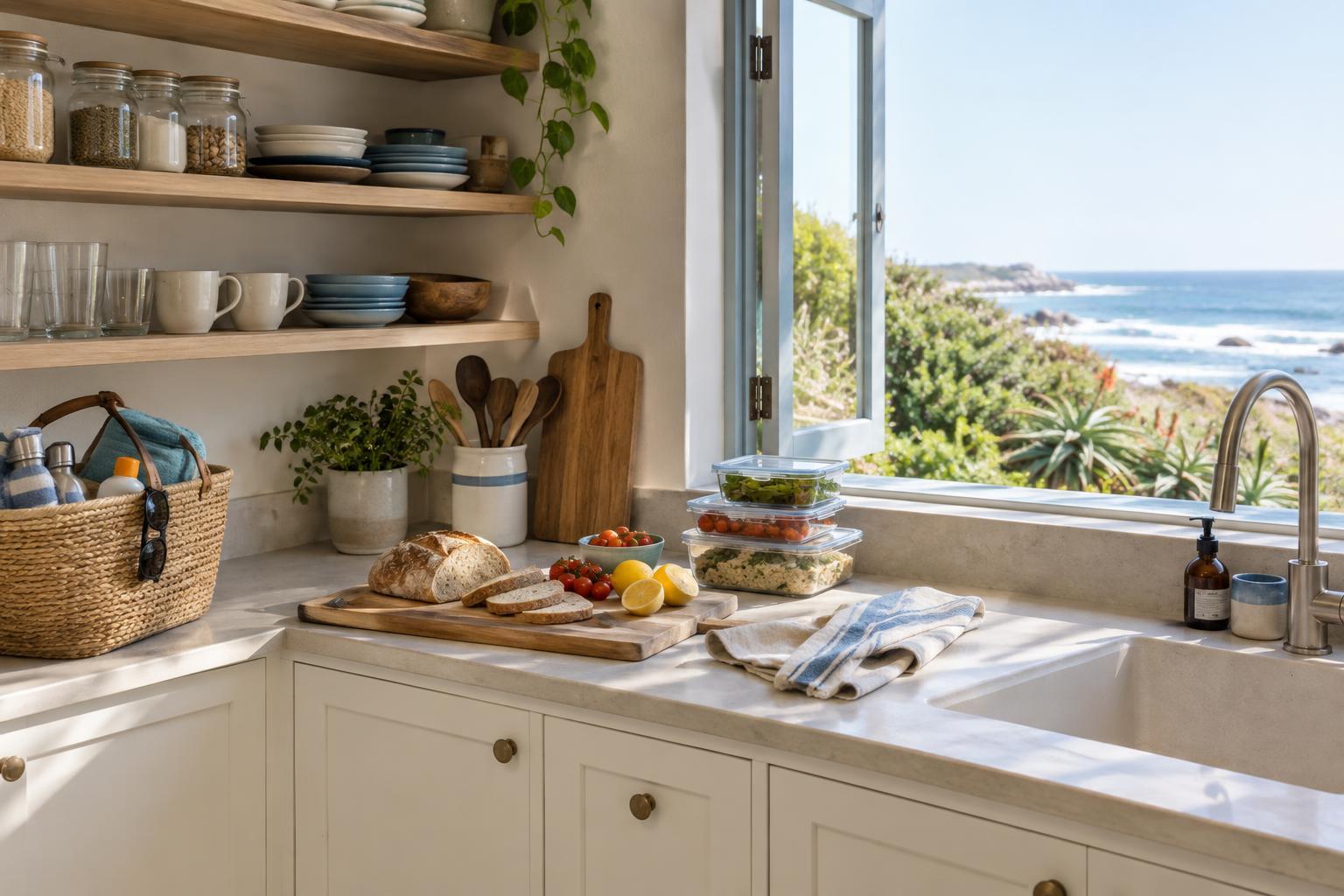
Plan around the way you use the kitchen
A coastal kitchen does not need a themed makeover to feel suited to its setting. Start with the tasks that happen most often: unpacking groceries, making quick meals, filling water bottles and clearing up when everyone comes back from the beach. If several people tend to gather while food is being prepared, leave a clear route between the sink, work surface and fridge. A little uncluttered counter space will usually be more useful than a display of seaside objects.
Keep everyday cups, plates and utensils close to where they are used. Reserve an easy-to-reach spot for items that regularly go out with you, such as reusable bottles, food containers and a small cooler bag. This helps prevent a search through several cupboards when you are trying to leave early. In a small kitchen, a tray or shallow basket can give those loose items a home without taking over a whole shelf.
Store food with moisture and busy days in mind
In a humid kitchen, it is worth paying attention to how dry goods are stored. Close opened packets properly or move frequently used staples into clean containers with well-fitting lids. This makes it easier to see what you have and helps keep crumbs and spills contained. Do not put warm food straight into a sealed storage container for the cupboard; let it cool safely and store it according to its needs. Check stored food regularly rather than assuming that a closed container will keep it in good condition indefinitely.
Arrange shelves so that older items are visible and likely to be used first. Put heavier groceries at a comfortable lifting height, and leave enough room to remove a container without knocking over its neighbours. If you host guests, keep a modest supply of flexible basics for simple meals, but avoid filling every gap with food that may sit unused. A clear shelf makes it easier to notice a leak, an open packet or signs of pests before the problem spreads.
Make beach-day meals easier to prepare and clean up
Beach days often call for food that can be packed without occupying the kitchen all morning. Set aside one clear area for assembling snacks and lunches, and keep containers and reusable bags nearby. Think about what needs to stay cool while you are out, and pack perishable food accordingly. When you return, empty and wash food containers promptly rather than leaving them in a bag overnight. A repeatable routine is easier to maintain than a complicated system that only works when the kitchen is spotless.
Sand is easier to manage when it has fewer places to hide. Wipe work surfaces before preparing food, and keep beach bags off counters used for cooking. A small, washable mat or designated spot for bags can help if the kitchen is the first room people enter. Choose cleaning cloths that can be washed and dried between uses, and give sponges and brushes a place where they are not left sitting in water.
Choose finishes and habits you can maintain
When replacing a worktop, shelf or storage unit, consider how you will clean it as well as how it looks. Smooth, accessible surfaces are generally simpler to wipe than intricate details that collect grease and dust. Follow the maker’s care guidance for any finish, especially before using a strong cleaner or an abrasive pad. Salt air can make routine upkeep more noticeable, but there is no need to replace serviceable fittings solely to create a coastal look.
Small habits do much of the work. Wipe up spills, dry wet areas around the sink and let washed items dry before putting them away. Make time to clear out expired food and wash storage containers as part of the usual kitchen routine. If cooking leaves the room steamy, use whatever suitable ventilation the space provides. The goal is not a perfect kitchen: it is one where making a meal, packing for an outing and cleaning up afterwards all feel manageable.