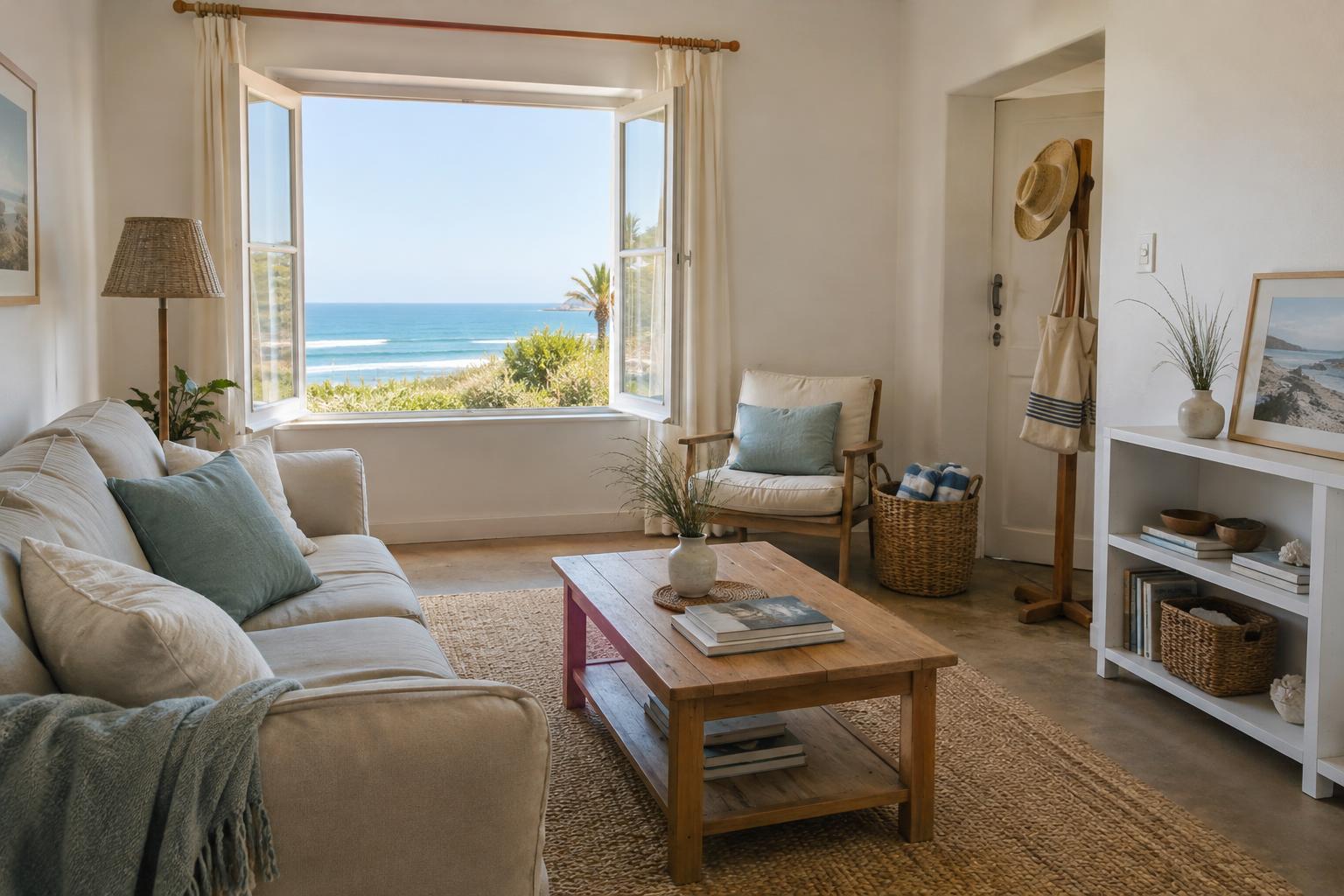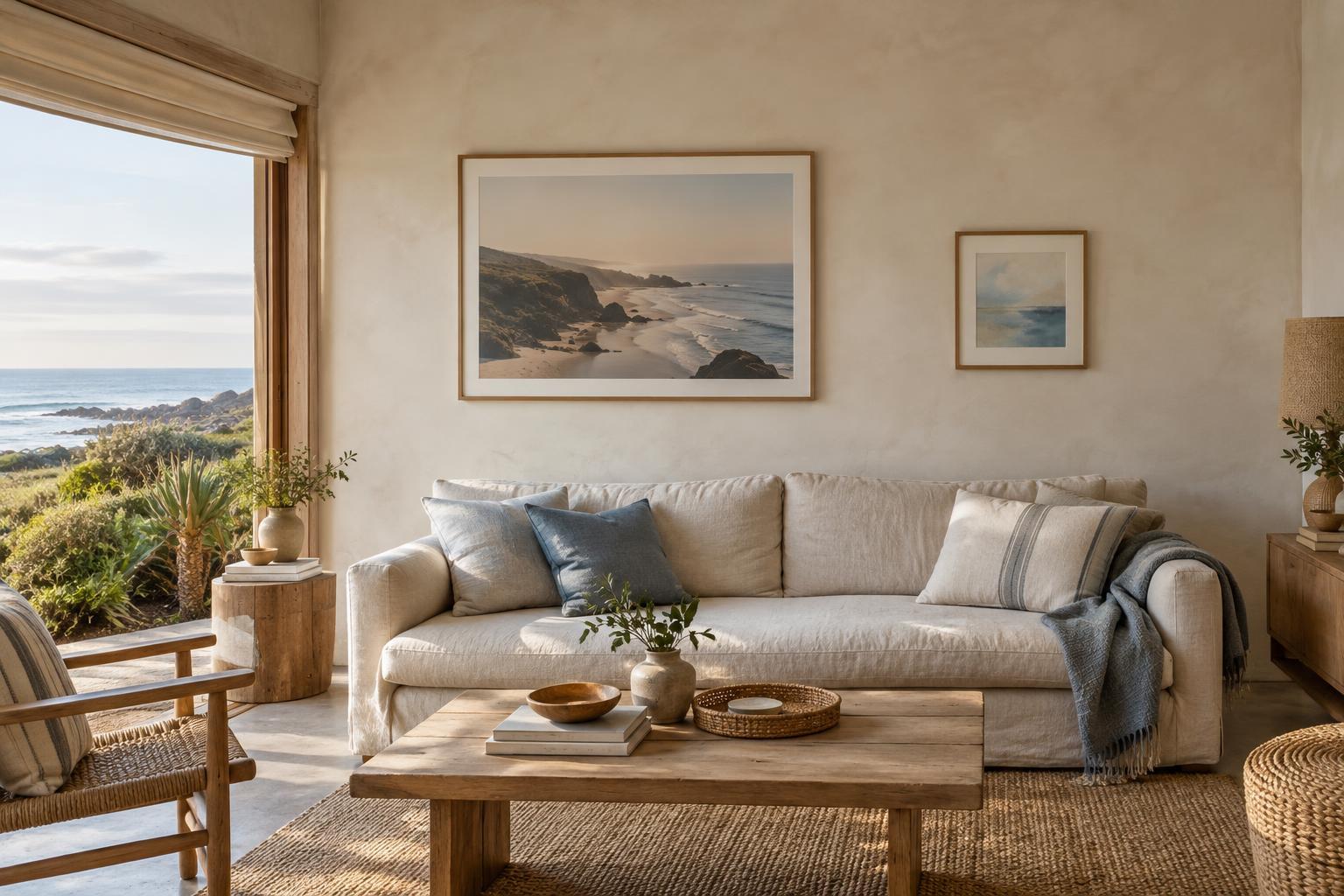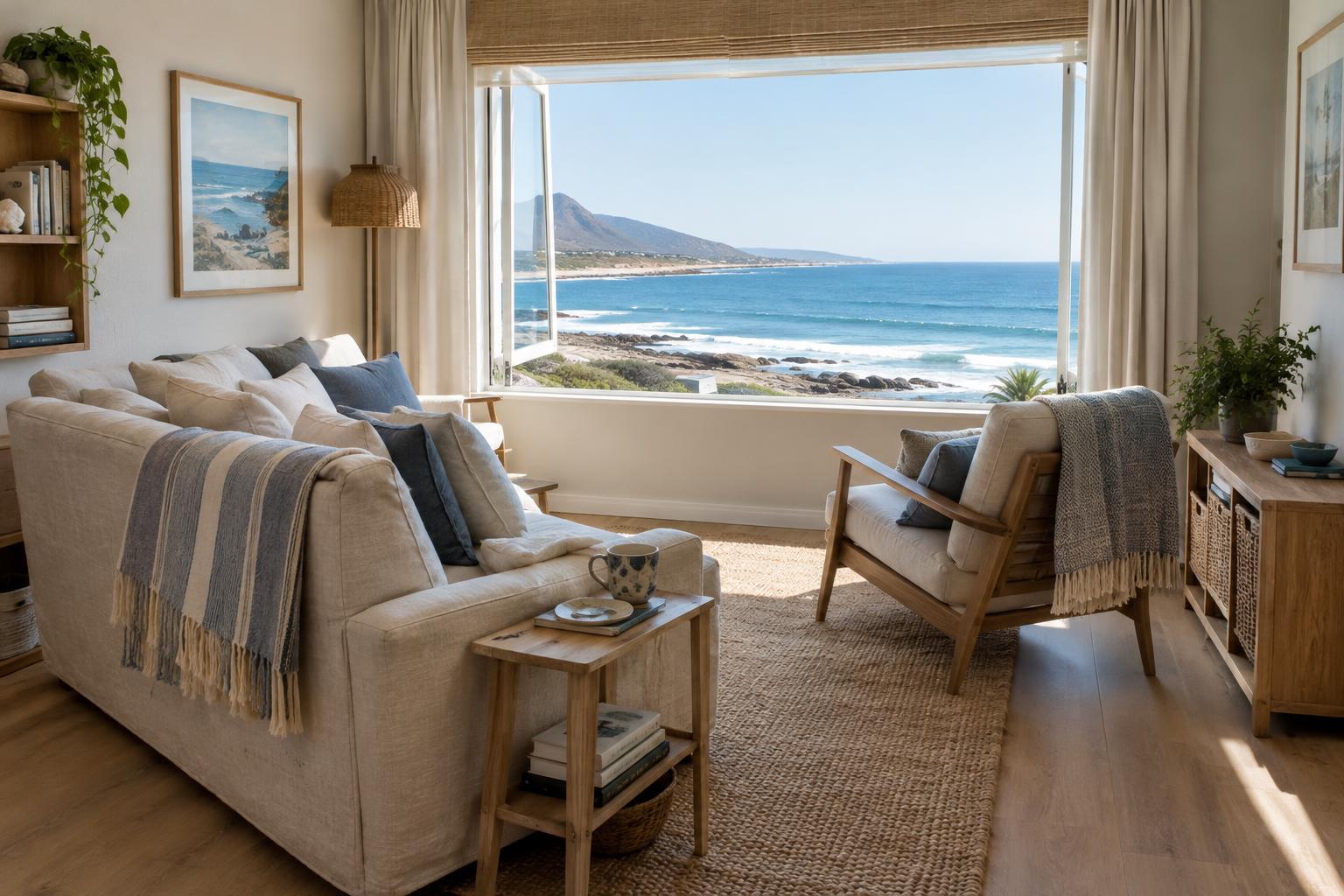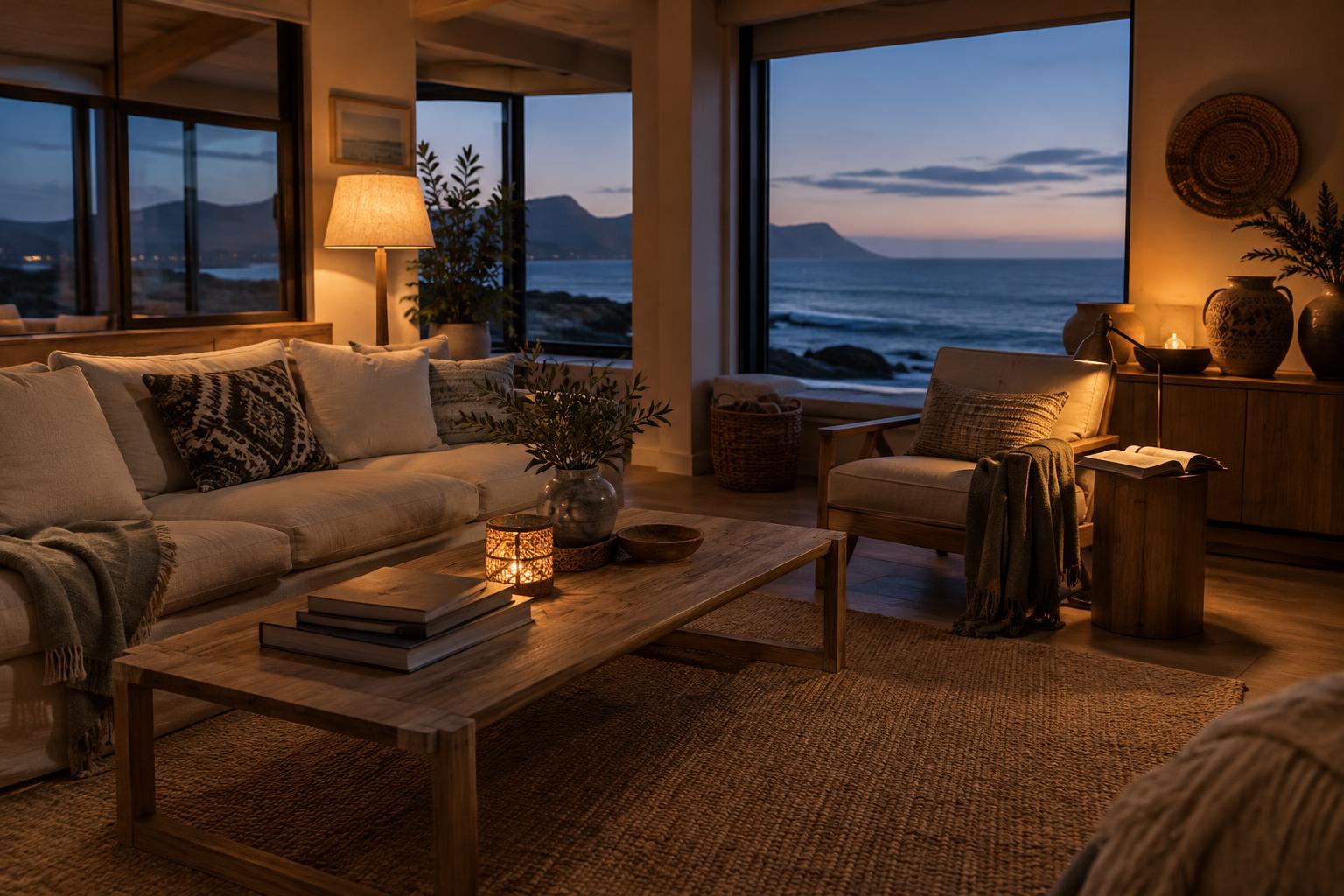
Start with the way you use the room
Coastal interiors often make the most of daylight, open views and pale surfaces. After sunset, though, the same room can feel flat if one ceiling fitting has to do every job. A layered lighting plan gives you options: enough light to move around comfortably, focused light where you need to see clearly, and softer pools of light for a slower evening.
Before buying a lamp, notice what happens in each space after dark. Do you read on the sofa, prepare dinner at a kitchen counter or gather around a table? Sit in those spots and look for shadows and glare. These observations are more useful than trying to light every corner equally. They also help you decide which existing fittings are worth keeping and where a portable lamp could make the biggest difference.
Build a gentle base of ambient light
Ambient light is the general illumination that lets you move through a room. It might come from ceiling fittings, wall lights or a few well-placed lamps. In a living area, try spreading light across the space rather than concentrating it in one overhead beam. Light that washes a wall or filters through a shade can soften strong contrasts, while still making the room feel welcoming.
Warm-toned bulbs often suit relaxed evenings, especially alongside timber, woven textures and sandy colours. What matters most is consistency: noticeably different bulb tones in the same room can make the lighting feel unsettled. If a fitting allows it, a dimmer gives you room to adjust the mood as daylight fades. Check that the bulb and dimmer are compatible before making a change, or ask a qualified electrician about fixed wiring.
Put task light where it earns its place
Task lighting serves a specific activity. A reading lamp should illuminate the page from a comfortable angle without shining into someone else’s eyes. In the kitchen, light aimed at a preparation surface is usually more helpful than a brighter ceiling bulb behind you, which may cast your own shadow across the counter. At a dining table, a shaded pendant or nearby lamp can make plates and faces visible without making the whole room feel harsh.
Think about flexibility as well as brightness. An adjustable lamp can follow a favourite reading chair if you rearrange the room, while a small table lamp can bring useful light to a sideboard or desk. Keep cords away from walkways and places where doors may catch them. Near sinks and other damp areas, use fittings suited to the location and seek appropriate installation advice rather than relying on an ordinary portable lamp.
Add depth without competing with the view
Accent lighting draws attention to a feature: a textured wall, a piece of art or a shelf of objects collected over time. You do not need to spotlight everything. One or two low-key points of interest can give a room depth and leave quieter areas in shadow. A lamp set beside a plant, for example, may create a pleasing silhouette; move it until the effect feels gentle rather than theatrical.
Coastal homes can have reflective windows after dark. A bare bulb facing the glass may appear as a bright reflection just when you want to enjoy the last of the view. Try shaded lamps, lower light levels or positions farther from the window. Pale walls and glossy surfaces can also bounce more light than expected, so adjust placement before assuming you need a stronger bulb.
Make the evening setting easy to live with
The most useful lighting plan is one you can change without fuss. Group lights so you can keep a soft background glow while switching on a reading or cooking light only when needed. Where practical, place switches or lamps within easy reach of the places you use them. A simple evening routine might be to turn off the brightest overhead fittings after dinner and leave two or three smaller sources on around the room.
Choose shades and fittings that you can clean easily, particularly in homes where open windows bring in sea air and dust. Follow the maker’s guidance for bulbs and care, and keep indoor fixtures away from moisture unless they are designed for that setting. You do not need to replace everything at once: begin with one room, test it on an ordinary evening, and adjust until the light supports both the practical moments and the pleasure of slowing down.