Two ways to live with the tide
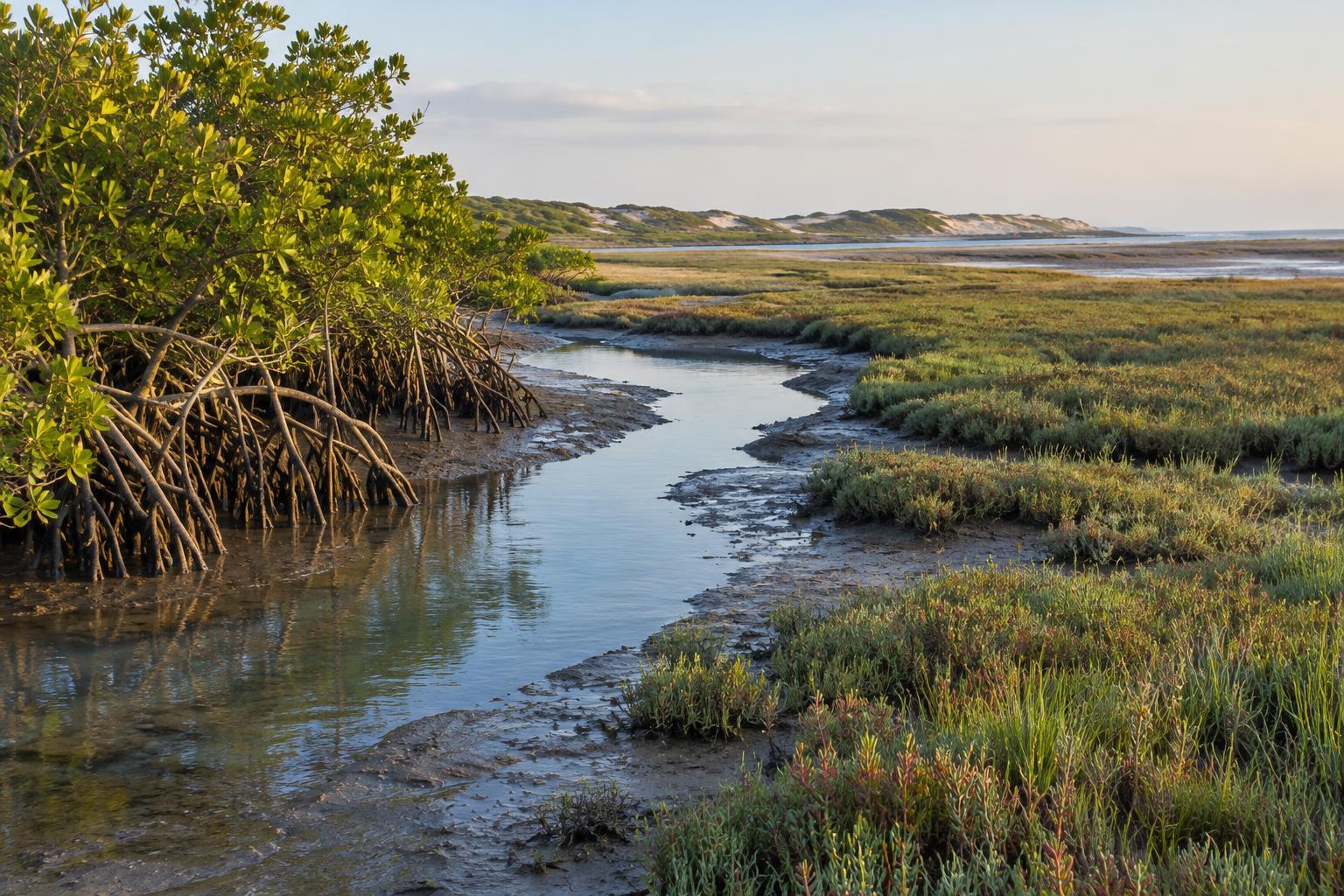
At the edge of a South African estuary, the landscape may change within a short walk: leafy trees rise from wet mud in one place, while low, open vegetation covers the next. These can be mangroves and salt marshes. Both occupy coastal ground affected by tides and salt, yet each has a different structure and a different set of plants adapted to those conditions.
Mangroves are trees or shrubs that tolerate salty, waterlogged ground. In South Africa, they are most closely associated with sheltered estuaries along the warmer eastern coastline. Salt marshes are open areas of salt-tolerant, usually low-growing plants. They occur in suitable estuaries and sheltered coastal wetlands in different parts of the country. The two habitats are not always alternatives: where conditions allow, they can sit beside one another along the same estuary.
How to tell them apart
The quickest clue is height. Mangroves form a woody canopy, even when the trees are modest in size. Look below the leaves and you may see exposed roots or small projections rising from the mud. These help some mangrove species manage life in oxygen-poor, waterlogged soil. Root shapes vary between species, so no single root pattern identifies every mangrove.
Salt marshes have a lower, more open profile. Their vegetation may include fleshy, salt-tolerant plants, grasses and rush-like plants, depending on how often a patch floods and how salty it becomes. A marsh can look sparse at first glance, but its plant cover changes across small differences in ground level. The lowest parts face regular tidal flooding; higher edges may be wet less often.
Why each habitat matters
Mangrove roots slow moving water and trap some of the sediment carried through an estuary. Their submerged branches and roots also create sheltered spaces used by small fish, crabs and other animals. Fallen leaves become part of a food web as they break down. A mangrove stand is therefore more than a line of trees: it connects the channel, muddy bank and surrounding estuary.
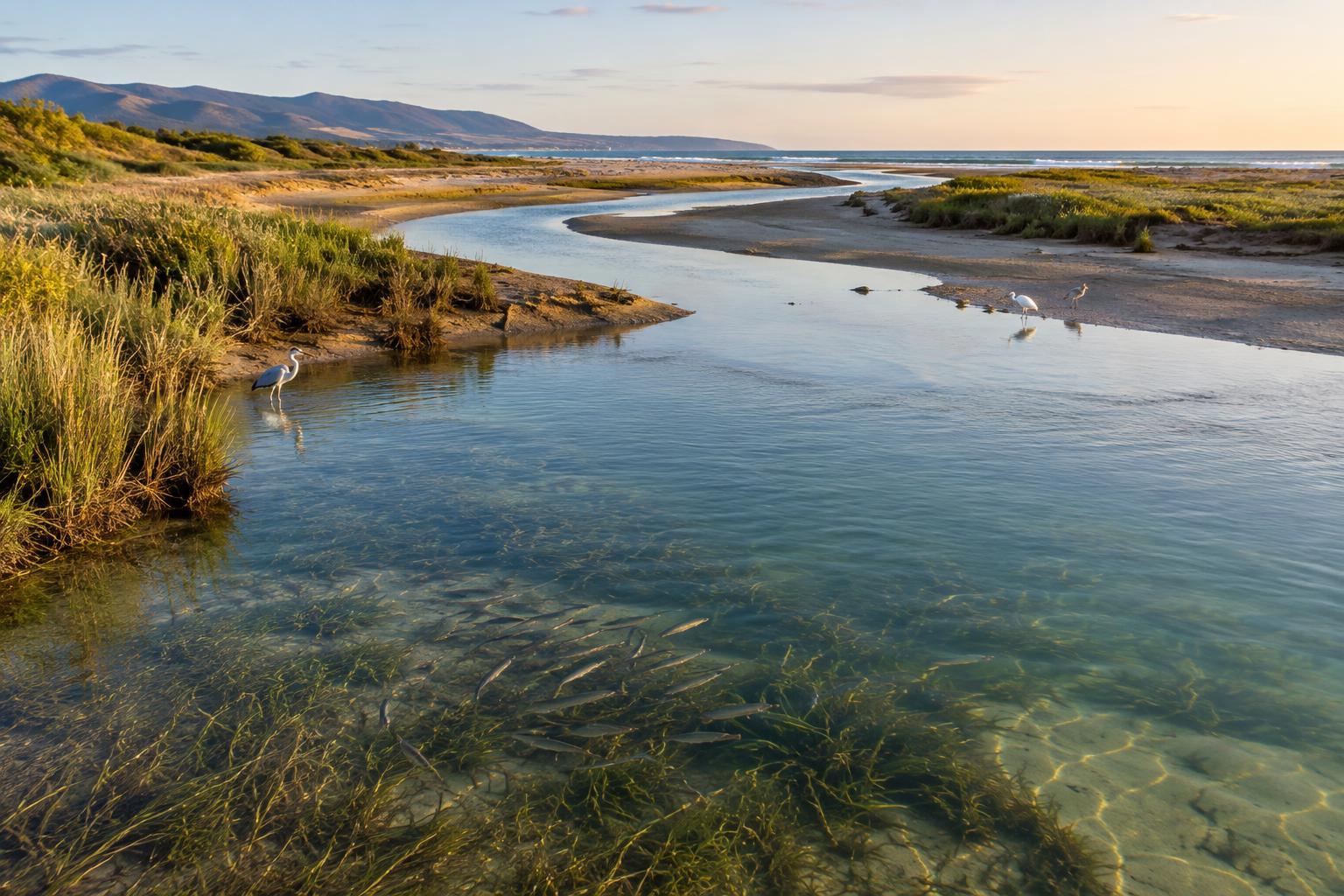
Salt-marsh plants also help hold soft ground in place and provide cover and feeding areas for wildlife. Birds may forage across exposed mud and marsh edges, while small invertebrates live among stems and in the sediment. Both habitats can store carbon in their plants and soils, although the amount varies with local conditions. Neither should be treated as spare land simply because it is muddy or periodically flooded.
What shapes their boundaries
Tides, freshwater inflow, sediment and exposure all influence what can grow at an estuary’s edge. Mangroves need suitable temperatures and sheltered sites where young plants can establish. Salt-marsh species may occupy ground that is too exposed, too high, too salty or otherwise unsuitable for mangrove trees. These are tendencies rather than a tidy rule: local conditions can create a patchwork of both habitats.
Estuary mouths and channels can shift, changing how often a bank floods and where sediment settles. That is one reason a coastal wetland may not look the same in every season or after a period of change. When comparing sites, notice the landform as well as the plants. A protected bend, a shallow creek and a slightly raised bank can offer different growing conditions only metres apart.
A closer look without leaving a mark
A boardwalk, marked path or established viewpoint is often the best place to appreciate these habitats. Pause to look for the contrast between tree roots, open marsh vegetation and bare feeding areas for birds. Watch the waterline too: it helps explain why a plant thrives in one patch but not the next. Binoculars make it easier to observe wildlife without approaching nests or animals.
Avoid stepping onto marsh plants or into mangrove mud, which can be unstable and easily disturbed. Leave roots, seedlings, shells and other natural material where they are, and give feeding birds space. Before a visit, check current access rules, path conditions and tide information with a reliable local source. A little planning makes for a safer outing and lets the estuary remain a working habitat, not just a scenic stop.