Choose a beach that suits your family
A beautiful view is not the only thing that matters when you have young children in tow. Think about the distance from parking or public transport to the sand, whether there is shade, and how easily you can reach toilets or a place to rinse sandy hands. A shorter visit to a convenient beach may be more enjoyable than a long outing that leaves everyone tired before play begins.
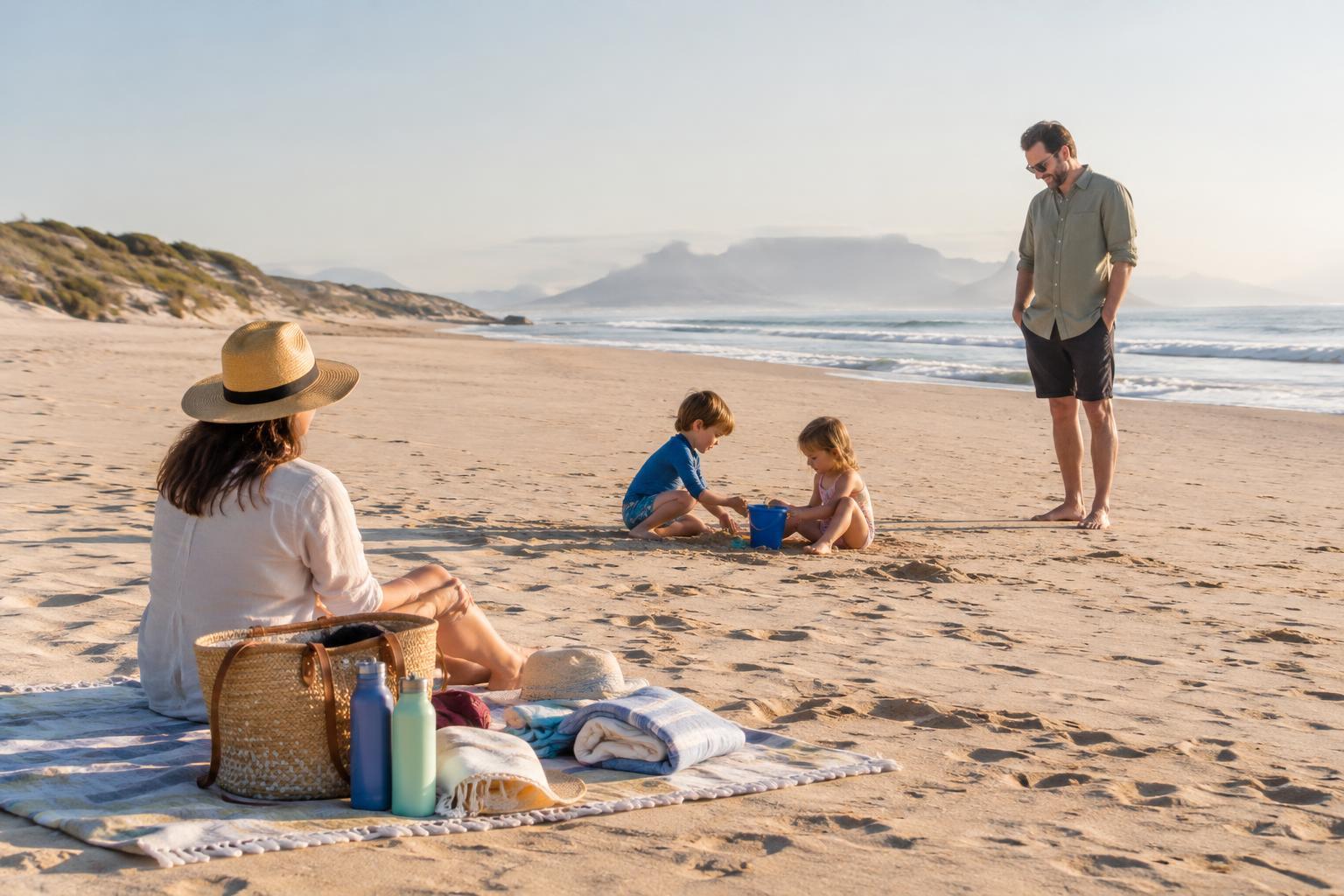
Along South Africa’s shoreline, conditions can differ greatly from one beach to the next. Look for a spot where you can set up well away from the water while still seeing the area where your children will play. Before leaving, check the weather and the beach’s current access, facilities and swimming guidance. If the conditions on arrival are not what you expected, it is fine to change plans or make it a walk instead of a swim.
Build the day around familiar routines
Young children often cope better when the day has a recognisable shape. Aim to leave after a meal or snack, keep the travel plan straightforward, and decide in advance when you will pause for food, water and a rest. You do not need a strict timetable: a loose sequence of arrive, settle, play, snack and head home can be enough.
Consider setting a departure point before anyone gets overtired. A short beach visit can still include digging, paddling and time to watch the waves. If naps are part of your child’s day, plan around them where possible rather than hoping the excitement will carry everyone through. Leave a little time at the end for changing clothes and finding missing shoes; the trip home will feel easier if packing up is part of the plan, not a surprise.
Pack for comfort, not every possibility
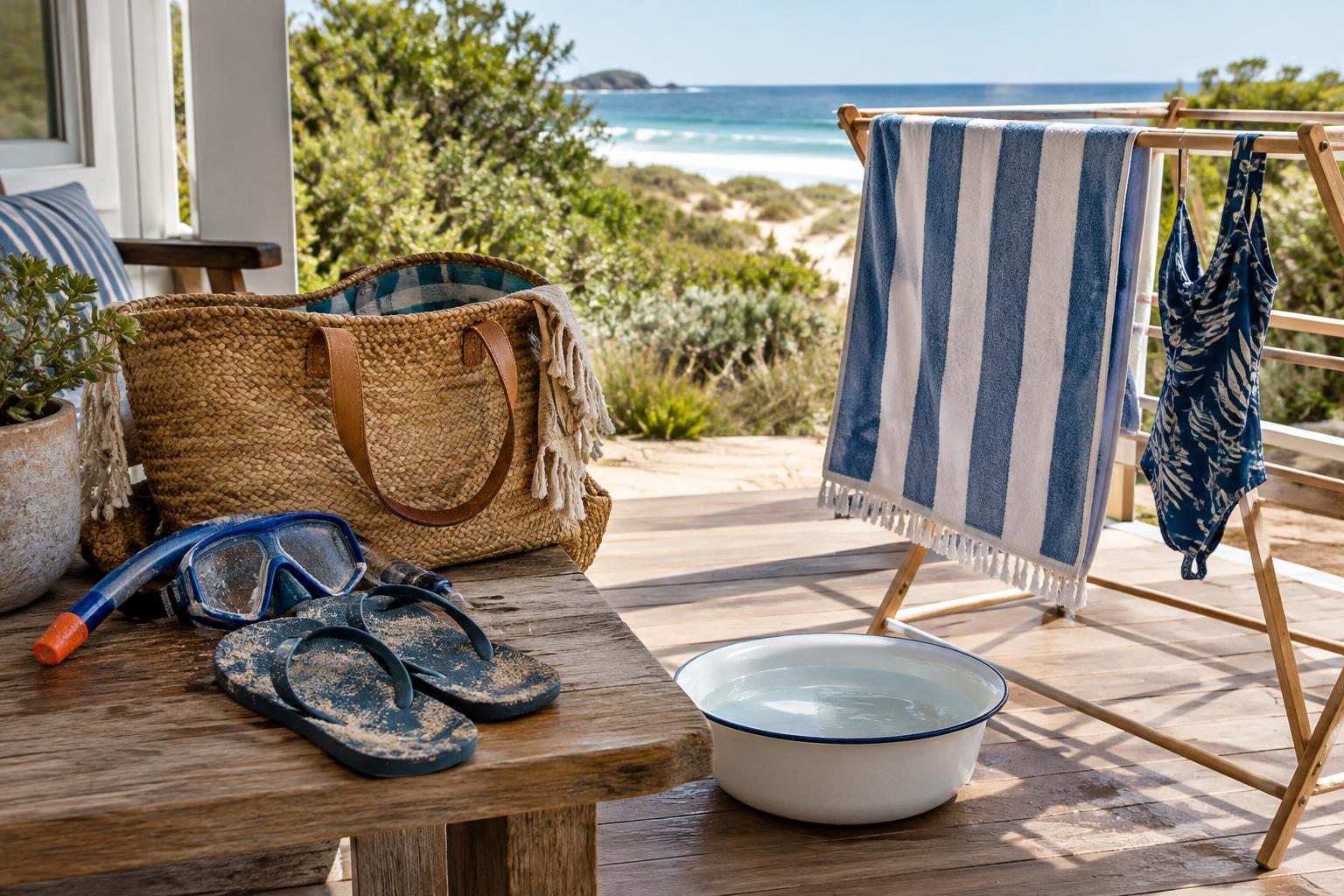
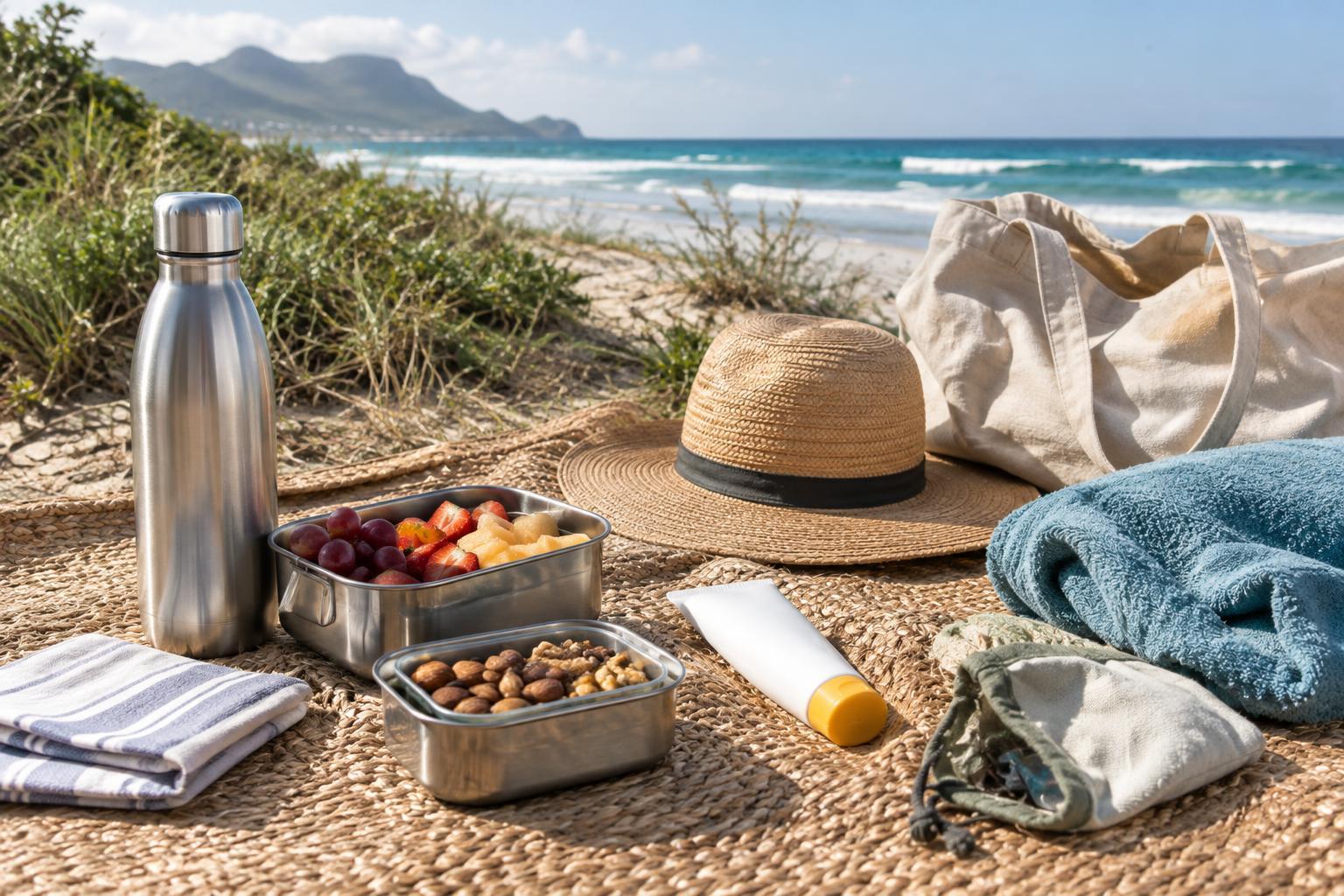
Start with the items you know your family uses: drinking water, easy-to-handle food, sun hats, suitable sun protection, towels, spare clothes and a bag for wet things. Add any nappies, wipes or other everyday supplies your child needs. A light layer can be useful when the wind picks up, even if the day began warm. Keep drinking water and essentials near the top of the bag so you can reach them without unpacking everything.
A small number of familiar toys is usually enough. A bucket, spade or mould can keep little hands busy without creating a long list of things to collect before leaving. If you bring a shade shelter, check that it is permitted at the beach and secure it appropriately for the conditions. Before setting off, give each child a small job, such as carrying a towel or choosing one toy. Helping with the preparation can make the transition from home to beach feel smoother.
Set boundaries before play starts
Explain the rules in simple, concrete terms while everyone is still together. Show children where the family’s spot is, what area they may play in, and which adult they should return to. You might use a visible landmark, such as your towel or a nearby path, but do not rely on it as a substitute for close supervision. Agree on what happens when an adult calls them back, and practise that response before play gets absorbing.
Water needs a separate rule. Decide whether paddling is part of the visit, where it may happen and which adult will stay close. Conditions can change, and calm-looking water does not remove the need for attention. Follow local signs and lifeguard guidance where available; avoid swimming where it is not advised. If supervising several children, make it clear which adult is watching whom rather than assuming everyone has an eye on the water.
Make breaks and leaving part of the fun
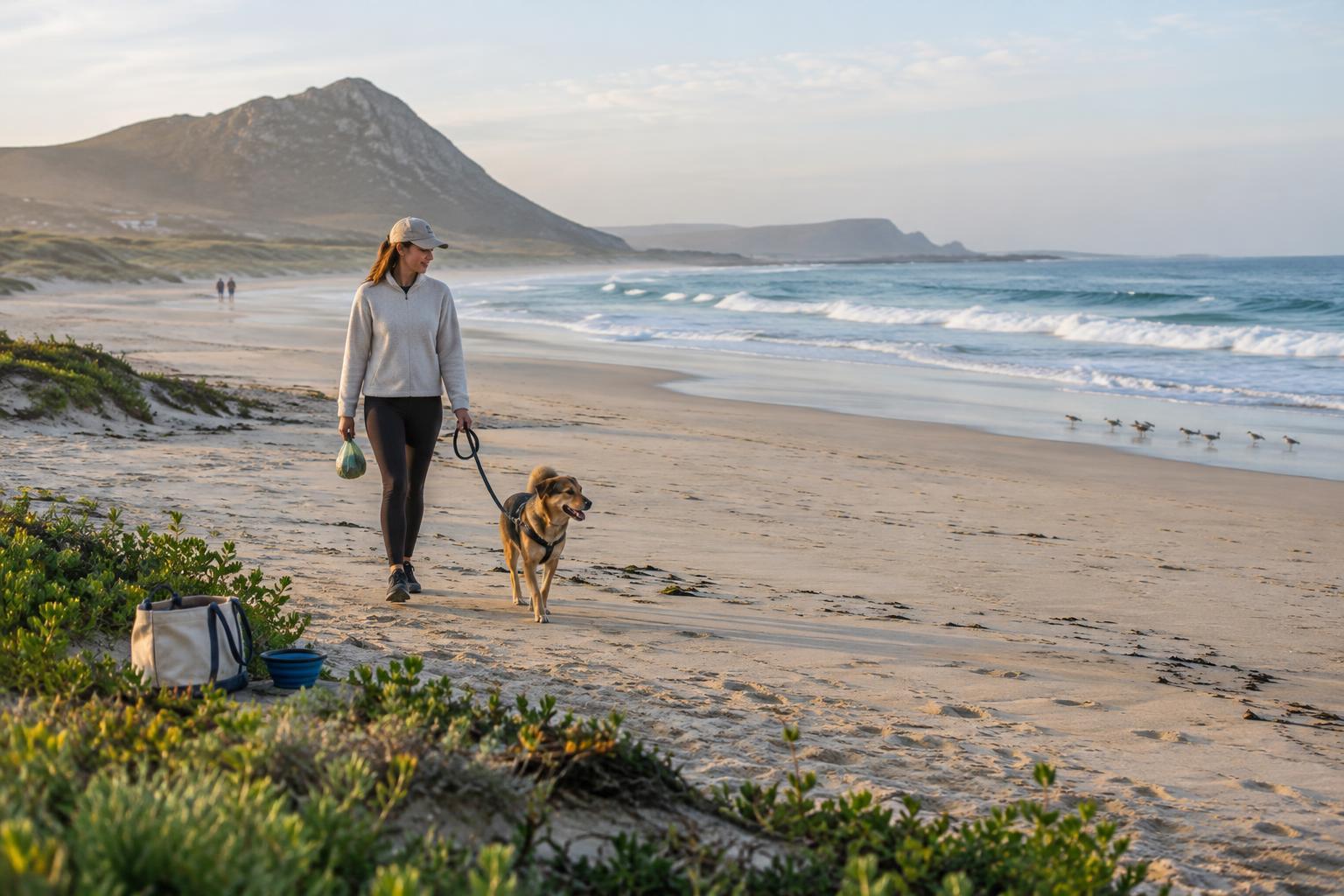
Invite regular pauses for a drink, a snack or a few minutes in the shade. These breaks are also a chance to check whether a child is cold, uncomfortable or simply ready for something different. A beach day does not have to be full of activities: looking for shells without taking protected natural items, drawing in the sand and watching seabirds from a distance can be satisfying ways to slow down.
Give children a little warning before it is time to leave, then offer a final, manageable activity: one last sandcastle, a walk to the water’s edge with an adult, or a wave goodbye to the sea. Pack rubbish and belongings together, shake sand off away from other people, and change into dry clothes if needed. A calm ending makes it easier to remember the outing as a good day, even if the plan changed along the way.