A remarkable journey onto the sand
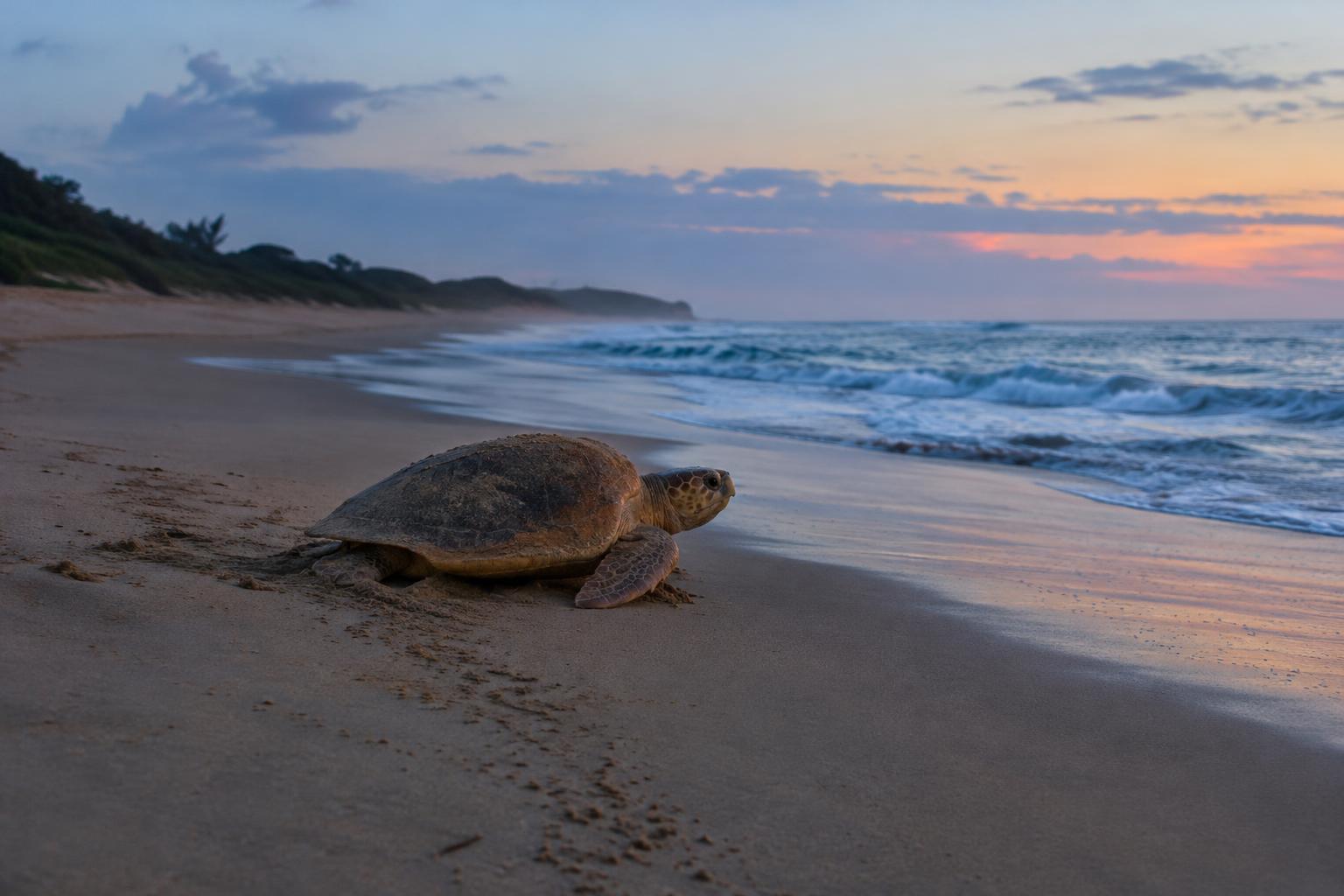
On parts of KwaZulu-Natal’s coast, loggerhead and leatherback sea turtles come ashore to lay their eggs. A nesting female must move well beyond the wash of the waves, find a suitable place, dig a chamber, lay her eggs and cover the nest before returning to the sea. It is slow, demanding work for an animal built to travel through water rather than across sand.
Weeks later, hatchlings may emerge and make their way towards the ocean. These two moments—the adult’s visit and the hatchlings’ first journey—are often what visitors hope to see. Neither is guaranteed. Nesting and hatching depend on natural conditions, and activity can be difficult to predict on any particular night. Treating a sighting as a privilege rather than an expectation makes it easier to put the turtles’ needs first.
Why a quiet, dark beach matters
A nesting turtle can be disturbed by people approaching too closely, standing in her path or shining lights at her. Hatchlings also face hazards on their short trip to the water. Artificial light may draw them away from the sea, while footprints, beach furniture and other obstacles can slow them down. Even a well-intentioned visitor can make that journey harder by trying to guide or carry them.
The most useful approach is simple: keep your distance, minimise noise and leave the beach as you found it. Avoid flash photography and bright phone screens. Do not use a torch to search for turtles unless a guide directs you to do so. If you encounter a turtle unexpectedly, stop where you are, give it a clear route and follow any instructions from authorised staff. Never touch an adult, hatchling or eggs, and do not dig into a nest.
What to do if hatchlings appear
Watching hatchlings head across the sand can be moving, but they need room to travel under their own power. Stay behind them rather than gathering between them and the water. Keep lights off, ask others nearby to do the same, and avoid creating a crowd around their route. Resist the urge to pick up a hatchling that seems slow: handling can cause harm, and appearances alone do not tell you what it needs.
If a hatchling appears trapped, is moving towards a brightly lit area, or you find a turtle that seems injured or stranded, contact a local conservation authority or an authorised turtle guide for advice. Do not attempt to relocate it yourself unless directed by someone qualified to respond. The same caution applies to nests and tracks: they may be useful to conservation teams, so leave them undisturbed.
Planning a responsible turtle outing
A guided visit is generally a better choice than searching beaches independently. A knowledgeable, authorised guide can explain where access is permitted, set an appropriate viewing distance and decide when a group should move on. Ask how the outing manages lights, group size and photography. Be prepared for a walk in darkness and for the possibility that you will not see a turtle at all; the coast has plenty to appreciate without a close encounter.
Access arrangements and visitor rules can differ between protected areas and other beaches, and they may change. Before making plans, check current guidance with the relevant park, conservation authority or tour operator. Follow signs and closures, stay out of marked nesting areas, and do not drive on the beach. If dogs are permitted where you are visiting, keep them controlled and well away from any turtle activity. Choose a guide whose priority is protecting the animals, not promising a sighting.
Take the experience home without leaving a trace
A responsible visit is measured less by the photographs you bring back than by the space you leave for wildlife. Pack out litter, secure loose belongings that could become beach debris, and avoid moving driftwood or other natural material simply to improve your view. On the walk back, use only the lighting needed to travel safely and follow your guide’s directions.
KwaZulu-Natal’s nesting beaches offer a glimpse of a life cycle that usually unfolds out of sight. Learning what turtles need—and accepting that the best observation may be from a distance—lets visitors enjoy that glimpse without becoming an obstacle in it.