Start with the room, not the material
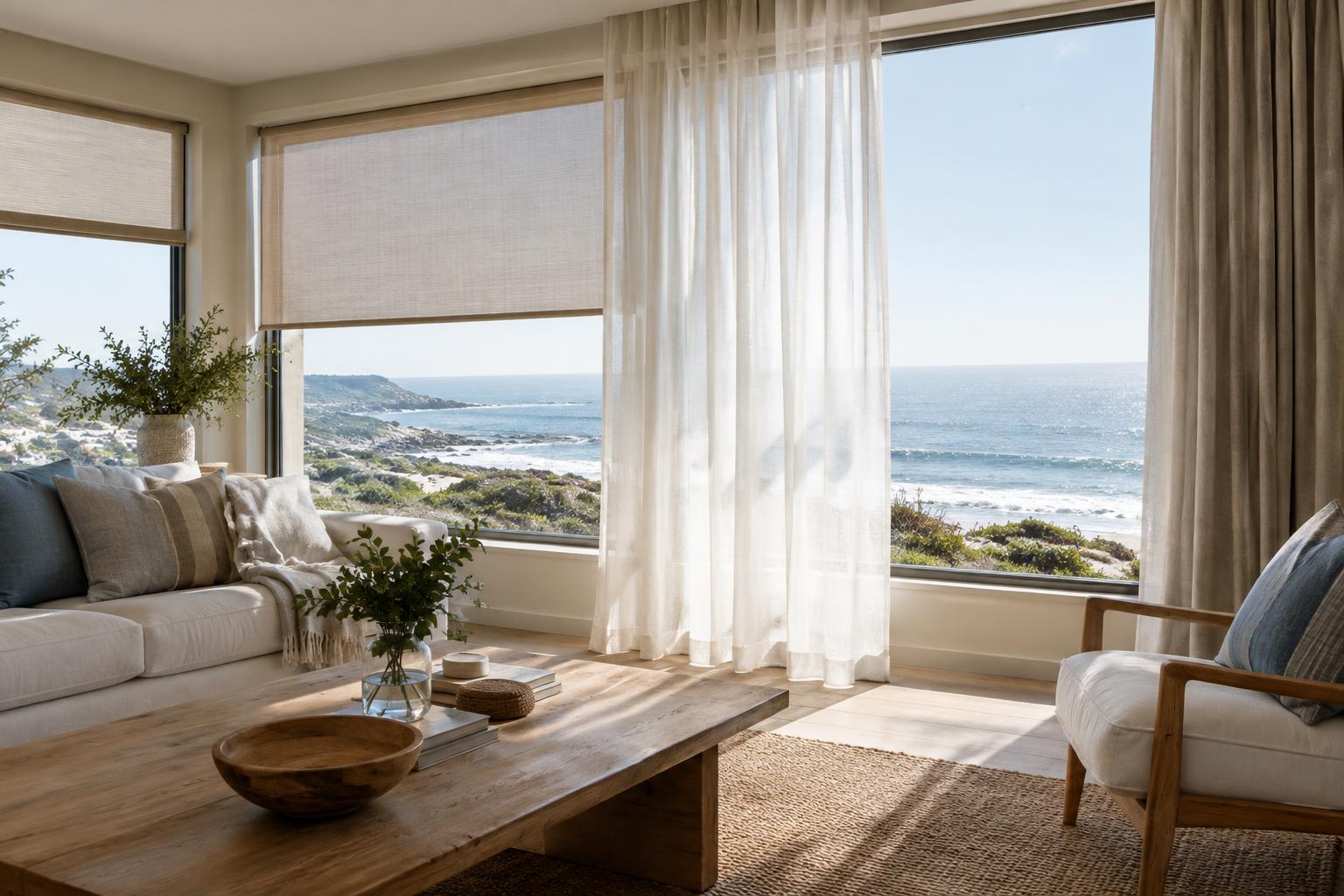
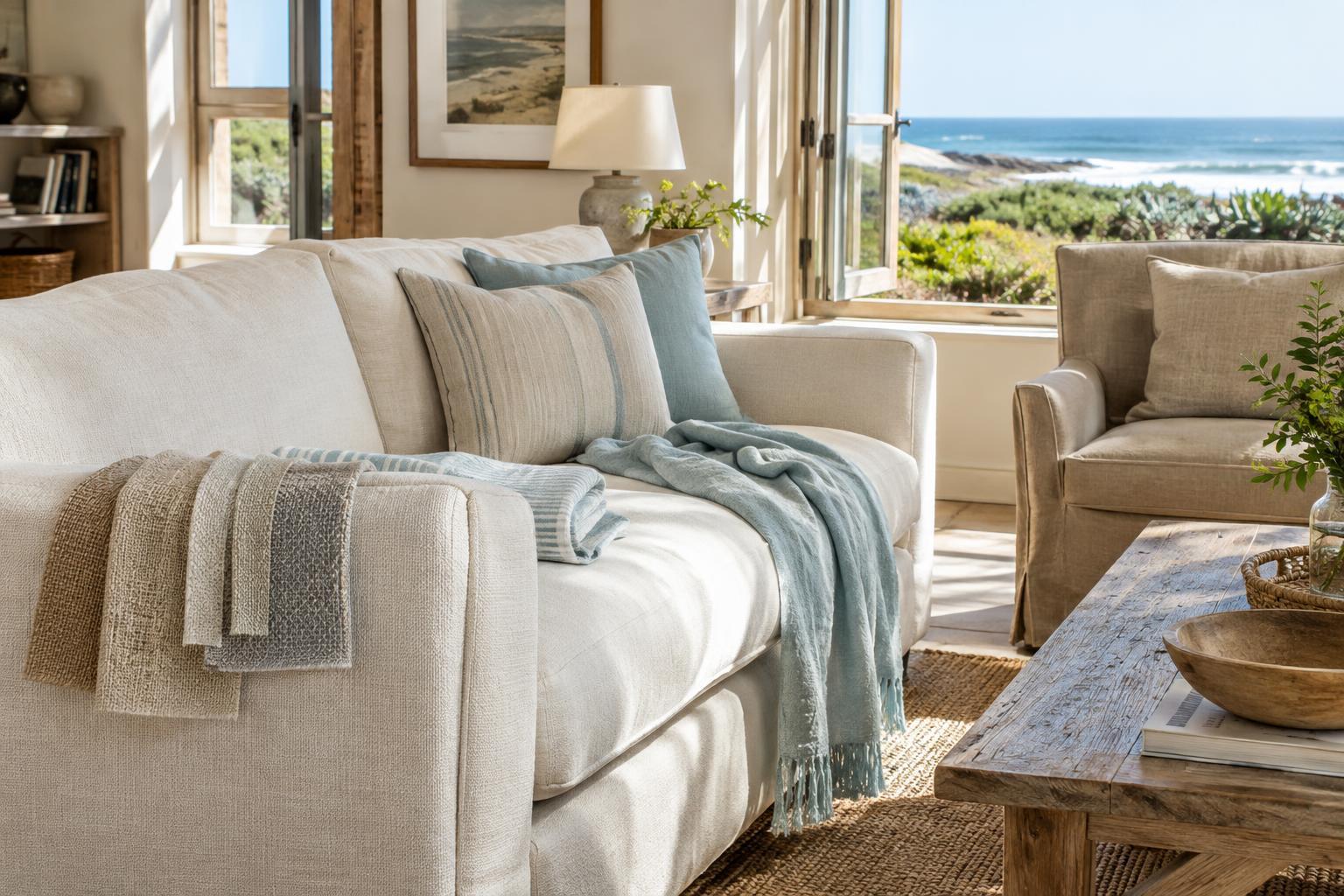
A home near South Africa’s shoreline may face humid air, salty breezes, damp towels and strong sunlight. Those conditions do not rule out beautiful furniture, but they make placement and construction as important as appearance. A dining table in an airy room has a different job from a bedside cabinet beside an open window or a storage unit that must hold beach gear.
Before choosing a surface, notice where moisture gathers, which windows admit direct sun and whether the room has steady airflow. Look at the whole piece, too: edges, joints, drawer runners and hardware can become trouble spots even when the broad surfaces look sound. No single material is automatically best for every coastal room.
Solid wood: character with room to move
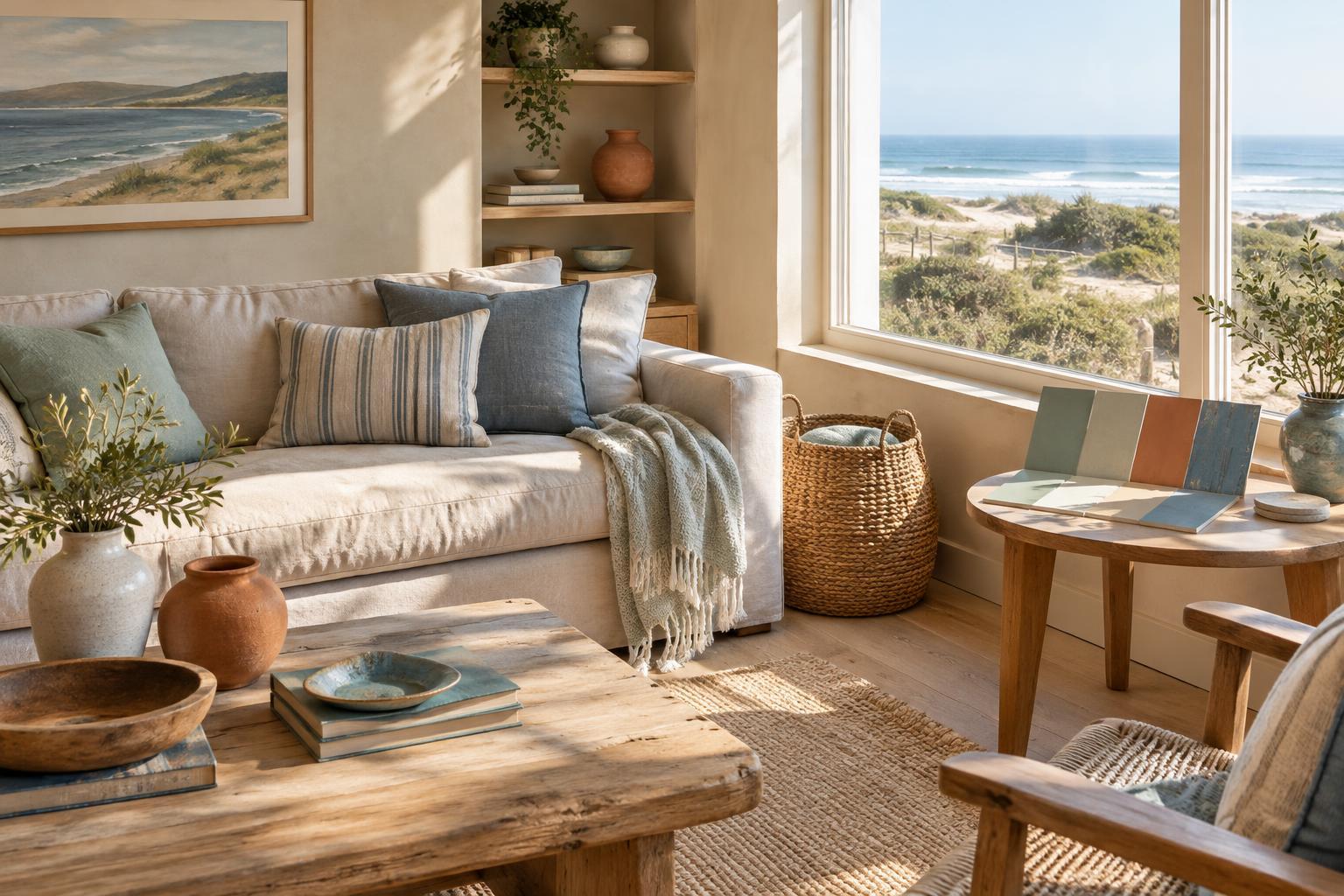
Solid wood offers natural grain throughout the piece and can often be sanded and refinished if it becomes worn. It is a good choice for furniture you intend to keep for years, provided its design allows for the way wood expands and contracts as humidity changes. A well-made solid-wood tabletop, for example, needs appropriate joinery and fixing methods rather than being held rigidly in place.
Solid wood is not waterproof. Moisture can leave marks, raise the grain or cause warping, while prolonged sun exposure may change its colour. Different species and finishes behave differently, so ask how a piece is constructed and finished rather than relying on a broad label such as “hardwood”. In a coastal home, keep solid-wood furniture away from persistent damp and give it a little space from walls where air circulation is poor.
Veneer: the look of wood over a stable core
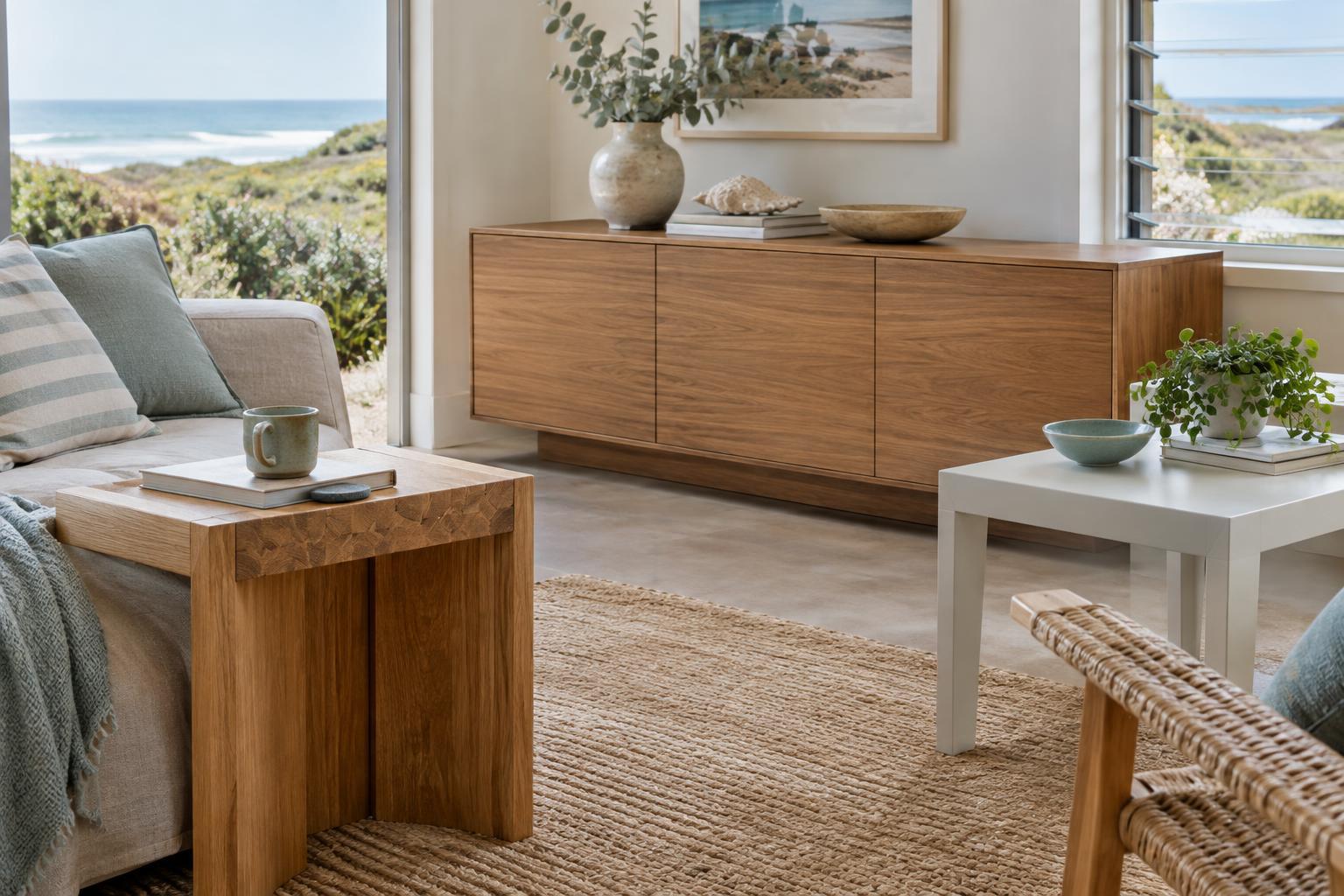
Wood veneer is a thin layer of real wood applied to a core, often plywood, MDF or particleboard. It can give a cabinet or desk the warmth and variation of natural grain while using less solid timber on its visible surfaces. Veneered panels can also be useful for wide, flat furniture fronts, where a carefully chosen core and sound construction help the piece retain its shape.
The core and edge treatment matter greatly near the coast. If water enters through an unprotected edge, seam or damaged finish, some cores may swell and be difficult to repair. Veneer itself can be refinished only to the extent its thickness allows. Check that corners feel secure, surfaces are evenly finished and any exposed edges are properly covered. Veneer may be a sensible option for living-room storage, but it is not a reason to leave spills or damp items in place.
Laminate: easy-care surfaces with important limits
Laminate furniture generally has a manufactured surface bonded to a substrate rather than a layer of natural wood. It comes in many colours and wood-look patterns, and its wipe-clean surface can be practical for frequently used desks, shelves or family storage. Quality varies: a robust laminate on a well-made board is a different purchase from a thin surface over poorly finished edges.
Laminate is usually less straightforward to refinish than solid wood, and a chip or lifted edge may remain visible. It is also not immune to heat, standing water or moisture reaching the board underneath. If you are choosing a piece for sunscreen bottles, wet beach bags or sandy hands, examine the seams and edge banding as closely as the top. A washable tray can protect the furniture, whichever material you choose.
Make the choice last
For a table you may want to repair over time, well-constructed solid wood has clear appeal. For a wide cabinet front with a natural-wood look, consider veneer and pay close attention to its core and edges. For hardworking storage where simple cleaning matters most, laminate may fit. In all three cases, sturdy joints, accessible hardware and a finish suited to the intended use deserve more attention than a surface label alone.
Everyday habits will help any piece last longer. Wipe up spills promptly, dry furniture after cleaning, use coasters or mats where needed and avoid pressing pieces against visibly damp walls. Keep wet towels and beach equipment off furniture, and follow the maker’s cleaning guidance rather than using harsh products by default. A coastal home can still feel relaxed: the goal is not to protect every surface from daily life, but to choose furniture that can comfortably handle it.