Check the beach rules before you leave
A beach that welcomes dogs on one stretch may restrict them on the next. Along South Africa’s coast, access rules can differ by municipality, beach, season and time of day. Before setting out, check the relevant municipality’s current guidance and any notices for the beach you intend to visit. Look for details on whether dogs are allowed, where they may go, and whether a lead is required. Check again at the beach entrance: signs on site may identify boundaries or temporary restrictions that are easy to miss when planning from home.
Include the route to the sand in that check. A dog-friendly section is not much use if reaching it means crossing an area where dogs are prohibited. If the rules are unclear, choose another beach rather than assuming access is allowed. Keep a lead with you even where off-lead exercise is permitted; a busy entrance, an unexpected crowd or wildlife nearby may make it the responsible choice.
Choose a beach and time that suit your dog
Think about your dog’s comfort, not just the destination. A quieter beach with an easy access path may work better than a long walk over hot sand or steep steps. Check the weather and tide before leaving, and allow enough time to return without rushing. Shade can be scarce on an open shoreline, while wind, waves and unfamiliar sounds may overwhelm a dog that is usually relaxed at home.
Plan around heat where possible. Sand and paved paths can become uncomfortable for paws, and running in warm conditions can tire a dog quickly. Bring drinking water rather than relying on taps being available. If your dog is very young, older, unwell or unused to crowds and surf, consider a short visit or a different outing. A pleasant beach day does not require a long stay or a swim.
Pack for control, comfort and cleanup
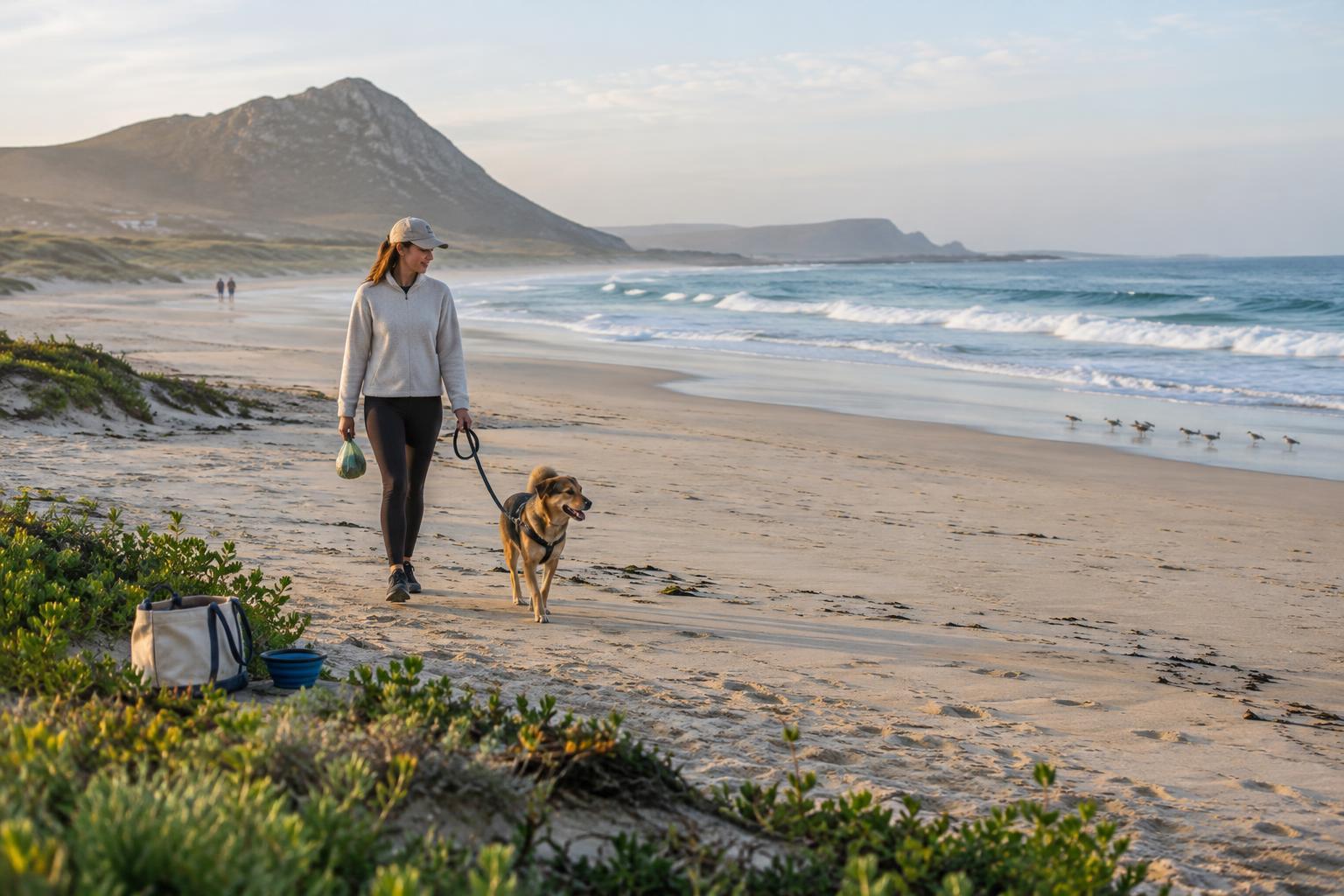
A simple kit makes it easier to respond to what happens on the shore. Take a secure collar or harness, a lead, plenty of fresh water and a bowl your dog will use. Pack more waste bags than you expect to need, plus a way to carry used bags until you find a bin. A towel is useful for drying paws and protecting your car on the way home. If you plan to stay awhile, bring shade you can set up without blocking paths or disturbing other visitors.
Before heading down, check that your dog’s identification details are up to date. Offer water regularly and watch for signs that your dog wants a break, such as slowing down or seeking shade. Discourage drinking seawater and eating washed-up material; both can cause problems. If you bring toys, choose ones you can retrieve easily so they do not become beach litter.
Share the shore with people and wildlife
Not everyone on a beach is comfortable around dogs, including people with children and visitors walking their own pets. Keep your dog close when passing others, and ask before allowing a greeting. Reliable recall matters in any area that permits off-lead activity. If your dog cannot return promptly when called, use a lead. Give anglers, picnickers and people entering the water room to enjoy their space.
Coastal habitats deserve the same care. Do not let your dog chase birds, investigate nests, disturb marine animals or run through sensitive dune vegetation. Even a playful chase can disrupt wildlife. Follow marked paths and respect any fenced or signed conservation areas. Pick up waste wherever your dog goes, including near the waterline; the tide is not a cleanup service.
Keep the visit flexible
Watch your dog and the conditions throughout the outing. Rough surf, changing tides, sharp debris and strong currents can make the water unsuitable even for a confident swimmer. Never assume your dog wants to go in, and do not throw a toy into waves to encourage a chase. If the beach becomes crowded or your dog seems stressed, move to a quieter spot or call it a day.
Before leaving, check that you have collected your belongings and any waste. Rinse or wipe sand and salt from your dog as needed, and look over their paws for irritation or trapped debris. A little preparation and a willingness to change plans help make a dog-friendly beach visit better for your companion, other visitors and the coast you came to enjoy.