A beach is more than a surface
From the dunes, a stretch of sand may appear bare. Up close, it is a changing habitat shaped by waves, tides, wind and water moving between the grains. Some animals spend much of their lives below the surface, where sand offers shelter from drying out, breaking waves and hungry birds. Others emerge to feed when conditions suit them.
The shore is not one uniform neighbourhood. High on the beach, sand may be dry and exposed for long periods. Lower down, waves regularly wet and rearrange it. At the water’s edge, animals must cope with sand that can shift beneath them in seconds. The mix of life you encounter will depend on the beach, the tide and how sheltered or wave-exposed the spot is.
The animals that dig in
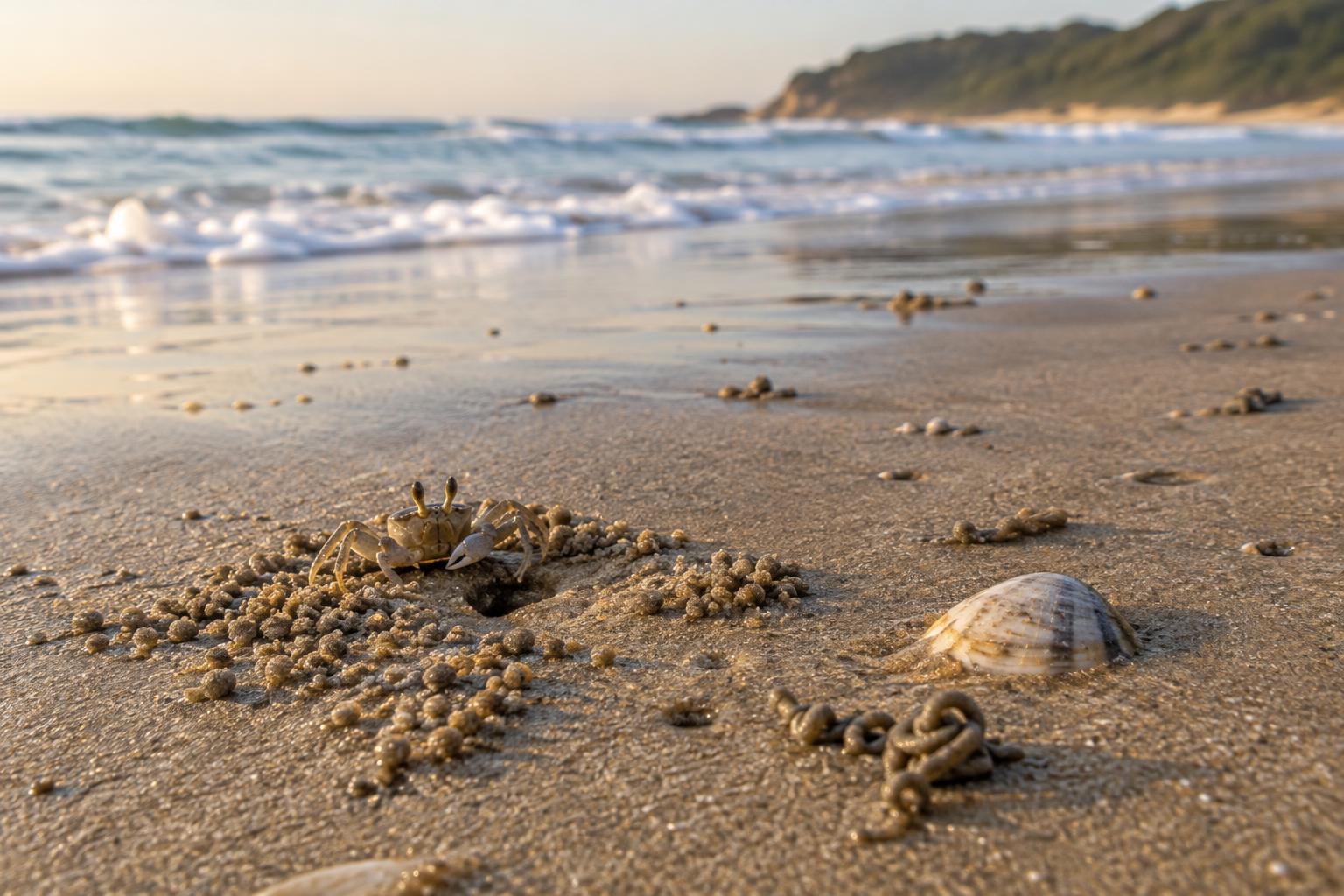
Burrowing worms are among the beach’s less visible residents. Different kinds move through wet sand, feed on particles within it or reach toward the surface for food. Small holes, delicate tracks and little mounds can hint at activity below, although a mark alone rarely identifies its maker. A smooth patch of sand may conceal a busy network of passages.
Some shellfish also live buried, using a muscular foot to move into the sand while drawing in water to breathe and feed. Small crustaceans can dig quickly near the swash zone, the strip washed by each incoming wave. Their ability to disappear into loose sand helps them stay in place and avoid exposure, even as the shoreline moves around them.
Farther up the beach, look near the high-tide line for signs of another community. Where seaweed and other natural material have washed ashore, small beach hoppers and other invertebrates may shelter beneath it. This washed-up material, often called wrack, provides food and cover; it also helps connect life in the sea with life on the upper beach.
A small world of hunters and hunted
Between the grains of damp sand live animals too small to notice on an ordinary walk. These include tiny worms and crustaceans that move through the spaces around sand grains. Some feed on microscopic life or organic matter; others prey on smaller animals. Alongside larger burrowers, they form a food web hidden in what looks like a simple landscape.
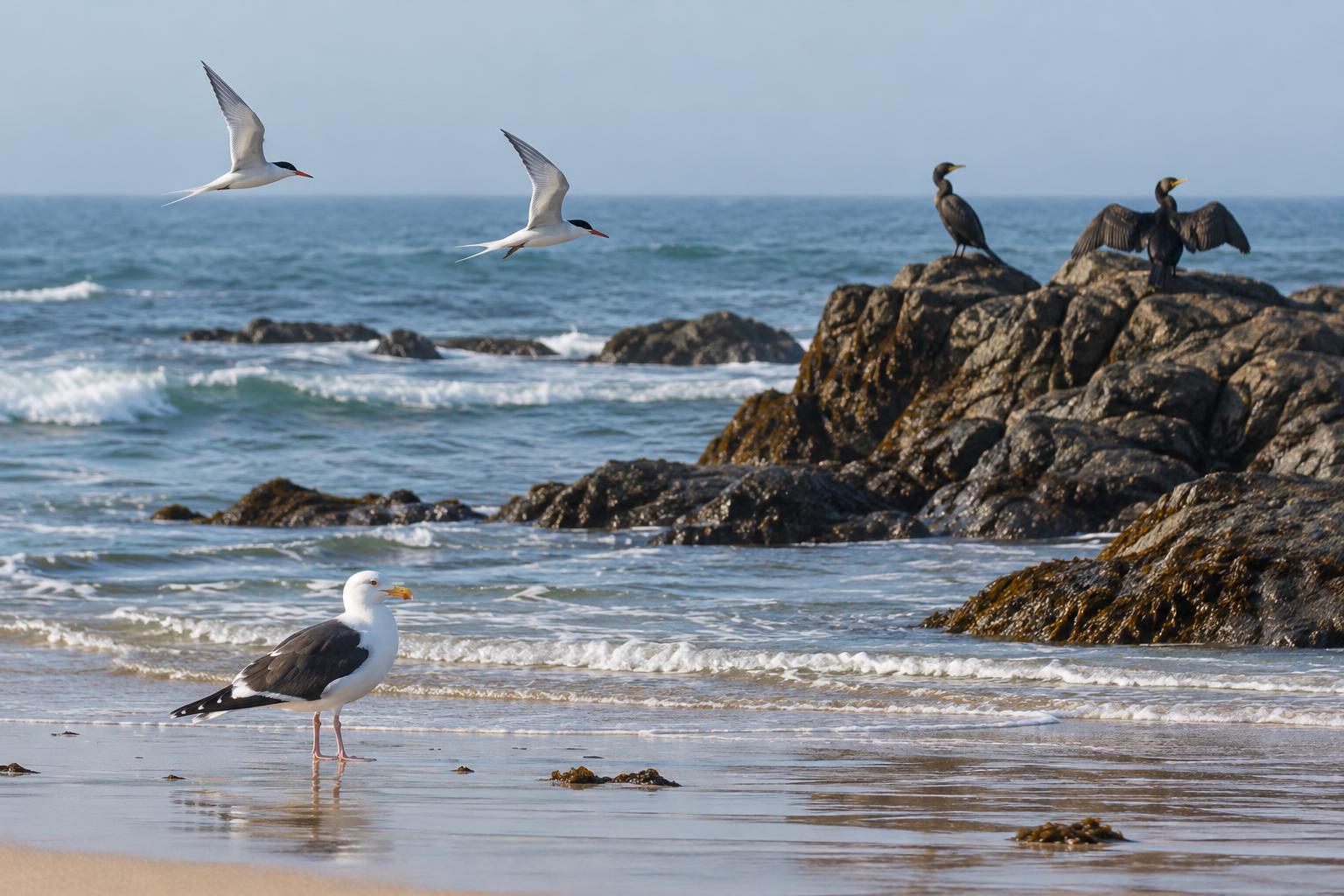
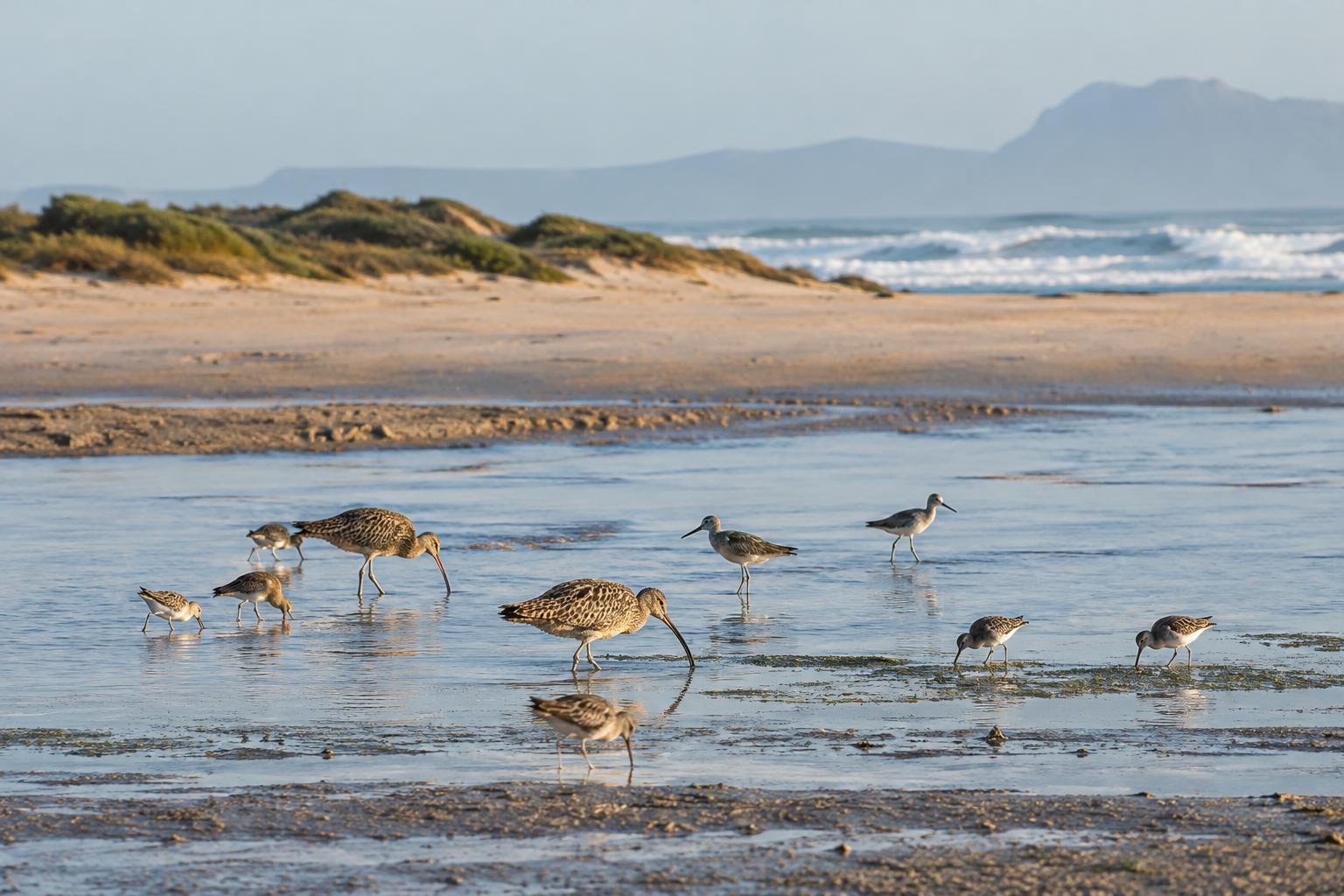
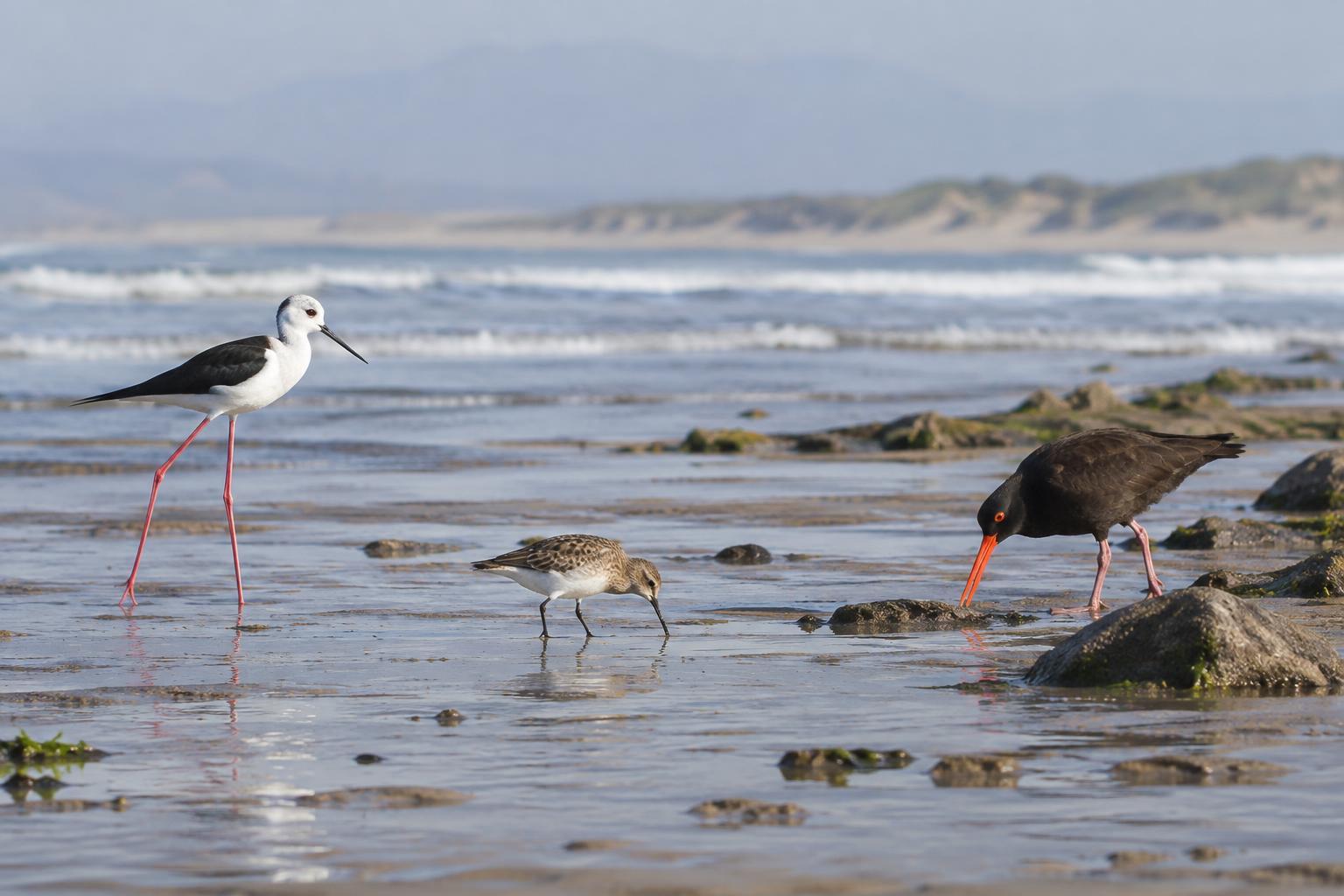
Predation is easier to spot above the surface. Crabs may search for food on suitable beaches, while shorebirds probe or pick at the sand for invertebrates. A bird pausing, listening and then dipping its bill into one patch is a reminder that a meal may be just out of sight. Not every hole is a crab burrow, and not every peck means a bird has found prey, but watching patiently can reveal how animals use the beach.
These relationships change with the tide. A rising sea can bring food and moisture to the lower shore, then drive surface-active animals inland or underground. As water retreats, exposed wet sand offers another feeding opportunity. For wildlife watching, the movement of the shore is often as interesting as any single creature.
How to read the sand without disturbing it
On a South African beach, begin with a slow walk above the incoming waves. Look for paired shell marks, pin-sized openings, trails across damp sand and clusters of bird footprints. Watch a likely patch for a minute before moving closer: movement at the edge of a hole may vanish when a shadow falls across it. A photograph and a note about where you saw a trace are often more useful than trying to dig up its maker.
Keep your visit gentle. Avoid pulling animals from burrows, turning over large areas of sand or stripping away wrack simply to see what is underneath. Give feeding birds space, particularly where they gather along the waterline. Beach rules and protected-area restrictions vary, so check local guidance before collecting anything or exploring a sensitive stretch of shore.
The reward is a different way of seeing a familiar place. A sandy beach is not empty ground between the dunes and the sea. It is a living, shifting habitat whose residents leave brief clues before the next wave smooths them away.