Start with the household, not the sample board
A flooring sample can look perfect in a showroom and feel quite different after a summer of sandy feet, wet towels and open doors. In a coastal home, the best choice depends less on a single “beach-proof” material than on where the floor will go and how people use the space. Think about the route from the beach to the bathroom, whether pets run through the house, and how often you are willing to sweep.
It also helps to separate appearance from material. “Timber-look” describes a finish, not one type of floor: tiles and vinyl can both imitate wood, while laminate and engineered timber have different constructions and care needs. If you love the warmth of boards, you may be able to get that look without choosing a wood-based floor for every room.
Tile: dependable where water and sand meet
Tile is a strong candidate for entrances, kitchens and bathrooms because splashes are straightforward to wipe up and loose sand can be swept away. A timber-look porcelain tile can bring a board-like appearance to a room while keeping the practical qualities of tile. Choose a finish with enough grip for the setting, particularly near doors where feet may be wet; a glossy sample that looks elegant on a wall may not feel reassuring underfoot.
The trade-offs are comfort and upkeep around the tile. Hard tile can feel cool and unforgiving when you stand on it for a long time, and dropped items may break. Grout lines collect dirt, so consider how the tile size and grout colour will work with regular cleaning. The quality of the substrate and installation matters too: tile is not a shortcut around cracks, unevenness or existing moisture problems.
Vinyl: softer underfoot, but check the product details
Vinyl planks and sheets can offer a quieter, slightly more forgiving surface than tile. Many designs mimic timber, making vinyl appealing in bedrooms and living areas where a relaxed, continuous look matters. Day-to-day sand is usually easy to remove with a soft broom or vacuum suited to hard floors. Felt pads under furniture and a clean mat at the door can help limit scratches.
Vinyl products vary, however. Check the maker’s guidance on standing water, direct sun, cleaning products and the type of installation before buying. Some floors can be affected by heat or movement, and water left at edges or seams can cause trouble even if the surface itself resists splashes. A flat, dry, properly prepared subfloor is important: vinyl can reveal bumps or fail to perform as expected when laid over an unsuitable base.
Where does actual timber fit?
Real timber brings natural variation and a feel that printed finishes do not fully reproduce. For some households, that character is worth the extra care. But wood-based floors generally call for more attention to moisture, wet shoes and indoor humidity. Laminate with a timber image also differs from vinyl: its core and joints may be vulnerable if water sits on them. Engineered timber has its own installation and maintenance requirements, so it is worth checking the specifications rather than treating every board-shaped floor as interchangeable.
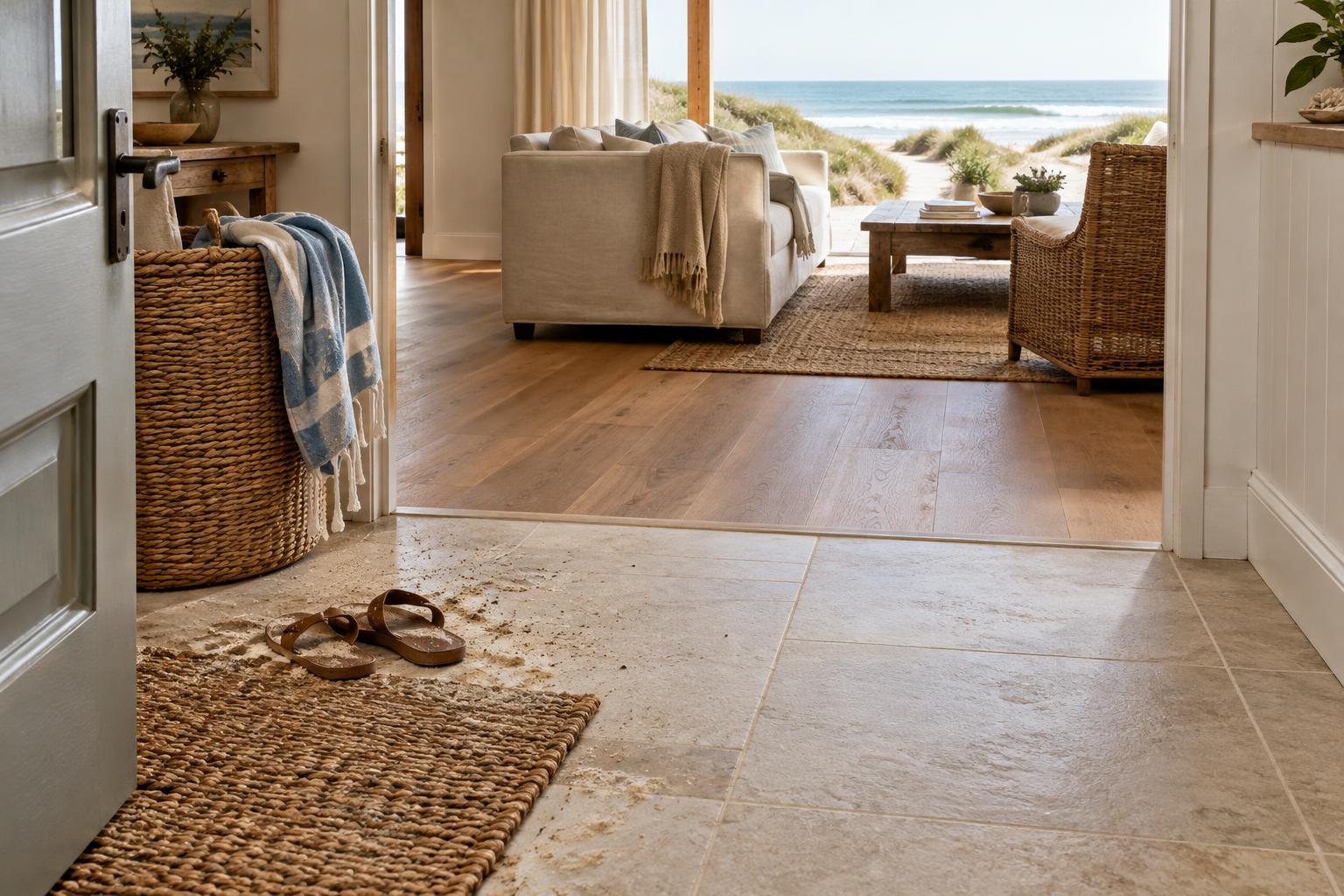
If a timber finish is your priority, consider using real wood or a suitable wood-based product in a drier, lower-traffic room, and a more forgiving surface on the path from the beach. Whatever you choose, ask about the product’s suitability for your particular room, subfloor and exposure to sunlight, and keep its care instructions for later.
Make any choice easier to live with
Before deciding, take samples home and view them in morning and afternoon light. Run a hand over the texture, imagine cleaning grit from it, and compare how each sample looks beside your walls and furniture. Pale floors may disguise some dust but show certain marks; very dark floors can make light-coloured sand conspicuous. A mid-tone, lightly varied finish may be easier to live with than a perfectly uniform one.
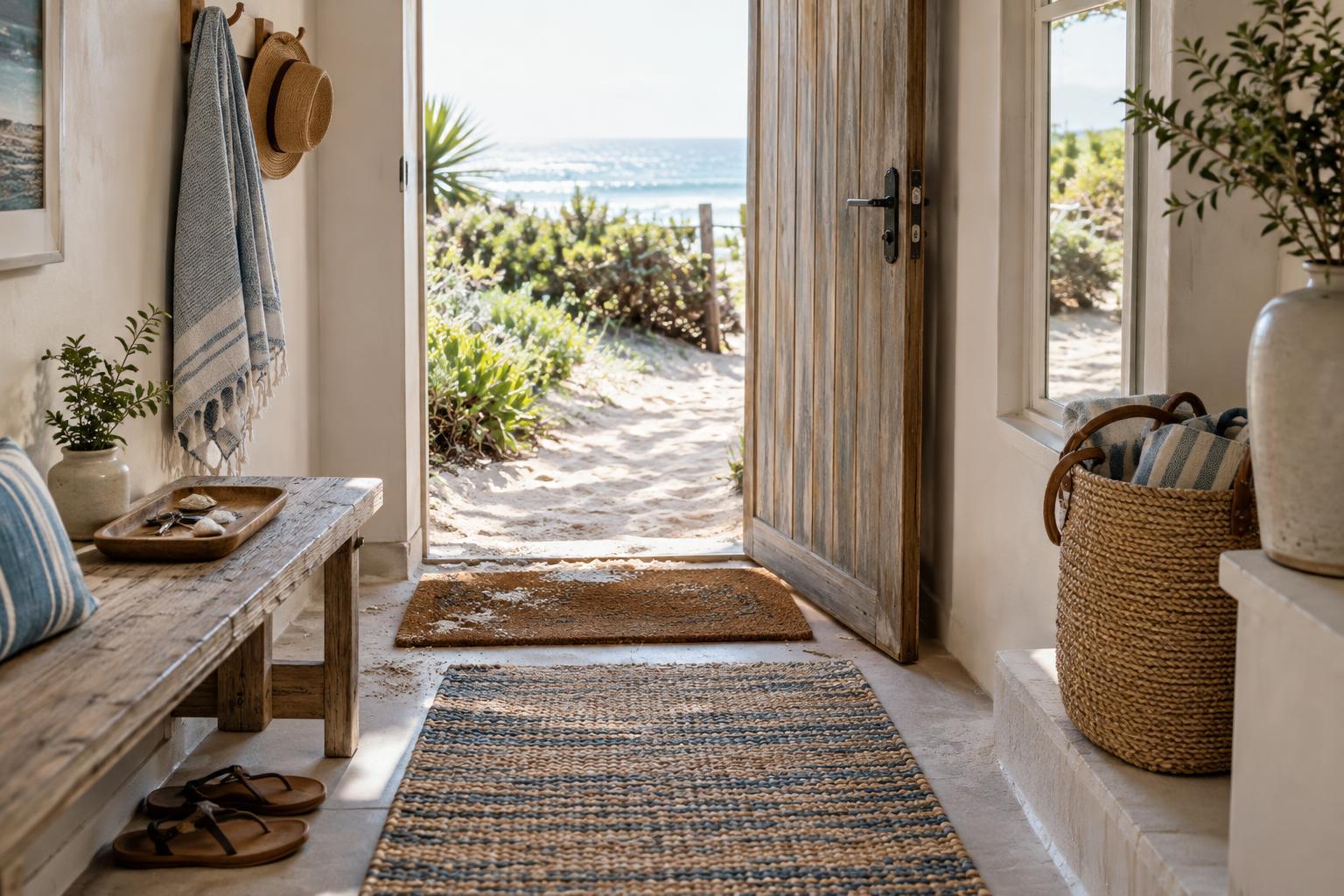
Finally, plan for the sand rather than expecting flooring to defeat it. A place to rinse feet, an outdoor mat and a washable indoor runner can catch much of what comes through the door. Sweep grit before it is ground underfoot, wipe up spills promptly, and follow the floor maker’s cleaning guidance. The most satisfying coastal floor is one that suits both the room and the ordinary routines of the people coming home to it.