An underwater forest along the cooler coast
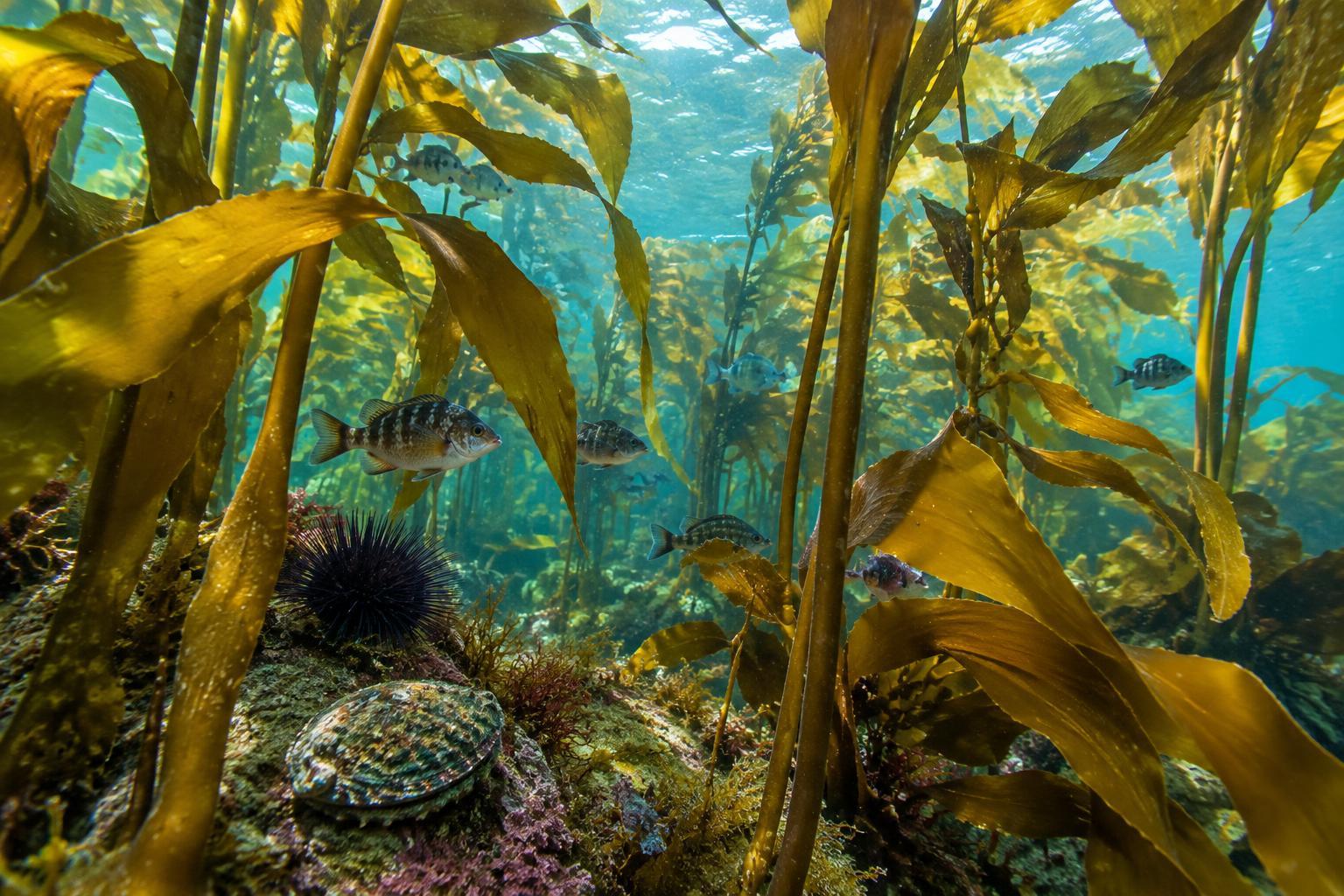
At low tide, washed-up kelp can look like a tangle of brown ribbons. In the water, it has a different shape: long stems lift broad blades toward the light, while holdfasts anchor the plants to rock. Kelp is a large brown seaweed, not a tree, but a dense kelp bed can feel remarkably forest-like.
South Africa’s most extensive kelp forests grow along cooler stretches of the west and south coasts, where suitable rocky habitat, light and nutrient-rich water allow them to thrive. Sea bamboo is one familiar kelp in these waters. Kelp beds are not identical from place to place: depth, waves, temperature and the shape of the seabed all affect what grows and which animals find a home there.
Who lives among the blades?
The structure of kelp offers places to hide, feed and rest. Small fish can shelter among the stems, while animals such as sea urchins, snails and other invertebrates graze or search for food on the rocks below. Look closely at a piece of kelp and you may notice tiny creatures living on its surface. Even the holdfast can provide nooks for small animals without being a root in the land-plant sense.
Fish found around South African rocky reefs, including klipfish and shysharks, may use kelp habitat. Octopuses hunt among nearby rocks, and rock lobsters occupy crevices beneath the canopy. Abalone, also called perlemoen, graze on algae in rocky coastal habitat where kelp may be part of the surrounding ecosystem. The species present vary by location; a kelp forest is a neighbourhood of connected habitats, not a guarantee of seeing every animal on a single visit.
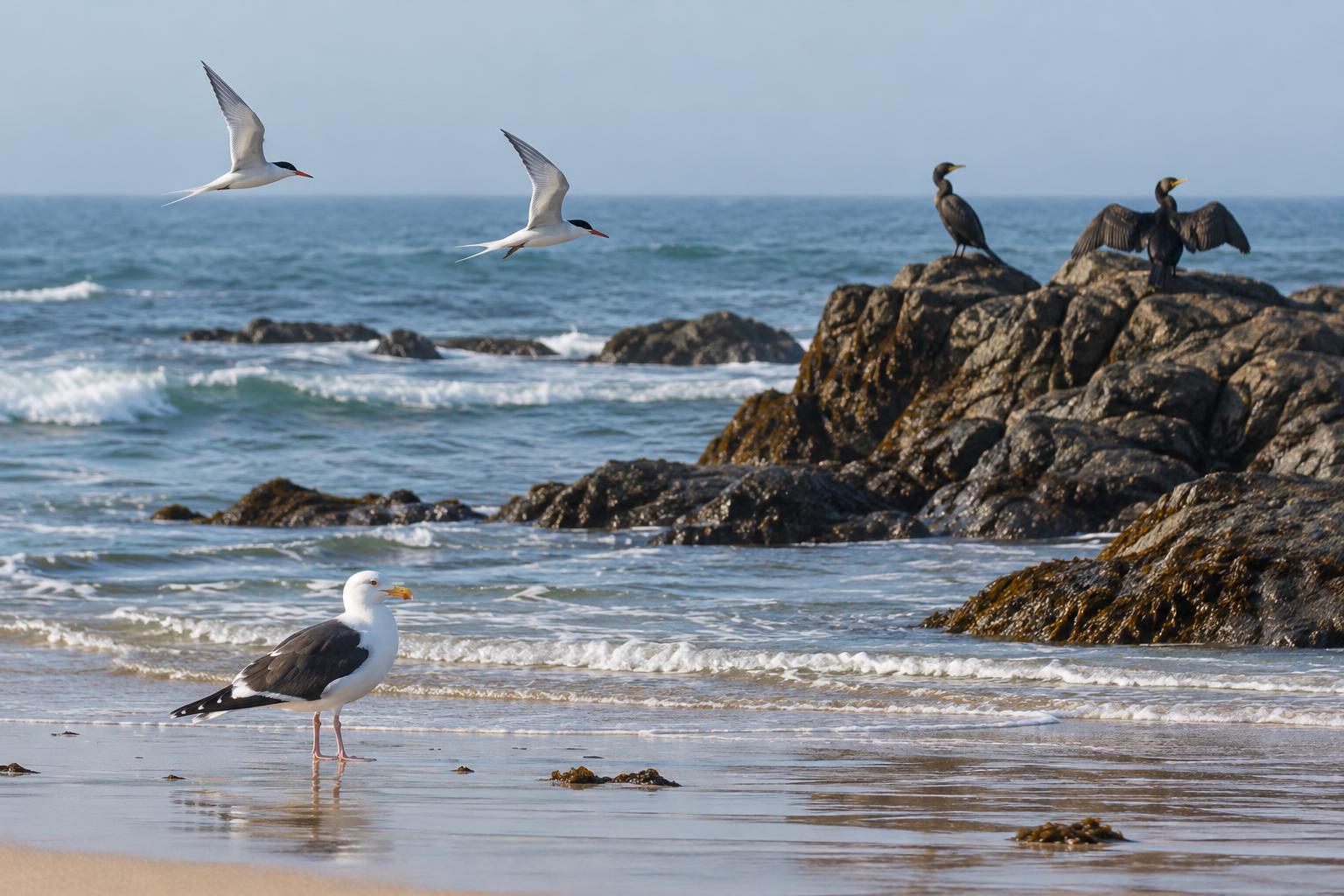
Life above the water is connected too. Seabirds and marine mammals may hunt in coastal waters around kelp beds, while broken kelp washes ashore and becomes food or cover for small shoreline creatures. A beach-cast frond can therefore be part of the habitat’s story rather than simply debris.
Why kelp matters beyond the forest
Kelp uses sunlight to grow, creating living material that supports a wider food web. Some animals eat kelp directly; others feed on particles from older, broken blades or on the creatures that kelp attracts. When kelp breaks free, currents can carry it into nearby habitats, where it may continue to provide food and shelter.
Its physical shape matters as much as its growth. A kelp canopy creates shaded, moving spaces in an otherwise exposed stretch of rocky seabed. Dense beds can also change how waves move through shallow water, although their effect depends on local conditions and should not be treated as a substitute for coastal protection measures.
Like other photosynthetic seaweeds, kelp takes up carbon as it grows. Whether that carbon remains stored for a long time depends on what happens after the kelp is eaten, breaks down or drifts away. Its clearest everyday value is visible closer to home: kelp helps make a varied coastal habitat possible.
A changing habitat that deserves care
Kelp forests face pressures that differ from one stretch of coast to another. Changes in water temperature and conditions can affect where kelp grows; poor water quality can stress coastal ecosystems. Harvesting and changes in the abundance of grazing animals may also influence a kelp bed. Because these factors interact, a thinning forest does not always have one simple explanation.
For a shore visitor, care starts with observation. Leave attached kelp and the animals beneath it in place, avoid turning over rocks unnecessarily, and give wildlife space. Check the applicable rules before collecting anything: protected areas and harvesting regulations can differ. Even beach-cast kelp can shelter small creatures, so it is worth looking before stepping through a pile of fronds.
How to experience a kelp coast
You do not need to dive to appreciate a kelp forest. From a safe viewpoint, watch how fronds rise and fall with the swell, or explore a rocky shore at a suitable low tide without entering the water. Notice the different textures: smooth blades, rough rock, shells and small pools. A field guide can help with identification, but patient observation is rewarding on its own.
If you plan to swim, snorkel or dive, treat kelp beds as demanding open-water environments. Cold water, waves, currents and limited visibility can make conditions difficult, and loose gear can catch on kelp. Choose an activity suited to your experience and check local conditions and access rules before setting out. Whether seen from shore or below the surface, a kelp forest is best enjoyed as a living place, not a collection of things to take home.