Pause and assess the scene
Finding a turtle, seal, seabird, dolphin or whale on the shore can be upsetting. Before going closer, check your own safety. Watch the surf and incoming tide, look for unstable rocks, and keep children and dogs back. An animal that appears still may be alive, frightened or capable of sudden movement.
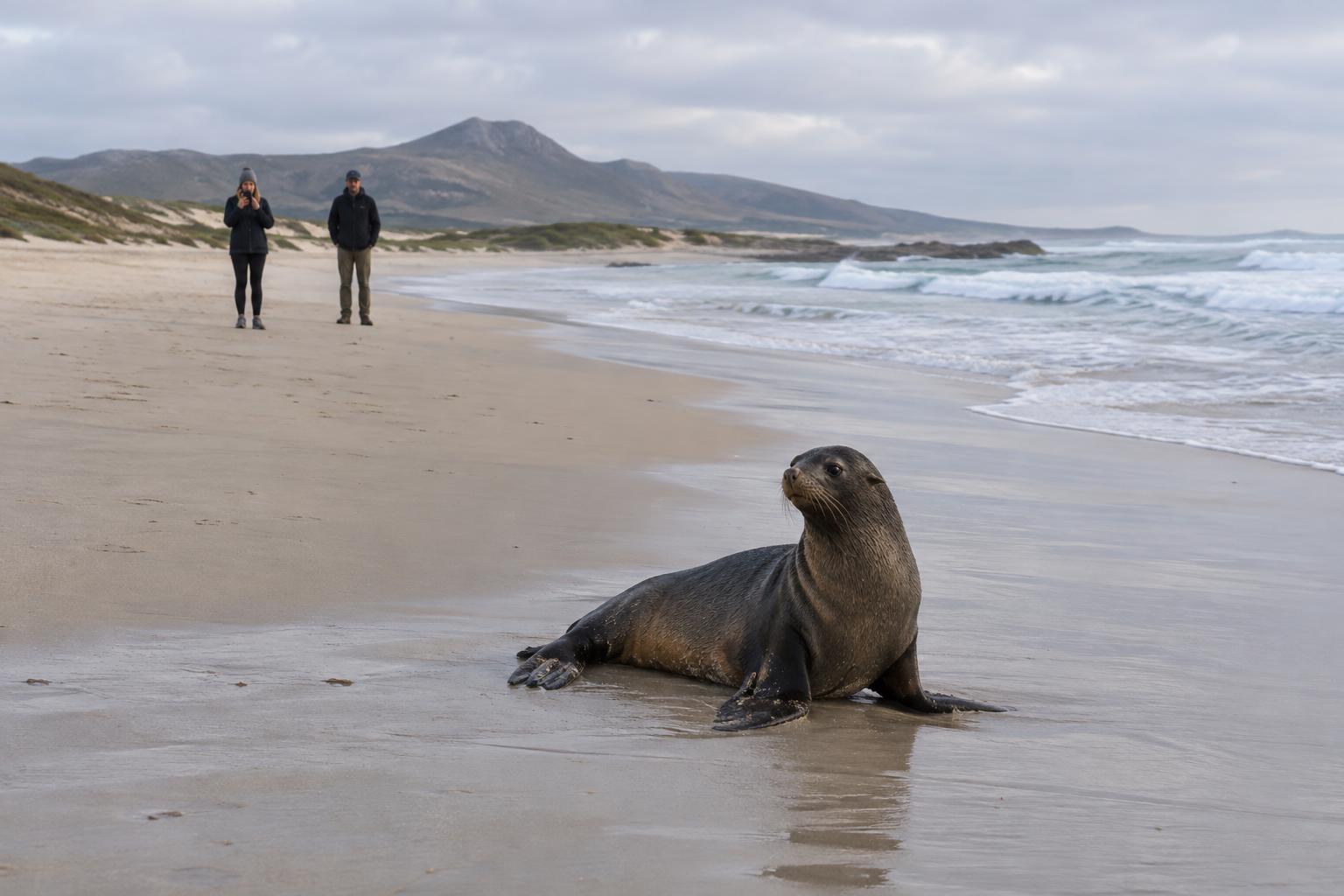
Not every animal resting on a beach needs rescuing. A seal lying ashore, for example, may simply be resting. Obvious injuries, entanglement, difficulty moving or an animal stranded above the waterline are reasons to seek expert advice. If you are unsure, report what you see rather than trying to decide on a treatment yourself.
Give the animal space
Keep a generous distance and ask others to do the same. Do not touch, feed, lift, drag or crowd the animal for photographs. Even small marine animals can bite or struggle, and handling may add stress or worsen an injury. Keep pets on a lead and away from the area.
Do not push a stranded animal back into the sea. It may be injured, exhausted or unable to swim, and the surf can put both the animal and helpers at risk. Avoid pouring water over an animal, covering it with towels or trying to move it into shade unless a qualified responder specifically tells you what to do. For whales and dolphins, never obstruct the blowhole on top of the head.
If there is fishing line, a hook, netting or plastic around an animal, resist the urge to pull it free. Removing entanglement safely can require specialist tools and an understanding of how the animal might react. Note what you can see from a distance so responders arrive prepared.
Report the sighting clearly
Contact a local lifeguard, beach authority, conservation office or marine wildlife rescue or stranding response organisation as soon as you can. If you do not know whom to call, a nearby lifeguard or municipal beach office may be able to direct you. Check local contact details before a beach trip if mobile reception is likely to be unreliable.
Give your location as precisely as possible: the beach name, nearest access point or landmark, and a phone location pin if available. Describe the animal’s approximate size, whether it is moving or breathing, any visible injuries or entanglement, and whether the tide or surf is approaching it. A photo or short video taken without moving closer can help responders assess the situation. Follow their instructions, even if they differ from what you expected.
Keep the area calm while help is arranged
If it is safe to remain nearby, stay far enough away not to disturb the animal and help direct arriving responders to the spot. You can politely ask onlookers to step back and keep a route clear from the beach access point. Avoid posting an exact location publicly while a live animal is there; a crowd could make the response harder.
You do not need to stay if the tide, weather or surroundings become unsafe. Let the person receiving your report know if you must leave, and tell them whether the animal has moved. If the animal appears dead, do not handle it or allow pets near it. Reporting the location still helps the appropriate team decide what to do.
Prepare for the next beach walk
A little preparation makes it easier to act calmly. Save verified local lifeguard, conservation and marine wildlife response contacts for the stretch of coast you plan to visit. Beach access arrangements and contact numbers can change, so check them again before travelling.
The most useful help is often simple: protect your own safety, give the animal room and get an accurate report to people trained to respond. You do not have to perform a rescue to make a worthwhile difference.