Start with a small, easy-to-reach pouch
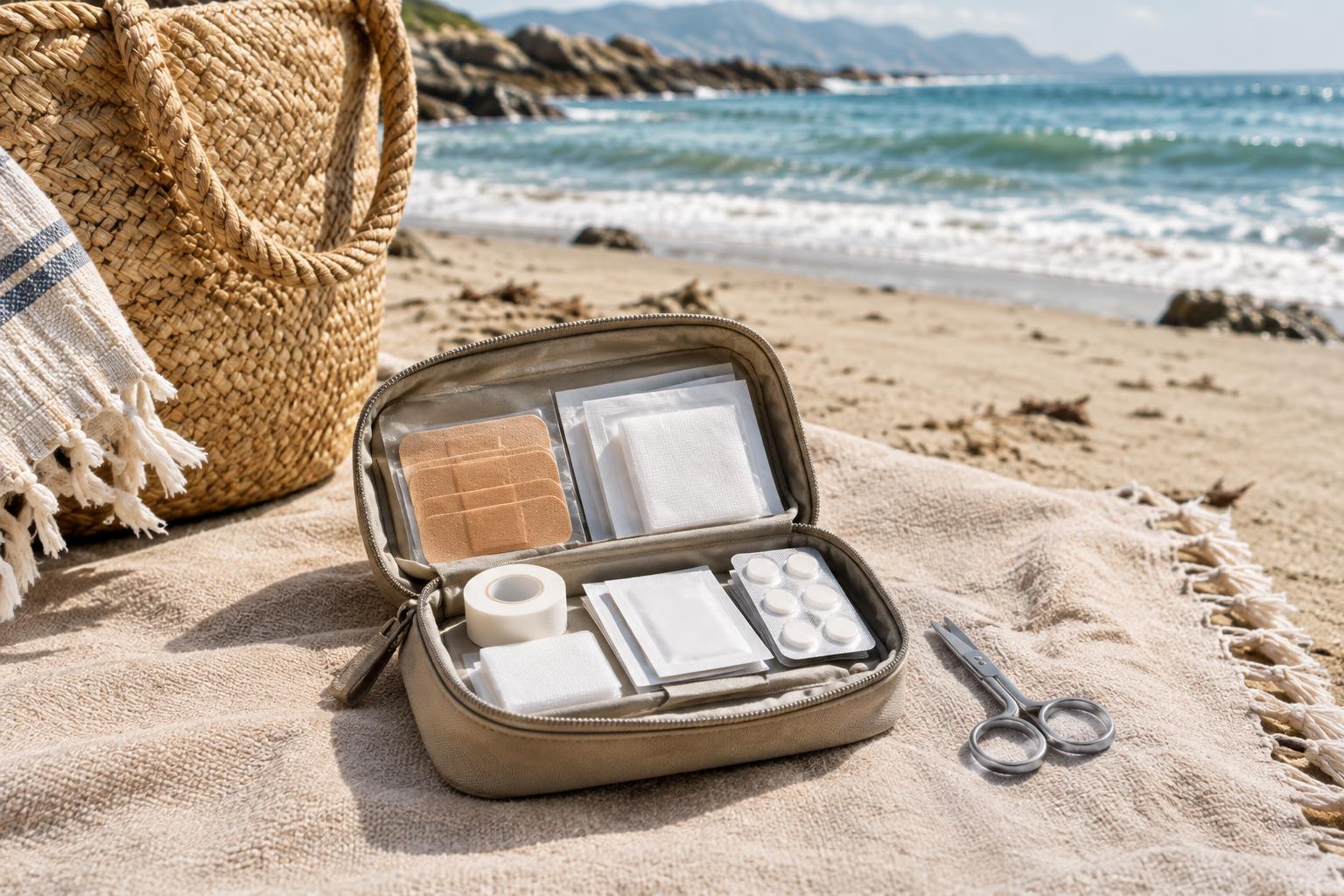
A beach-day first-aid kit is for minor problems that can interrupt an otherwise relaxed outing: a scraped foot, a small cut or a sandal blister. It is not a substitute for trained help. Pack it in a clearly marked, water-resistant pouch and keep it near the top of your beach bag, rather than under towels and food. If several people share the bag, make sure they know where the pouch is.
Coastal conditions are hard on supplies. Sand can get into open packets, while spray or a leaking bottle can soak dressings. Keep items in their original packaging where possible, and group the smallest pieces in resealable bags inside the pouch. Before leaving home, check that packets are sealed and replace anything damp, damaged or past its expiry date. A compact kit that you can find and use is more valuable than a large one left behind.
Pack the basics for cuts, scrapes and blisters
For minor cuts and scrapes, include a few sterile gauze pads, adhesive plasters in different sizes, a small roll of medical tape and a non-stick dressing. Gauze can help you apply gentle pressure to a bleeding cut; a dressing can then protect a cleaned wound from sand. Add a small bottle of clean water or sterile saline for rinsing, especially if your drinking water might run low. Hand sanitiser is useful before handling supplies, although visibly sandy hands should be cleaned first if water is available.
Blisters are common after a walk in wet sandals or shoes. A couple of blister dressings can protect a sore spot from further rubbing. Blunt-tipped scissors and tweezers may also be useful, but use tweezers only for a clearly visible, easy-to-remove splinter. Do not dig into a wound or attempt to remove something deeply embedded. A small rubbish bag gives you somewhere to put used wrappers and dressings until you reach a bin.
Choose quantities to suit your group and the length of the outing. A handful of well-chosen dressings is usually easier to manage than a pouch full of loose supplies. If someone in your group has a known allergy or another condition requiring personal medication, bring their prescribed items separately and make sure the people responsible know where they are and how they should be used.
Keep comfort items separate from first aid
A kit works best alongside, not instead of, ordinary beach preparation. Sunscreen, drinking water, shade and footwear help prevent some of the problems a first-aid kit cannot fix. Pack sunscreen where it is easy to reapply, rather than hiding it inside the medical pouch. If you include pain relief or other over-the-counter products, keep them in their original labelled packaging and follow the label directions. Avoid sharing medication casually, particularly with children or anyone whose allergies or medical history you do not know.
It can also help to keep a short list of relevant emergency contacts with the kit. Your phone may run out of charge or be difficult to use with wet hands, so consider how you would call for help before you settle on the beach. At an unfamiliar spot, take a moment to notice any lifeguard station, access path or clear landmark you could use to describe your location. Lifeguard presence and local conditions can vary, so check them for the beach and day you plan to visit.
Know the limits of a basic kit
For a small scrape, move away from blowing sand, clean your hands, rinse the area with clean water and cover it with an appropriate dressing. Watch for worsening pain, spreading redness or other signs that it is not healing as expected. A deep wound, bleeding that does not stop with steady pressure, an injury involving the eye, or a serious reaction needs prompt medical help rather than more supplies from the pouch.
Beach hazards also differ from place to place. If someone is stung, bitten or injured by a marine animal, avoid guessing at a treatment from a general packing list; different injuries may call for different care. Follow local safety guidance and seek help from a lifeguard or medical service, especially if the person has severe pain, trouble breathing, dizziness or rapidly worsening symptoms. Do not delay calling for help while searching through the kit.
After the outing, empty out sand, restock what you used and let the pouch dry before storing it. That quick reset makes the kit ready for the next walk, swim or picnic along the South African coast.